
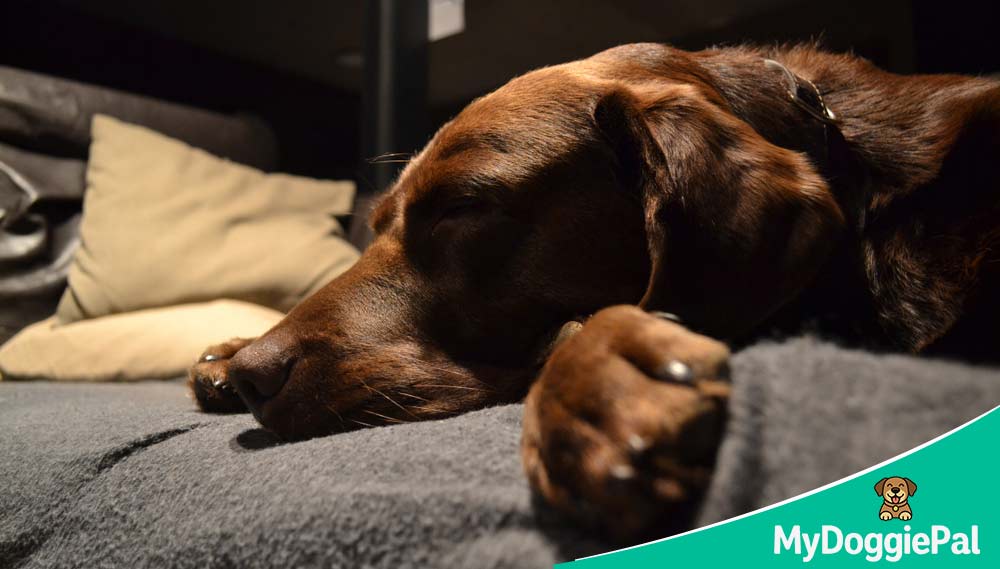
Should dogs sleep in the dark? Yes. Dogs sleep better in the dark. Light suppresses melatonin, delays sleep onset, and reduces sleep depth.
Darkness is not optional for quality sleep. It is part of the biological requirement. Here is why it matters, which light sources cause the most disruption, and what to do about it.
Do Dogs Need Darkness to Sleep?
Do dogs need darkness to sleep? Yes, and for a specific biological reason.
Dogs evolved as crepuscular animals, most active at dawn and dusk. Darkness was the natural signal for deep rest. That wiring has not changed because they moved indoors.
Their eyes contain more rod cells than human eyes, making them significantly more sensitive to light in low-light conditions.
Even ambient light from a TV in the corner, a street lamp through thin curtains, a hallway light under a door, registers as a disruption signal to the canine brain.
A dog can fall asleep in a lit room. That is not the same as getting quality sleep. The quantity of sleep and the depth of sleep are different things. Light reduces the second without necessarily preventing the first.
Dogs and Circadian Rhythm: What Light Actually Does to Your Dog’s Sleep
Dogs have a circadian rhythm controlled by the suprachiasmatic nucleus (SCN), the same internal clock mechanism humans have. It is driven by light and dark.
When light enters the eye, it signals the SCN to suppress melatonin production. Melatonin is the hormone that tells the brain it is time to sleep. Less melatonin means longer to fall asleep, shallower sleep cycles, and more waking through the night.
Dogs are more light-sensitive at night than humans, not less. Their larger pupils and higher rod-cell density mean light that barely registers to us is significantly more stimulating to them.
The TV problem most owners don’t know about.
When your dog is lying next to you at 9pm while you watch television, their retinas are receiving a blue-light signal that their biology interprets as midday.
The evening melatonin rise that should be preparing their body for deep, restorative sleep is being suppressed in real time by your TV. Turning it off at your bedtime is too late. The damage to that night’s sleep is already in progress.
RESEARCH SPOTLIGHT
A 2025 study published in Life (MDPI) compared blue and red LED light exposure in the evening. Blue light at 464nm maintained melatonin suppression throughout. Red light allowed melatonin to recover: levels under red light reached 26.0 pg/mL after two hours, compared to just 7.5 pg/mL under blue light.
This is why amber and red nightlights are genuinely different from white ones. The wavelength is the variable that matters, not just the brightness. A dim white LED nightlight can suppress melatonin more effectively than a brighter amber lamp.
The dog melatonin sleep relationship is direct and measurable. More light at night means less melatonin. Less melatonin means poorer sleep.
Which Lights Disrupt Dog Sleep the Most?
Ranked from highest to lowest disruption.
| Rank | Light Source | Disruption Level | Why |
|---|---|---|---|
| 1 | Overhead LED or fluorescent | Highest | Bright, blue-spectrum, directly overhead |
| 2 | Screens (TV, phone, tablet) | Very high | Blue light at 450 to 490nm; effects persist 3 to 4 hours after the source turns off |
| 3 | Natural light through thin curtains | High | Street lamps, summer dawn; underestimated by most owners |
| 4 | White LED nightlights | Moderate | Small but real blue-spectrum emission |
| 5 | Amber or red nightlights | Low | Wavelength too long to efficiently suppress melatonin |
| 6 | Moonlight or natural night sky | Negligible | Natural ambient light dogs evolved alongside |
The screen entry in that table needs emphasis. Research published in clinical trials on human circadian biology found that the alerting and melatonin-suppressing effects of blue light persist for 3 to 4 hours after the source is turned off.
A TV left on until 10pm is still affecting your dog’s sleep depth at 1am. The fix is to turn screens off at least an hour before your dog settles for the night, not when you go to bed.
Is It Okay to Leave a Light on for Your Dog? (Practical Answers)
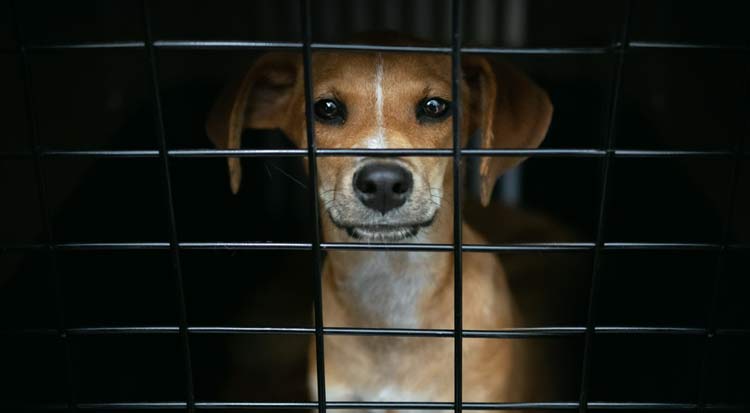
My dog seems scared of the dark. Do I need a night light?
Most dogs are not afraid of the dark. What they are responding to is being alone, which is a different problem entirely. If a dog seems distressed at night with the lights off, the cause is almost always separation anxiety or an unsettled environment, not darkness itself.
If a night light is genuinely needed, choose amber or red-toned. Keep it dim and place it low rather than overhead. The goal is orientation without melatonin suppression.
Can I leave the TV on for my dog at night?
No. The combination of blue-spectrum light and sound keeps the brain in a more alert state. A TV left on overnight is one of the most significant sleep disruptors in a home environment. If your dog needs background sound, white noise or brown noise with no screen is the right alternative.
Does my dog need total blackout?
Not necessarily. The goal is low light, not zero light. A room free from active light sources, screens, overhead lights, and strong street lamps, is sufficient for most dogs. Total blackout is most useful when the room receives strong morning light early in summer.
What about puppies and night lights?
Puppies do not need night lights. The instinct to provide one comes from human habit. If the puppy is crying at night, darkness is not the cause. Adjustment, settling, and separation from the litter are. A night light for dogs is rarely necessary and often counterproductive to sleep quality.
Practical Steps to Get the Light Environment Right
For a full guide to every element of a good sleep setup beyond lighting, see our dog sleep environment guide.
Morning light matters as much as nighttime light. Summer dawn light entering a bedroom at 4:30am is one of the most common causes of dogs waking their owners progressively earlier through June and July.
Each morning the light enters a little sooner. The dog’s internal clock shifts forward accordingly. Blackout curtains or a crate cover solve this completely.
If your dog is used to sleeping with a light on, switch gradually. A dog that has lived with a lamp on for months or years has calibrated its circadian cues to that environment. Switching to darkness abruptly can cause temporary disruption and anxiety.
Reduce the brightness over one to two weeks: dim the source first, then remove it. The adjustment is smoother and the result is the same.
- Switch screens off at least one hour before your dog settles, not at your own bedtime. The blue-light suppression window is already open by the time you reach for the remote.
- Replace white LED nightlights with amber or red if a low light is genuinely needed anywhere near the sleep space. The wavelength difference is not cosmetic.
- Dim overhead lights 30 to 60 minutes before bedtime. Pre-sleep dimming reinforces the sleep cue and begins the melatonin window before the dog is even in their bed.
- Use a crate cover for crated dogs. It blocks light, reduces stimulation, and reinforces the enclosed den feeling that promotes faster settling.
- Go in overnight with a low phone torch, not a light switch. A brief overhead light in the middle of the night resets the melatonin clock.
Dog Melatonin and Sleep: Should You Supplement?
Some owners ask whether melatonin supplements can compensate for a lit environment or help with specific sleep problems.
The short answer is: sometimes, as a short-term tool, but not as a substitute for getting the light right.
Melatonin supplements are used by some vets for sleep-wake disruption in dogs with canine cognitive dysfunction (CDS), for anxiety-related sleep issues, and for dogs adjusting to new environments or travel. The supplement provides exogenous melatonin that the light-suppressed brain is not producing naturally.
But supplementing melatonin while keeping the room lit is treating the symptom while maintaining the cause. The light environment should be addressed first.
If sleep problems persist despite a properly dark environment, then dog melatonin sleep supplementation is worth discussing with a vet. Dosing varies by weight and situation.
For a deeper look at the science behind how dogs sleep, including sleep stages and what happens in the brain during rest, see our guide on dog sleep stages.
The Bottom Line
Should dogs sleep in the dark? Yes.
Light suppresses melatonin, reduces sleep depth, and delays sleep onset. The TV is more disruptive than most owners realise. Amber beats white if a light is genuinely needed.
If your dog has been sleeping with a light on, transition gradually rather than switching overnight. The result is the same. The adjustment is much smoother.
For everything about dog sleep in one place, visit our complete guide to dog sleep.