
Your dog’s sleep environment affects far more than just whether they settle at night. It shapes how deeply they sleep, how well they recover, and how they behave the next day.
A good dog sleep environment doesn’t require a lot of money or a big home. It requires a few deliberate decisions about temperature, light, noise, placement, and routine. This guide walks through all of them, step by step.
If you’re still figuring out whether a crate, a dog bed, or your bed is the right base for that environment, take a look at our comparison of where dogs sleep best first. It’ll help you make a more informed decision before you set anything up.
Why the Sleep Environment Matters More Than You Think
Most owners put thought into what their dog eats and how much exercise they get. But the sleeping environment usually gets left to chance.
That’s worth changing.
Dogs sleep between 12 and 14 hours a day as adults, and significantly more as puppies and seniors. That’s a huge chunk of their life spent in one spot. If that spot is too warm, too noisy, or poorly placed, it affects the quality of their rest even if they’re technically lying down.
RESEARCH SPOTLIGHT
A 2025 study published in the Journal of Veterinary Emergency and Critical Care found that dogs were significantly less likely to be asleep when noise levels were elevated or lights were bright. Dogs in a dimmed environment at night were 1.7 times more likely to be asleep than those in bright conditions.
A separate study in Applied Animal Behavior Science confirmed that both temperature and light duration directly affect how much and how well dogs sleep.
In other words, environment isn’t a nice-to-have. It’s a meaningful variable in how well your dog actually rests. Let’s build it properly.
Step 1: Get the Temperature Right
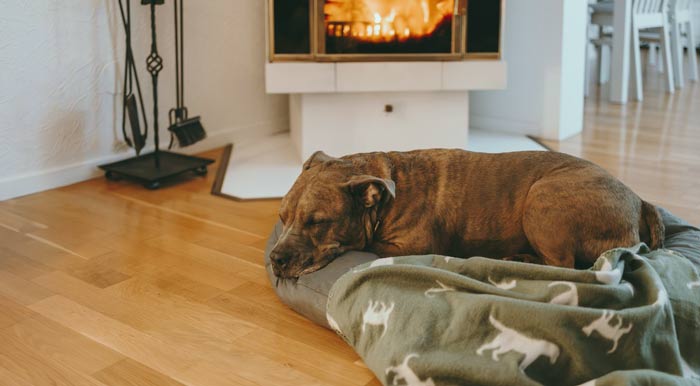
The ideal temperature for dogs to sleep is between 65 and 75 degrees Fahrenheit (18 to 24 degrees Celsius).
That range covers most dogs comfortably, but it isn’t one-size-fits-all. Breed, coat length, age, and size all shift where your dog sits within that window.
Ventilation matters alongside temperature. A well-aired room prevents your dog from overheating in warmer months and reduces the build-up of dander and allergens around their sleep spot.
If the room gets stuffy overnight, a slightly open window or a slow-running fan on the other side of the room helps without creating a direct draft on the bed.
How to Adjust for Your Specific Dog
Large dogs with thick coats, like Huskies, Bernese Mountain Dogs, or Newfoundlands, stay comfortable at the cooler end of the range. They generate a lot of body heat and overheat more easily than smaller breeds.
Small and short-haired dogs, like Chihuahuas, Greyhounds, and Whippets, need more warmth. They lose heat quickly and benefit from being at the warmer end, around 72 to 75 degrees Fahrenheit. A blanket in their bed goes a long way too.
Older dogs and puppies are more sensitive to temperature swings in both directions. A senior dog with arthritis will benefit from a consistently warm sleep space, ideally away from any cold drafts near exterior walls or windows.
QUICK TIP
If your thermostat drops at night to save energy, check that your dog’s sleep spot isn’t the coldest corner of the house. An orthopedic bed raised off the floor reduces cold from below, and a lightweight blanket covers the rest. Short-haired and small breeds especially will thank you for it.
A Note on Flat-Faced Breeds
If you own a Pug, French Bulldog, English Bulldog, Cavalier King Charles Spaniel, or any other flat-faced breed, temperature control in their sleep environment deserves extra attention.
These breeds are prone to brachycephalic obstructive airway syndrome (BOAS), a structural condition that narrows their airways and makes breathing harder, especially during sleep.
Research published in GoodRx Health confirms that BOAS is the primary cause of sleep apnea in dogs, with symptoms including snoring, labored breathing, and disrupted sleep.
For these dogs specifically, the sleep environment should be cool rather than warm, well-ventilated, and never near a heat source.
If your flat-faced dog snores loudly, gasps during sleep, or seems excessively tired during the day, speak to your vet. It may be more than just breed-typical behavior.
Avoid placing the sleep area near radiators, fireplaces, or heating vents. Sleeping too close to a direct heat source is just as disruptive as sleeping somewhere too cold.
Step 2: Control the Lighting
Dogs are more sensitive to light than most owners realize. Light signals to a dog’s brain that it’s time to be awake. That’s not a preference. It’s biology.
The research cited above found that dim lighting at night directly increased the likelihood of dogs being asleep. Bright light, even ambient light from a TV or hallway, can keep a dog’s brain in a more alert state.
Dark or Light for Dog Sleeping?
Dark is better. A sleep space with low light or no light at night produces the deepest, most restorative rest.
That doesn’t mean the room needs to be pitch black. But if your dog sleeps in a room with a street lamp shining through a thin curtain, or where the TV runs until midnight, those light sources are working against them.
- Use blackout curtains or blinds in rooms where outside light is strong
- Turn off screens in the room where your dog sleeps, or move their bed away from the screen
- If your dog sleeps in a crate, a crate cover works as a simple, effective light blocker. It also reinforces the den feeling that helps dogs settle
- Night lights are generally fine for owners who need them. Soft, low-level light doesn’t disrupt dog sleep the way bright overhead or flickering light does
Daylight During the Day Matters Too
It’s not just about darkness at night. Your dog’s ability to sleep well at night is partly determined by how much natural light they get during the day.
Natural daylight during waking hours helps regulate your dog’s internal clock, the same circadian rhythm that tells their body when it’s time to be alert and when it’s time to rest.
Dogs kept in consistently dim or artificially lit environments throughout the day can have a harder time settling at night, because the signal that separates day from night becomes weaker.
In practical terms, this means letting your dog spend time in naturally lit rooms during the day, or making sure daytime walks happen during daylight hours rather than just after dark. The contrast between a bright day and a dim night is itself a cue for better sleep.
Step 3: Reduce Noise
A quiet sleep space for your dog matters more than most people expect. Dogs hear at roughly four times the distance of humans, and they hear a wider range of frequencies. Sounds that are barely noticeable to you can be genuinely disruptive to a sleeping dog.
Noise doesn’t have to be loud to disturb sleep. Intermittent sounds, like a TV turning on in another room, a door closing, or traffic, are more disruptive than consistent background sound. The unpredictability is the problem.
What to Do About Noise
- Place the sleep area away from the street side of the house if possible. Interior rooms or those facing a garden are naturally quieter.
- White noise or brown noise works well for dogs that are sensitive to sudden sounds. A fan or a dedicated white noise machine creates a consistent sound layer that masks the peaks and troughs of household and outdoor noise.
- Keep the TV off or low in the room where your dog sleeps. Even the sound of dialogue and music keeps the brain processing.
- If you have children or housemates who are up late, a door between your dog’s sleep spot and the activity area makes a genuine difference.
MYTH-BUST
“My dog sleeps through anything.”
Dogs that appear to sleep through noise are still having their sleep quality affected, even if they don’t fully wake. Light sleep and disrupted sleep cycles are just less visible than full waking. The research is clear that noise reduces both sleep time and sleep depth in dogs, even in animals that seem accustomed to it.
Step 4: Choose the Right Bed Placement
Where you put the bed matters as much as what the bed is. A high-quality orthopedic bed in a bad location won’t perform as well as a simpler bed in a well-chosen spot.
What Makes a Good Sleep Location
- Avoid high-traffic areas. A hallway, the area near the front door, or a spot between rooms means constant interruption as people move around. Dogs in these spots sleep in shorter, lighter bursts.
- Avoid drafts. Check the sleep spot at floor level, not standing height. Cold air travels low, and a draft that you can’t feel at waist height can be significant at the floor where your dog sleeps.
- Stay near where you sleep, if that helps your dog settle. Many dogs, especially anxious ones, sleep better when they can hear or sense their owner. A dog bed in the bedroom is a practical solution that gives the dog proximity without co-sleeping.
- Avoid isolating anxious dogs. Putting an anxious dog in a distant room on their own, away from all household activity, usually makes anxiety worse rather than better. If your dog has sleep-related anxiety, our guide on dog sleep and anxiety goes into this in more detail.
- Consistency matters. Once you settle on a spot, stick with it. Dogs sleep better in places that feel familiar and predictable.
How to Get Your Dog to Actually Use the Spot
Setting up a great sleep environment only works if your dog uses it. Some dogs take to a new bed immediately. Others need a little encouragement.
The most effective approach is positive reinforcement. Guide your dog to the bed, ask them to settle, and reward them with calm praise or a treat when they stay there. Repeat this over several evenings. You’re not bribing them. You’re building a positive association between that spot and feeling relaxed and rewarded.
Placing an item of your worn clothing on or near the bed speeds this process up significantly. Your scent is deeply reassuring to your dog and helps them accept a new sleep location far faster than a bare, unfamiliar bed.
Avoid using the sleep spot as a time-out area or as a place associated with anything stressful. The bed and the spot around it should be exclusively positive. Once that association is in place, most dogs choose it on their own.
Step 5: Pick the Right Bed and Bedding
The bed itself is worth thinking about carefully. Dogs spend more time on their bed than anywhere else in the house. Getting it right is one of the better investments you can make in their daily wellbeing.
Matching the Bed to the Dog
For large or older dogs: an orthopedic memory foam bed is the right choice. Larger dogs put more pressure on their joints over time, and hard surfaces worsen the stiffness that comes with age. An orthopedic bed supports the hips, shoulders, and elbows in a way that cheaper beds simply don’t.
For puppies: a softer, washable mat or cushion that fits inside a crate is usually ideal. Puppies have accidents. Washability matters more than material luxury at this stage.
For anxious dogs: bolster or donut-style beds with raised edges often work better. The enclosed shape triggers the same denning instinct that makes a crate comfortable. Many anxious dogs settle faster and stay asleep longer in this type of bed.
For small or short-haired dogs: a self-warming bed or one with a blanket helps them maintain body heat through the night without relying on room temperature alone.
Bedding Materials and Practical Details
- Machine washable covers are non-negotiable. Dog beds collect dirt, dander, and hair fast. A bed that can’t be washed regularly becomes a hygiene problem. Aim to wash bedding every one to two weeks.
- Choose a bed with a non-slip base. This matters more than most owners expect, especially for older dogs or dogs on wooden or tiled floors. A bed that slides when your dog steps onto it creates hesitation and discomfort over time.
- Avoid beds with loose stuffing or buttons that can be chewed off and swallowed, particularly for puppies and strong chewers.
- Raised beds or those with a bolster rim keep dogs off cold floors and away from ground-level drafts.
- Blankets are a simple, low-cost addition that most dogs appreciate. Many dogs will rearrange them on their own to find the right position, which is actually a sign they’re using them well.
Calming Pheromones for the Sleep Space
For dogs that are anxious or slow to settle at night, calming pheromone products are worth knowing about. These products use synthetic versions of Dog Appeasing Pheromones (DAP), which mimic the natural pheromones that nursing mothers produce to calm their pups.
They are not sedatives and they don’t mask the problem. What they do is create a low-level sense of reassurance in the environment, which can make a meaningful difference to how quickly an anxious dog settles and how deeply they sleep.
These products are available as plug-in diffusers for ongoing use in the sleep room, sprays that can be applied directly to bedding before sleep, and collars for dogs who need support beyond the home environment.
A diffuser placed in the room where your dog sleeps is the most practical option for overnight use. It releases pheromones continuously and requires no effort once set up. If your dog struggles with sleep-related anxiety, this is a reasonable first step before exploring other interventions.
For more on managing sleep anxiety in dogs, our guide on dog sleep and anxiety covers the full picture
QUICK TIP
When you first introduce a new bed, place an item of your worn clothing in or near it. Your scent is deeply reassuring to your dog and helps them accept a new sleep spot much faster. Combined with a pheromone spray on the bedding, this is one of the most effective ways to settle a nervous dog in a new sleep space.
For a curated list of beds that perform well across different dog sizes and needs, see our top-rated dog beds roundup.
Step 6: Remove Safety Hazards
The sleep area needs to be safe, especially overnight when you aren’t watching. This matters most for puppies and for dogs new to your home.
- Keep electrical cables out of reach. A dog left unsupervised near a power cable overnight is a real risk, particularly for puppies who explore by chewing.
- Remove small objects from floor level in the sleep area. Coins, rubber bands, hair ties, and similar items are common household items that are dangerous if swallowed.
- Check for toxic plants near or in the sleep area. Common indoor plants including pothos, peace lilies, and certain succulents are toxic to dogs.
- Keep cleaning products and medications in closed cupboards, not on low shelves near where your dog sleeps.
- If your dog sleeps in a crate, remove their collar before closing the crate door. Collars can snag on crate bars and become a choking hazard, especially with puppies.
- For dogs who sleep on or near your bed, make sure they can get on and off safely. Large and older dogs jumping from a high bed risk joint injury. A ramp or low steps solves this without disrupting the setup.
Step 7: Build a Consistent Bedtime Routine
The physical environment is one part of the equation. The routine around it is the other.
Dogs thrive on predictability. A consistent pre-sleep routine signals to your dog’s brain that it’s time to wind down, which makes settling faster and sleep deeper. You don’t need to be rigid about it. You just need to be consistent.
Start With Enough Exercise During the Day
A dog that hasn’t had enough physical activity during the day will struggle to settle at night, regardless of how well-designed the sleep space is. Daytime exercise is one of the most reliable levers for improving night-time sleep quality.
The timing matters too. Exercise in the morning or early afternoon gives your dog time to wind down before bed. Vigorous play or a long run in the hour before sleep raises adrenaline and body temperature, making it harder to settle, in the same way it does for humans. A shorter, calmer evening walk is fine. Save the high-intensity activity for earlier in the day.
GOOD TO KNOW…
Dogs that don’t get enough mental stimulation during the day often compensate by sleeping more, but it’s not restorative sleep. It’s boredom. Adding puzzle feeders, a short training session, or a varied walking route during the day produces more genuine tiredness at night and better quality rest overall.
What a Good Evening Routine Looks Like
- A final toilet break at a regular time. This is the most important step. A dog who hasn’t been out before bed will wake earlier or become restless in the night.
- Wind-down time after the last walk or any active play. Bring the energy down in the house before settling your dog. Stimulating play right before bed makes it harder to settle, exactly as it does with children.
- Settle the dog in their spot using a calm cue if you have one. A word like “settled” or “bed” used consistently becomes a powerful signal over time.
- Dim the lights and lower noise levels in the home as part of your own wind-down. Your dog picks up on household energy more than most owners realise.
- Avoid feeding a large meal close to bedtime. Dogs who eat a full meal in the evening often need to go out again before the night is over, which disrupts both their sleep and yours.
QUICK TIP
If your dog takes a long time to settle, try a short obedience session before bed. Five minutes of basic commands tires the brain more effectively than physical activity and promotes faster settling..
Common Mistakes That Disrupt Dog Sleep
Even owners who care a lot about their dog’s wellbeing make a few of these. They’re worth knowing about.
- Moving the sleep spot frequently. Changing where your dog sleeps disrupts their sense of security and makes it harder to settle each night. Pick a spot and commit to it.
- Letting the room get too warm. Most owners worry about dogs being cold. Overheating is actually the more common problem. A dog that paces, seeks the coolest floor spot, or keeps waking in the night is often too warm, not anxious.
- Using the sleep area as a time-out space. If a crate or sleep area is associated with punishment, the dog will resist going there at night. The sleep space should be a positive, neutral place at all times.
- Skipping daytime exercise. A dog that hasn’t moved enough during the day will not sleep well at night. Physical and mental activity during the day is part of the sleep environment, even if it doesn’t happen in the sleep room.
- Inconsistent bedtimes. Dogs have internal clocks that respond to routine. Highly variable bedtimes disrupt their natural sleep-wake cycle over time, in much the same way shift work disrupts sleep in humans.
- Ignoring signs of poor sleep quality. Excessive daytime sleeping, restlessness at night, or waking earlier than usual are worth paying attention to. Sometimes the fix is environmental. Sometimes it’s something to raise with your vet.
The Bottom Line
A good dog sleep environment comes down to seven things: the right temperature, low light, minimal noise, a well-chosen location, appropriate bedding, no safety hazards, and a consistent routine around it all.
None of these require a complete home overhaul. Most of them are small, low-cost adjustments that make a meaningful difference to how well your dog sleeps and how they feel the next day.
If your dog is anxious at night, the combination of a well-placed bed, a pheromone diffuser, your scent on the bedding, and a predictable evening routine covers most of what’s needed before you consider anything more involved.
If you’re still deciding on the right sleeping setup for your dog, go back to our full guide on where dogs should sleep for the complete comparison of crates, dog beds, and co-sleeping.
And for the full picture on dog sleep, including how much is normal by age and breed, visit our complete guide to dog sleep.