
You may have noticed your dog is sleeping more. Maybe a lot more. And even though you know they’re getting older, you find yourself watching them and wondering if this is normal or if something is wrong.
That worry is not an overreaction. Watching your dog slow down is genuinely hard. Noticing every change and asking questions is exactly what a caring owner does.
The honest answer is that a senior dog sleeping a lot is, and in most cases, completely normal. Aging bodies need more rest. But some old dog sleep changes are worth paying closer attention to, and this guide explains the difference clearly.
We’ll cover what’s expected as dogs age, what canine cognitive dysfunction does to sleep, which health conditions play a role, and the specific signs that mean it’s time to call your vet.
When Does a Dog Become a Senior?
Senior isn’t a fixed age. It depends significantly on how big your dog is. Larger breeds age faster than smaller ones, and their senior years begin earlier.
| Breed Size | Example Breeds | Senior Age |
|---|---|---|
| Small (under 20 lbs) | Chihuahua, Pomeranian | 10 to 12 years |
| Medium (20 to 50 lbs) | Beagle, Cocker Spaniel | 8 to 10 years |
| Large (50 to 90 lbs) | Labrador, Boxer | 7 to 8 years |
| Giant (90 lbs+) | Great Dane, Mastiff | 5 to 6 years |
One thing worth knowing: sleep changes often begin before a dog officially crosses into senior territory. If your seven-year-old Labrador is napping noticeably more, that’s not unusual at all. The biological clock runs ahead of the calendar.
Why Is My Old Dog Sleeping So Much? What’s Actually Normal
Adult dogs sleep around 12 to 14 hours a day. Senior dogs commonly sleep 14 to 18 hours, and in very old dogs the number can reach 20 hours. So if you feel like your senior dog is sleeping a lot, you are almost certainly right. And it is almost certainly fine.
These are real reasons for this shift:
Physically, older dogs have lower stamina. Their muscles tire faster, their joints ache more after activity, and their bodies need longer to recover from exertion. A walk that left your dog bouncing at four years old might leave them sound asleep for three hours at eleven.
Neurologically, aging brains also slow down. Processing stimulation takes more effort, and the brain responds by seeking more rest. This is not a problem. It is the body doing what it should.
Daytime napping increases significantly too. Senior dogs nap more often and for longer stretches. And while they appear to sleep more, their sleep quality actually changes. Older dogs spend less time in deep REM sleep and more in lighter sleep stages, which means they can rest for long periods and still not feel fully restored.
For a full breakdown of sleep norms across every life stage, see our guide on how much sleep dogs need by age.
WHAT TO KNOW
A gradual increase in sleep over weeks or months, with no other behavior changes, is almost always a normal part of aging. The word to watch is gradual. When the change is slow and steady, it’s the body adjusting. When it’s sudden, that’s different.
How Aging Changes the Way Dogs Sleep
It’s not only about how much they sleep. How they sleep changes too, and owners often notice this before they have words for what they’re seeing.
Older dogs become lighter sleepers. They move in and out of sleep more easily and wake more readily than they used to. Joint stiffness means more position shifting during the night, which owners often hear as a soft thump from the dog’s bed as they rearrange themselves.
Bladder control weakens with age. Some senior dogs need a toilet trip once or even twice overnight. They may wake and signal this quietly, or they may simply have an accident.
Neither is a behavioral problem. Both are physical.
Hearing and vision changes mean that sounds and lights which your dog previously slept through now disturb them. A car outside or a light turning on in the hallway can rouse an older dog in a way it never would have before. Sensory sensitivity increases as the senses themselves decline.
Temperature regulation also becomes less efficient. Senior dogs feel cold more easily and overheat more quickly than they did when younger. Their sleep spot matters more now than it ever did.
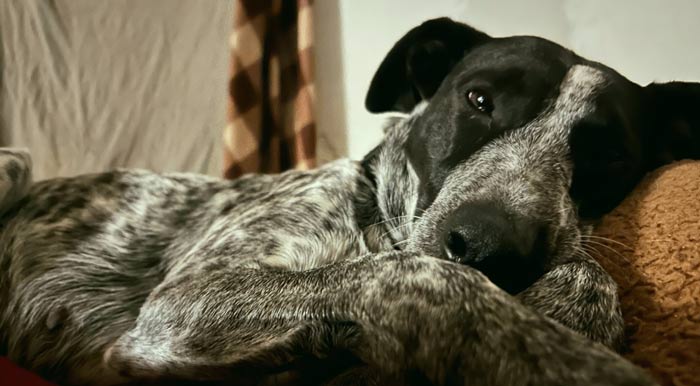
Some owners notice their senior dog starts seeking out unfamiliar or more enclosed spots: under the bed, in a wardrobe, in a corner behind the sofa. This is worth noting. As sensory acuity declines, dogs often seek quieter, more sheltered spaces that reduce stimulation and help them feel contained.
Routine matters more as dogs age too. Their internal clock becomes more rigid, and disruptions to the usual elderly dog sleep schedule affect them harder than they would have affected the same dog at five years old. Consistency isn’t just comfortable. At this stage, it’s genuinely protective.
Dog Dementia and Sleep: What Canine Cognitive Dysfunction Does to Sleep
Canine Cognitive Dysfunction Syndrome (CDS) is the closest equivalent to dementia in dogs. It is a progressive neurological condition that affects memory, awareness, and behavior. And sleep disruption is one of its most recognizable and distressing symptoms.
Understanding CDS is important for any owner of a senior dog, because the numbers are higher than most people expect.
How Common Is CDS? The Numbers by Age
| Dog's Age | Mild CDS Prevalence | Severe CDS Prevalence |
|---|---|---|
| 8 to 10 years | Emerging risk | Rare |
| 11 to 12 years | Around 28% of dogs | Around 10% of dogs |
| 15+ years | Around 68% of dogs | Around 35% of dogs |
A 2022 study found that the odds of CDS increase by 52% with each additional year of age. This is not a rare condition in older dogs. It is a common one.
What CDS Sleep Disruption Actually Looks Like
The most recognizable pattern is a reversal of the sleep-wake cycle. A dog with CDS often sleeps heavily through the day and then becomes restless, confused, or agitated at night.
Owners describe coming downstairs at 2am to find their dog pacing or standing in the middle of the room, staring at nothing.
Nighttime vocalizing is another common sign. Whining or howling with no obvious cause, often in the early hours, is one of the clearest signals that something neurological is happening rather than something environmental.
Dogs with CDS also frequently wake disoriented. They don’t know where they are. They may walk into furniture, get stuck in corners, or stand still seeming unable to work out what to do next.
RESEARCH SPOTLIGHT
A 2023 study published in Frontiers in Veterinary Science used the same brainwave monitoring techniques as human sleep studies and found that dogs with CDS show brain activity during sleep that closely mirrors patterns found in people with Alzheimer’s.
Dogs with poorer memory showed stronger beta waves during sleep. Beta waves are normally a sign of wakefulness. This explains something many owners of CDS dogs observe and struggle to articulate: their dog seems to sleep a lot, but is never truly rested. They are not achieving deep sleep. They are suspended in a lighter, less restorative state
The DISHA-AL Framework: What Vets Look For
Vets use a structured assessment tool called DISHA-AL to identify CDS. Knowing what each letter stands for helps you arrive at the vet with useful, specific observations rather than a general sense that something is wrong.
| Letter | Stands For | What It Looks Like at Home |
|---|---|---|
| D | Disorientation | Getting stuck in corners, staring at walls, seeming lost in familiar rooms |
| I | Interaction changes | Less responsive to family members, reduced affection, or unusual clinginess |
| S | Sleep-wake alterations | Sleeping heavily through the day, awake and restless or confused at night |
| H | House soiling | Accidents from a dog who was previously reliable with toilet habits |
| A | Activity changes | More or less active than usual without a clear physical reason |
| A | Anxiety | New or increased restlessness, pacing, or fearfulness |
| L | Learning and memory | Forgetting commands or routines they knew reliably for years |
You don’t need to see every sign on this list. Two or three appearing together, particularly when sleep disruption is one of them, is enough reason to book a vet appointment. Early diagnosis makes a meaningful difference to how well CDS can be managed.
CDS has no cure. But it is manageable. There are interventions that slow its progression and improve quality of life for both dog and owner. The earlier you catch it, the more options you have.
For a complete guide to CDS, including diagnosis and management in detail, visit our canine cognitive dysfunction resource.
What to Ask Your Vet About: Treatment Options
This is not a guide to medicating your dog at home. It is a preparation tool so you know what options exist and can have an informed conversation at the appointment.
Melatonin is a supplement that can help re-establish a more normal sleep-wake cycle. It is widely available, low-risk, and often the first thing vets try for mild sleep-wake disruption. Given consistently at bedtime, it signals to the brain that it is time to sleep. Mention it to your vet before starting, as the right dose varies by size.
Selegiline (brand name Anipryl) is a prescription medication licensed for use in dogs with CDS in several countries. Given in the morning, it supports dopamine function and helps keep the dog more alert and engaged during the day, which indirectly improves nighttime sleep. Your vet will assess whether it is appropriate based on your dog’s overall health and the severity of symptoms.
Pheromone therapy uses synthetic versions of the calming pheromones that nursing mother dogs produce. A DAP diffuser placed in the sleep room reduces nighttime anxiety and restlessness in dogs with CDS. It works gradually over several weeks and can be used alongside medication or on its own for milder cases.
All three are worth raising at the same appointment. Going in knowing what exists makes the conversation more productive.
When Pain or Illness Is Behind the Sleep Change
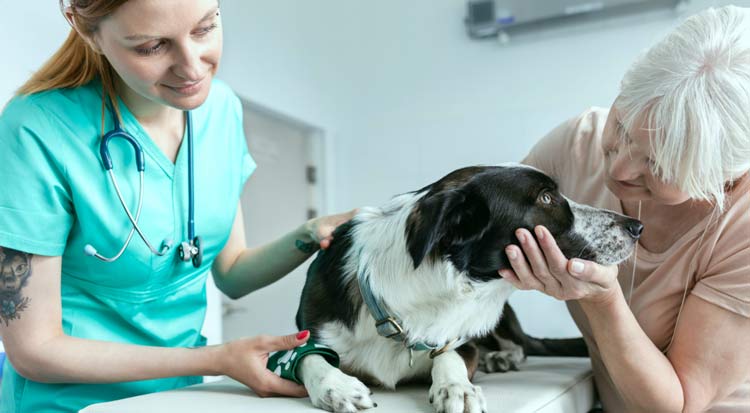
CDS is not the only reason a senior dog’s sleep changes. Several health conditions directly affect rest, and the sleep change is often the first visible sign before other symptoms become obvious.
- Arthritis and joint pain is the most common cause of restless sleep in senior dogs. A dog in pain shifts position repeatedly through the night, struggling to get comfortable. They may whimper softly when lying down or rising, or seem reluctant to use the bed they previously loved.
- Hypothyroidism causes lethargy, weight gain, and increased sleep. It arrives gradually, which is why owners often attribute the changes to normal aging and miss it for longer than they should. A simple blood test checks for it.
- Heart disease reduces cardiovascular efficiency, which means the body tires faster and needs more rest. Coughing at night is a common accompanying sign that owners often notice before the fatigue becomes obvious during the day.
- Diabetes causes blood sugar fluctuations that disrupt sleep and can produce unusual restlessness or increased thirst overnight. A dog that keeps waking to drink water is worth checking.
- Kidney disease increases the frequency of urination, which is one of the most common disruptors of senior dog sleep. Waking repeatedly to go out, or waking in the morning to find overnight accidents, can both signal kidney involvement.
- Cancer brings fatigue as one of its most consistent symptoms. Increased sleep alongside unexplained weight loss or a loss of appetite warrants prompt vet attention, not a wait-and-see approach.
If your old dog is sleeping so much that it feels like a distinct shift rather than a gradual drift, a health check is the right next step. Many of these conditions are treatable when caught early. The sleep change is often the body’s earliest signal.
For a broader look at the conditions most commonly diagnosed in aging dogs, visit our senior dog health hub.
When Old Dog Sleep Changes Need a Vet Visit
Not every change requires an urgent call. But specific ones do. Here is what to watch for.
- A sudden increase in sleep over days rather than weeks or months
- Difficulty waking, or seeming groggy and slow to respond when they do wake
- Sleep change paired with loss of appetite or interest in food
- Sleep change paired with noticeable weight loss
- Sleep change paired with increased water intake or urination
- Nighttime restlessness or pacing alongside heavy daytime sleeping (the CDS pattern)
- Vocalising at night, whining or howling, with no apparent cause
- Confusion, disorientation, or failing to recognise familiar people or rooms
- Limping, reluctance to rise, or signs of pain when lying down
- Breathing changes during sleep: gasping, extended pauses, or choking sounds
The Nighttime Pattern Decoder
Different nighttime patterns point to different causes. This is something no other guide maps out clearly, and it is genuinely useful when you’re trying to figure out what to tell your vet.
| Pattern | What It Looks Like | Most Likely Cause |
|---|---|---|
| Cannot settle at bedtime | Pacing, circling, lying down and getting up repeatedly before sleep | Pain, anxiety, or physical discomfort |
| Falls asleep then wakes mid-night | Settled for the first few hours, then restless or confused | Bladder urgency, early CDS, or pain that increases after rest |
| Wakes very early | Sleeps well but alerts unusually early each morning | Age-related circadian rhythm shift, or stiffness and pain on waking |
| Sleeps all day, awake all night | Inverted pattern: active or agitated at night, unresponsive during the day | CDS sleep-wake reversal - the most recognizable pattern |
These patterns can overlap, and no table replaces a vet assessment. But understanding which pattern your dog shows most helps your vet narrow things down faster.
When you book the appointment, bring a brief sleep diary covering roughly one week.
Approximate times are completely fine. Include any other behavior changes you’ve noticed, no matter how small. If you have video footage of nighttime restlessness or unusual behavior, bring that too.
Vets find it genuinely useful to see what owners see at home. To understand the full range of sleep pattern concerns across all ages, our guide on dogs sleeping too much or too little covers the warning signs in detail.
How to Help Your Senior Dog Sleep Better
Once you know what’s causing the change, or once your vet has ruled out anything serious, the focus shifts to making their sleep as good as it can be. Most of what helps is low-cost and straightforward.
The Sleep Environment
An orthopedic or memory foam bed is not optional for a senior dog with joint issues. It supports the hips, shoulders, and elbows in a way that cheaper beds simply do not. Over time, sleeping on a thin or collapsing bed worsens the joint stiffness it should be relieving.
The entry point matters too. A bolster rim that a young dog steps over easily becomes a barrier for a stiff senior. Choose a flat or low-entry bed so your dog can get on and off without effort.
Keep the sleep spot warm, draft-free, and consistent. Do not move the bed or rearrange furniture around it, especially for dogs showing early signs of CDS. Familiarity is a genuine comfort when cognition is declining.
A night light helps dogs with vision loss. Very dim, just enough to reduce confusion when they wake in the dark and need to orient themselves.
The Daily Routine
Keeping a consistent elderly dog sleep schedule matters more as dogs age, not less. Their internal clock becomes more rigid, and a day that runs very differently from the usual one can unsettle their sleep that night.
Fixed meal times, walk times, and a consistent bedtime all help. Walks for senior dogs often work better as two shorter outings rather than one long one. The shorter distance is gentler on joints, and two outings provide two natural energy peaks and troughs in the day.
A late evening toilet trip should be the final step before settling for the night. A dog who needs to go out at 3am will wake the household to signal it, or will learn not to and have an accident. Either disrupts sleep. The late trip prevents both.
QUICK TIP
A brief, gentle massage before bed eases joint stiffness and helps senior dogs settle. Five to ten minutes of slow, calm strokes along the back and legs is genuinely relaxing for most dogs and signals that the day is done. It also gives you a daily opportunity to notice any new lumps, tender spots, or changes in muscle tone.
Specific Support for Dogs with CDS
For dogs with confirmed or suspected cognitive dysfunction, the environment and routine carry extra weight.
Keep furniture in the same position. A dog that is already struggling to orient themselves in familiar surroundings will be significantly more distressed if the sofa moves or the bed disappears from where it has always been.
A pheromone diffuser in the sleep room reduces the anxiety and restlessness that comes with CDS, particularly at night. It works gradually over two to four weeks and is most effective when used consistently.
Discuss melatonin and selegiline with your vet if the sleep-wake disruption is affecting your dog’s quality of life. These are not last resorts. They are reasonable early interventions that many vets are comfortable recommending once other causes have been ruled out.
The Bottom Line on Senior Dog Sleep
A senior dog sleeping a lot is usually not cause for panic. It is cause for attention. There is a difference, and knowing that difference is what this guide is for.
Most old dog sleep changes are a normal, expected part of aging. A dog that sleeps more than they used to, naps through the afternoon, and needs more time to recover after a walk is not unwell. They are old. That is allowed.
What matters is the pattern. Gradual and consistent is normal. Sudden and accompanied by other changes is the signal to act. Use the DISHA-AL framework to track what you’re seeing.
Use the nighttime pattern decoder to understand which kind of disruption you’re dealing with. And if your gut tells you something is different, trust it. You know your dog.
For everything about dog sleep in one place, visit our complete guide to dog sleep.