
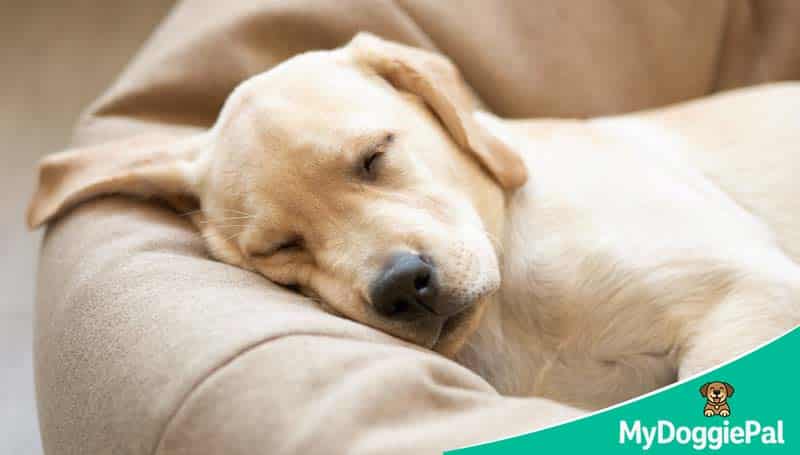
Here’s something that surprises most dog owners: your dog probably sleeps more than half the day. And that’s completely normal.
But “normal” isn’t the same for every dog. A ten-week-old Labrador puppy needs a wildly different amount of sleep than a five-year-old Border Collie or a twelve-year-old Great Dane. Age, breed size, health, and lifestyle all play a part.
So how do you know if your dog is sleeping the right amount? We’ve put together a clear, vet-backed breakdown to help you figure that out.
And if your dog’s sleep is changing in ways that worry you, we’ll point you toward the signs that something might be off
Let’s start with the big picture. For a deep dive into everything about dog sleep, head over to our complete guide to dog sleep.
Quick-Reference Table – Normal Dog Sleep by Age
| Life Stage | Age Range | Sleep Per 24 Hours |
|---|---|---|
| Newborn puppy | 0–4 weeks | 20–22 hours |
| Young puppy | 4–16 weeks | 18–20 hours |
| Adolescent puppy | 4–12 months | 16–18 hours |
| Adult dog | 1–7 years | 12–14 hours |
| Senior dog | 7+ years | 14–18 hours |
One important thing to keep in mind: these numbers include all sleep – overnight rest plus daytime naps. Many owners only count night-time hours and then panic that their dog sleeps all day. In reality, daytime napping is a huge chunk of a dog’s total sleep.
Now let’s dig into what each life stage actually looks like.
Puppy Sleep Needs – Why Puppies Sleep So Much
If you’ve just brought a puppy home and you’re wondering why they sleep constantly, take a breath. That’s exactly what they’re supposed to do.
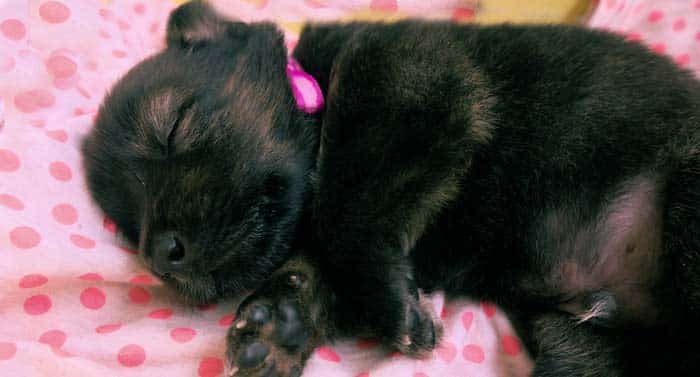
Newborns and Very Young Puppies (0–8 Weeks)
Newborn puppies sleep around 20 to 22 hours a day. The only time they’re really awake is when they’re feeding. That might sound like a lot, but every minute of that sleep is doing critical work.
During sleep, a puppy’s body releases growth hormones that drive physical development. Their brain is also busy forming neural connections. According to research published in the Journal of Veterinary Behavior, sleep in early life is directly linked to healthy neurological development in dogs.
At this stage, puppies sleep in lots of short bursts. This is called polyphasic sleep — many small cycles rather than one long stretch. It’s perfectly normal.
Puppies 8 Weeks to 6 Months
As your puppy grows, their sleep gradually drops to around 18 to 20 hours a day. You’ll start to see longer stretches at night with several naps scattered through the day.
Here’s something fascinating: puppies who nap after a training session actually retain more of what they learned.
Sleep helps consolidate memories.
So if you’re house-training or teaching basic commands, let your puppy rest afterwards. That nap is part of the learning process.
A common concern at this age? “My puppy sleeps all day – is that normal?”
Usually, yes. As long as your puppy is alert, playful, and eating well during their waking hours, all that sleep is doing exactly what it should.
Adolescent Puppies (6–12 Months)
Between six and twelve months, sleep drops to roughly 16 to 18 hours. Your puppy is more active now, more curious, and sometimes more chaotic.
And here’s the frustrating part. An overtired puppy doesn’t just lie down and rest. They get more wired; zooming around, nipping, unable to settle.
Sound familiar?
If your adolescent pup turns into a tiny tornado in the evenings, they probably need more sleep, not less.
An enforced nap schedule can be a lifesaver at this stage. Pop your pup in their crate or a quiet room and let them decompress. You’ll be amazed at the difference it makes.
Want a detailed week-by-week guide? Check out our article on puppy sleep schedules and how much sleep puppies need at every age
Adult Dog Sleep: What’s Normal for a Grown Dog
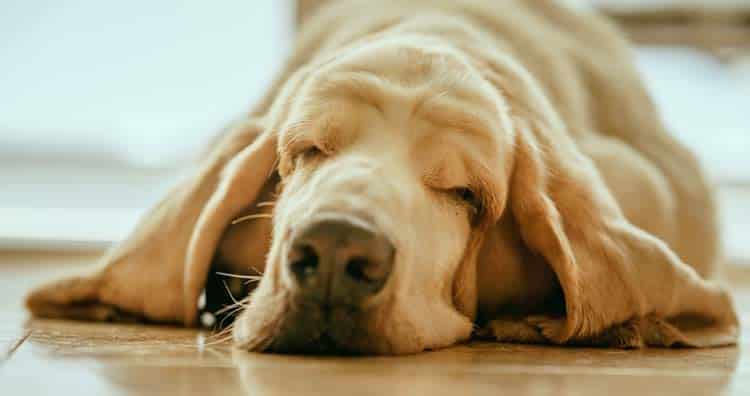
The 12-14 Hour Average and What It Includes
A healthy adult dog typically sleeps between 12 and 14 hours in a 24-hour period. That usually breaks down to about 8 to 9 hours overnight and another 3 to 5 hours of naps and rest during the day.
Dogs don’t sleep the way we do. While most humans aim for one solid block of overnight sleep, dogs are naturally polyphasic sleepers.
They cycle between sleeping and waking multiple times throughout the day and night. This isn’t a sign of a problem. It’s how dogs are wired.
Working dogs, think search-and-rescue dogs, police dogs, and herding dogs on active farms may sleep less during duty hours but tend to compensate with deeper, longer rest when they’re off the clock
Factors That Shift an Adult Dog’s Sleep
Not every adult dog lands at exactly 12 to 14 hours, and that’s fine. Several things push the number up or down:
Activity level. A dog who goes on long hikes or does agility training will need more recovery sleep. That’s healthy. Their body is repairing and rebuilding after exertion.
Environment. Dogs in calm, quiet homes with little going on tend to sleep more not because they’re exhausted, but because there’s nothing else to do. It’s boredom napping, and it’s extremely common.
Season and daylight. Some dogs sleep a bit more during the shorter, darker days of winter. It’s subtle, but real.
Diet and weight. Overweight dogs often seem sluggish and sleep more. If your dog has gained weight and is sleeping more than usual, a vet check is worth it.
Of course, age doesn’t stop at adulthood. As dogs get older, their sleep needs shift again sometimes dramatically.
Senior Dog Sleep: Why Older Dogs Sleep More
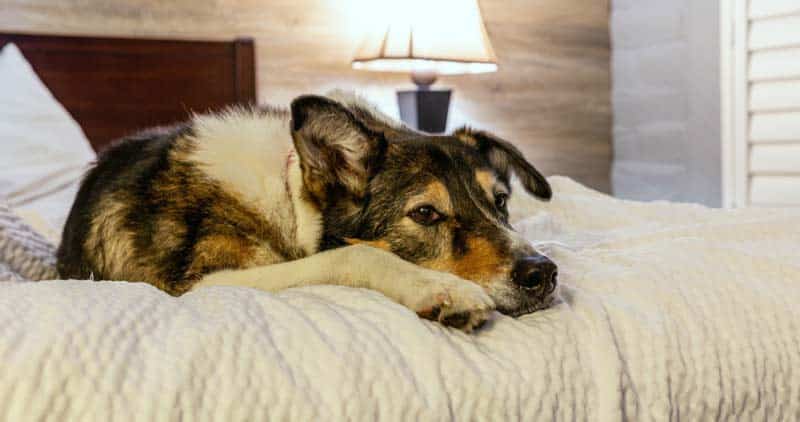
Normal Sleep Increases With Age
Once your dog hits their senior years (typically around age seven, earlier for giant breeds), you’ll probably notice them sleeping more. Somewhere in the range of 14 to 18 hours is common and usually nothing to worry about.
Why the increase?
It’s a combination of things. Older dogs have less stamina. Their joints may be stiffer. Their metabolism slows down. All of this means they tire more easily and need more downtime to recover.
If the change is gradual – a slow drift toward longer naps over months – it’s usually just part of getting older.
When Increased Sleep Is a Red Flag
But what if the change is sudden? That’s different.
A sudden increase in sleep — over days rather than months — can signal pain, hypothyroidism, or cognitive dysfunction syndrome (CDS), which is essentially canine dementia.
One of the hallmark signs of CDS is a disrupted sleep-wake cycle. Your dog might pace restlessly at night but then sleep all day. If you’re seeing that pattern, please talk to your vet.
A good rule of thumb: any noticeable, sudden change in a senior dog’s sleep pattern deserves a vet visit. Better to check and find nothing than to miss something treatable.
For a deeper look at what’s normal and what’s not as your dog ages, read our guide on senior dog sleep changes and when to worry
Sleep Needs by Breed Size: Does Size Matter?
It really does. Your dog’s breed size has a genuine impact on how much they sleep and here’s how it breaks down.
Giant and Large Breeds
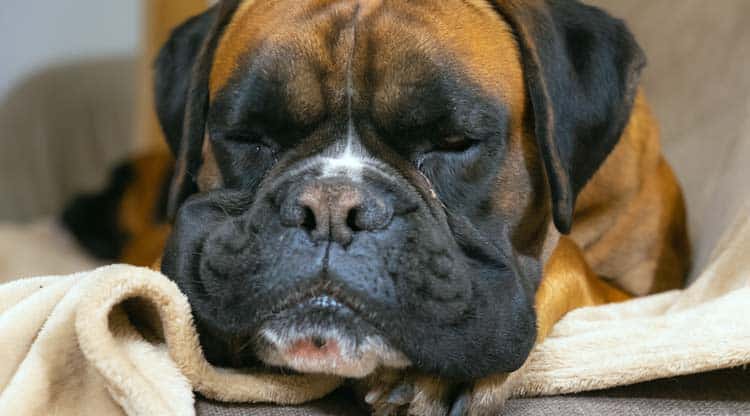
Great Danes, Mastiffs, Saint Bernards, Newfoundlands – these gentle giants are legendary sleepers. Even as healthy adults, they often clock 14 to 16+ hours a day.
It makes sense when you think about it. Supporting a massive body costs a lot of energy. Their hearts, joints, and muscles work harder just to get through a normal day, so they need more recovery time.
That said, there’s an important distinction. Normal breed-typical sleepiness is not the same as lethargy.
Large and giant breeds are prone to conditions like hip dysplasia and heart disease that can also cause excessive tiredness. If your big dog seems dull or uninterested rather than just sleepy, get them checked out.
Medium Breeds
Most medium-sized dogs fall squarely in the 12 to 14 hour standard range. But within this group, there’s a big difference between working and sporting breeds and more laid-back companions.
A Border Collie with daily mental and physical challenges might sleep a clean 12 hours and spend the rest of the day alert and engaged.
That same Border Collie with nothing to do? Might sleep 16 hours – but it’s boredom, not contentment.
Small and Toy Breeds
Chihuahuas, Yorkies, Pomeranians, and other tiny dogs tend to sleep around 14 to 16 hours. Their higher metabolic rate means they burn energy fast and need more frequent rest to recharge.
Small breeds also get cold more easily, which can make them seek out warm, cosy spots and rest more, especially in winter.
And here’s one that catches people off guard: brachycephalic small breeds like Pugs and French Bulldogs often have disrupted sleep quality because of their breathing difficulties.
They may spend more time sleeping but actually get less restorative rest. According to research from the Royal Veterinary College, brachycephalic breeds are at higher risk for sleep-disordered breathing, much like sleep apnoea in humans.
Your dog’s breed gives you a starting point, but it’s only one piece of the puzzle. Health and lifestyle matter just as much, sometimes more.
Health and Lifestyle Factors That Affect Your Dog’s Sleep
Pain and Chronic Illness
A dog in pain often sleeps more. Or at least they appear to rest more — sometimes they’re actually just reluctant to move because it hurts.
Common culprits include arthritis, dental pain, ear infections, and gastrointestinal discomfort. If your dog has started sleeping more and seems stiff, reluctant to jump, or less interested in food, pain could be the reason.
Our Health and Wellness hub covers the conditions that most commonly affect sleep and overall wellbeing.
Medications
Some medications cause drowsiness as a side effect. Antihistamines, anti-anxiety drugs, and certain pain medications can all make your dog sleepier than usual.
Post-surgery and post-vaccination sleepiness is also normal and usually temporary. If you’re worried about how long it’s lasting, your vet can advise.
Mental Stimulation and Boredom
This one is huge and often overlooked.
Dogs who don’t get enough mental stimulation sleep more but it’s not healthy, restorative sleep.
It’s boredom.
They’re switched off because there’s nothing to switch on for.
Dogs who get regular enrichment, puzzle toys, training sessions, and varied walks tend to have much more defined sleep-wake patterns. They’re properly tired at the end of the day rather than just… existing.
Stress and Anxiety
Stress affects sleep in dogs just like it does in people. An anxious dog might sleep less because they’re hypervigilant, constantly scanning for threats. Or they might sleep more as a kind of shutdown response.
Sleep disruption restlessness at night, frequent waking, inability to settle, is one of the earliest signs of separation anxiety and environmental stress.
If your dog’s sleep has changed alongside a move, a new family member, or a change in routine, the two are probably connected.
Whatever the cause, when health or lifestyle factors are affecting your dog’s sleep, it helps to know what too much or too little actually looks like.
When to Worry: Signs Your Dog Is Sleeping Too Much or Too Little
This is the section you’re probably here for.
Because at the end of the day, the real question isn’t “how much should dogs sleep?”
It’s “is my dog sleeping the right amount?”
Signs your dog might be sleeping too much:
A sudden increase in sleep (not a gradual change). Difficulty waking up or seeming groggy. Loss of interest in food, play, or things they usually love.
Sleeping more and showing other symptoms like weight change, limping, or changes in appetite.
Signs your dog might not be sleeping enough:
Restlessness and pacing at night. Frequent waking. Inability to settle even when tired. Increased irritability or hyperactivity during the day.
The most important metric isn’t a number from a chart. It’s change from your dog’s personal baseline. You know your dog. If something feels different, trust that instinct.
And if you’re seeing changes? Call your vet.
Any sudden or significant shift in sleep patterns is worth investigating. We’ve written a full guide on how to tell if your dog is sleeping too much or too little – and when it’s a health warning sign
How to Track Your Dog’s Sleep
If you’re worried, or just curious – tracking your dog’s sleep for a week is the simplest way to get a clear picture.
Keep a simple sleep diary. Note roughly when your dog falls asleep and wakes up, both overnight and during naps. You don’t need to be precise, approximate times are fine. After a week, you’ll have a solid baseline.
Consider a pet activity monitor. Devices like FitBark and PetPace use accelerometers to track rest and movement. They’re handy, but keep in mind that they measure inactivity, not true sleep. They’re a useful guide, not a perfect measure.
What to bring to the vet. If you’re concerned enough to book an appointment, bring your week of sleep notes plus any other behavioural changes you’ve noticed. The more information you give your vet, the faster they can help.
Frequently Asked Questions
Is it normal for my dog to sleep all day?
For puppies and senior dogs, yes. Sleeping most of the day is completely normal. Healthy adults usually spend about half the day sleeping or resting. If your adult dog is sleeping significantly more than that and showing other changes, it’s worth a vet check.
Do dogs sleep more in winter?
Some do. Shorter daylight hours and colder weather can lead to a slight increase in sleep. It’s usually subtle and nothing to worry about unless it’s accompanied by other symptoms.
Why does my dog twitch or paddle their legs in their sleep?
That’s REM sleep – the dreaming stage. Twitching, paddling, soft barking, and eye movement under closed lids are all signs your dog is in a deep, healthy sleep cycle. It’s completely normal and actually a sign of good-quality rest.
Should I wake my dog up from a nap?
Generally, no. “Let sleeping dogs lie” is genuinely good advice. Startling a dog out of deep sleep can cause a disoriented snap or bite, especially in older dogs or dogs with anxiety. If you need to wake them, use a calm voice from a distance rather than touching them.
Do dogs need a set sleep schedule?
Dogs are adaptable, but they do thrive on routine. Consistent walk times, meal times, and bedtime help regulate their internal clock and lead to better-quality sleep. Puppies in particular benefit from a structured nap schedule.
The Bottom Line
There’s no single magic number. How much sleep your dog needs depends on their age, their breed size, their health, and what their daily life looks like.
A newborn puppy and a senior Great Dane might both sleep 18 hours for completely different reasons and both be perfectly healthy.
Use the table above as a starting guide. Then pay attention to your dog. You know them best. If their sleep pattern changes suddenly, don’t wait, talk to your vet.
Your dog’s sleep matters. And the fact that you’re reading this means you’re already doing right by them.