
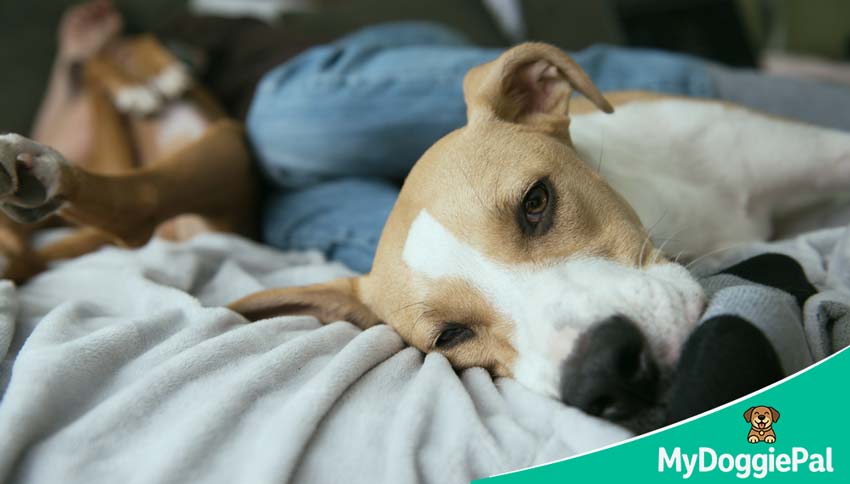
Your new dog won’t sleep, and neither will you. That’s why you’re here.
A new dog won’t sleep because everything familiar has been removed at once: their scent environment, their previous home sounds, and the people or animals they knew. This is a stress response, not a behaviour problem.
For most dogs, sleep improves significantly within 3 to 7 nights. For adult rescues, full normalisation can take 2 to 3 weeks. There is a lot you can do about it starting tonight.
This guide covers both puppies and adult rescues separately, because the causes and the fixes are different. Jump to the section that applies to you.
Why Your New Dog Won’t Sleep: What’s Actually Happening
Everything a dog relies on to feel safe at night has just been removed in one day.
Their familiar scent environment is gone. The sounds of their previous home are gone. The people or animals they knew are not there.
They don’t know the routine or what happens next.
This is not a behavior problem. It is a stress response to genuine uncertainty. Research confirms that cortisol spikes when dogs enter new environments and typically takes several days to normalize.
Rescue organizations use a framework called the 3-3-3 rule to describe what happens:
- 3 days to decompress,
- 3 weeks to begin settling,
- 3 months to feel fully at home. Sleep follows this same arc.
The first 3 days are the hardest. It gets meaningfully better after that.
For puppies, add the loss of their litter on top of all of the above. The whining is communication, not manipulation.
For adult rescues, there may be history you cannot account for. Unknown previous trauma, kennel habits, or simply never having had a quiet indoor night all play a role in dog settling in new home sleep challenges.
How to Help Your New Dog Sleep on the First Night

Night one sets the template.
Here is what to do, in order.
Before Night One Starts: Manage Arrival Day
A big arrival day is the most common first-night saboteur.
Meeting everyone in the family, long explorations, excited children, and car journeys all elevate cortisol. An overstimulated dog arrives at bedtime with their stress hormones still high. Calm arrival day, calmer first night.
Keep introductions brief, keep the house quiet, and save the celebrations for week two.
The Six Things That Make the Biggest Difference
- Put the bed near you, not across the house. Proximity to a human reduces anxiety immediately. Your bedroom or just outside it is better than a separate room on night one. You can gradually move the bed later. For now, closeness matters more than location preference.
- Request a scent item before pickup day. Contact the breeder, rescue, or foster family before collection and ask for a piece of bedding, a towel, or a toy that smells of the previous environment.
This is the single most underused comfort tool available. A familiar scent placed in the new bed can make the difference between a dog that settles and one that cries for hours. Arrange this in advance, not on the day. - Add your own worn clothing. A t-shirt or jumper worn that day, placed in or beside the bed. Your scent signals safety when you are not in direct contact.
- Use white noise or low background sound. A fan, a radio at low volume, or a white noise app creates a consistent audio baseline. Sudden sounds at night, a car outside, a door closing, are more disruptive than ongoing background sound. Consistency is the goal.
- Keep the last hour low-energy. No rough play in the hour before settling. A short calm walk is fine. Adrenaline and cortisol need time to come down before sleep is possible.
- Settle once, then stay out. Each return when they cry resets their anxiety cycle. It teaches them that distress brings you back, rather than that the situation is safe. Settle them calmly once, then leave unless they genuinely need the toilet.
QUICK TIP
The scent item from the previous home should ideally be unwashed. Washing it removes the familiar scent entirely. Ask for it to come straight from the sleeping area, not the laundry.
Puppy or Adult Rescue? The Approach Is Different
The tools for settling a new puppy and an adult rescue overlap in some areas and differ significantly in others. Find your situation in the table, then read the relevant section below.
| New Puppy | Adult Rescue | |
|---|---|---|
| Main cause of waking | Separation from litter, small bladder | Kennel adjustment, anxiety, unknown history |
| Most effective comfort tool | Warm water bottle, heartbeat toy, litter scent | Bedding from foster or kennel, quiet routine |
| Crate recommended? | Yes, covered crate works well | Yes, but introduce gradually, never force |
| Proximity to owner | Same room strongly recommended | Same room or adjacent, adjust gradually |
| Expected timeline | 3 to 7 nights for most puppies | 3 days to 3 weeks depending on history |
New Puppy Crying at Night: Why It Happens and What Helps

A new puppy crying at night has just left the only warmth, sound, and scent it has ever known. It is not being dramatic. It is communicating genuine distress at being alone for the first time in its life.
The Blue Cross recommends keeping the crate or bed next to you and expecting some whining for the first few nights as completely normal. Most puppies stop crying at night within one to two weeks with consistent management.
- Warm water bottle under a blanket. Simulates the body warmth of littermates. Use a covered bottle to avoid burns. This single addition often reduces new puppy crying at night significantly on the first night.
- Heartbeat toy or ticking clock. Simulates the sounds of a litter. Heartbeat plush toys are specifically designed for this purpose and work well for many puppies.
- Covered crate. Creates an enclosed den feeling. Many puppies settle faster in a covered crate than in an open space. The darkness and enclosure trigger a natural calming instinct.
- Your worn clothing in the crate. Your scent reduces the cortisol response. Something worn that day placed in the bed works as a proxy for your presence.
- Sleep in the same room as the crate. This is not co-sleeping and does not create bad habits. It simply reduces the cortisol spike that comes from full isolation. Once they are settled over several nights, you can begin gradually moving the crate toward the door.
→ Got a puppy? See our full puppy sleep schedule guide for building a routine that lasts
Rescue Dog Sleep Problems: Why Adult Dogs Struggle Too
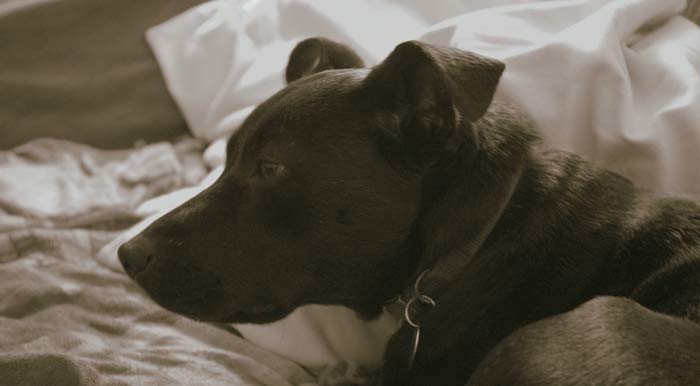
Adult rescues are consistently underserved in first-night guides. People assume adults adapt faster than puppies. They do not. An adult rescue facing a new home carries every bit as much uncertainty as a puppy, and sometimes considerably more.
What Is Different About Adult Rescues
- They may have unknown history: previous abuse, abandonment, or neglect you have no way to account for
- Some have never slept indoors, or not for a long time
- Their expectations of what nighttime means may be completely different from yours
- An adopted dog not sleeping is not a damaged dog. It is a dog processing an enormous amount of change
The Kennel Noise Problem Nobody Talks About
This is one of the most common rescue dog sleep problems and almost not properly and directly addressed.
Kennels are loud. Almost constantly, day and night. A dog that has spent weeks or months in that environment has calibrated its nervous system to background noise as its baseline.
The sudden quiet of a domestic home does not feel peaceful. It feels unfamiliar, and therefore potentially unsafe.
This is why many rescues actually settle better with a radio or TV on low in the background during the first few nights.
Silence is not always calming for a dog coming from a noisy kennel environment. White noise or soft music bridges that gap while the dog adjusts to domestic quiet gradually.
What Helps Adult Rescues Specifically
- Don’t force the sleep spot on night one. Let them sniff and explore the space. Drop a treat near the bed without asking them to get in. Build a positive association first before expecting them to use it.
- Arrange scent from the foster home before pickup. Same principle as for puppies. Ask for bedding or a toy before collection day. A familiar scent in the new bed is the most effective comfort item available.
- Keep the first few nights quiet. No visitors, no children’s introductions, no other pets running in overnight until the dog has established that this new home is safe.
- Low background sound during the first few nights. A radio at low volume or a white noise machine addresses the kennel noise withdrawal most rescues experience.
- Let them choose proximity, within reason. An anxious rescue sleeping near you is showing healthy attachment behavior, not a bad habit forming. That can be adjusted gradually once they are settled.
For more on managing anxiety in a newly adopted dog, see our guide on new home anxiety in dogs.
Dog Settling in New Home Sleep: What the First Week Looks Like
One of the most searched questions around this topic is also one of the least answered:
Why does the dog sleep fine on night one and then get worse from night two onwards?
The answer is predictable.
Night one often runs on exhaustion from the journey, arrival day, and novelty. The dog is somewhat numb from stimulation.
By night two, that novelty has worn off. Cortisol has settled to a new baseline. The dog is now actively aware that the old world is gone and the new one is unfamiliar.
Nights two and three are frequently the hardest nights of the whole first week. Knowing this in advance keeps you consistent rather than abandoning an approach that was actually working.
Dog Settling in New Home Sleep
| Night | What to Expect |
| Night 1 | Exhaustion often helps. Many dogs sleep better on night one than night two |
| Night 2–3 | Often harder. Cortisol has normalised and the reality of the new environment sets in |
| Night 4–5 | Usually some improvement. May still wake but settles more readily |
| Night 6–7 | Most dogs beginning to establish a pattern. Noticeably better for the majority |
For most adult rescues with unknown histories, full sleep normalization takes closer to 2 to 3 weeks than 7 days. An adopted dog not sleeping solidly at day seven is not a problem. They may simply need a longer runway.
The 3-3-3 framework used by rescue organizations describes this well: 3 days to decompress, 3 weeks to settle into routine, 3 months to feel fully at home. Sleep follows the same arc.
Settling Tips That Work Every Night of the First Week
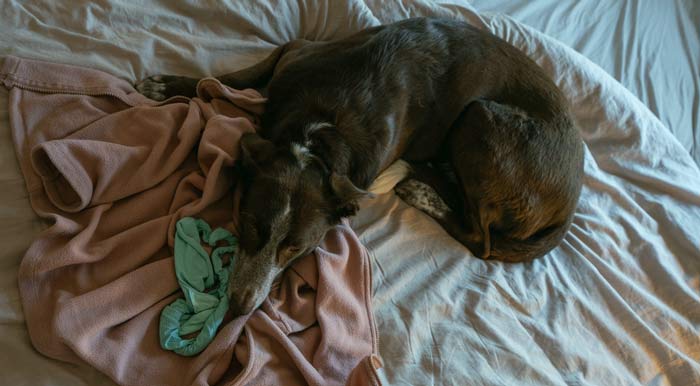
- Keep the sleep location consistent from day one. Moving the bed mid-week disrupts their orientation. Pick the spot and commit to it even if the first two nights are rough.
- White noise works for adult dogs, not just puppies. A consistent background sound masks unpredictable noises that trigger alertness. For rescues coming from noisy kennels, it bridges the silence gap while they adjust.
- The last hour before bed matters every night. Low energy, low stimulation. No rough play. Coming down from the day is as important as anything you do in the sleep space itself.
- Settle once, calmly, then leave. If they wake, calm them once and go. Don’t make waking exciting or alarming in either direction. The goal is a boring, predictable, safe night.
- Scent is your most underused tool. Your worn clothing in the bed every night. A pheromone spray applied to the bedding before lights out. Both reduce baseline anxiety without any training required.
→ For a full guide to setting up the best possible sleep space, see our dog sleep environment guide
WHAT NOT TO DO
Do not make arrival day a big event. Meeting everyone, long explorations, and excited greetings elevate cortisol and make the first night harder.
Do not keep going back in when they cry. Every return teaches them that distress brings you. Settle once and leave unless they need the toilet.
Do not move the bed mid-week. If the first spot is not working after two nights, resist relocating. Consistency matters more than finding the perfect location.
Do not punish crying or barking. Yelling back engages them and makes vocalisation worse. No response is better than a negative one.
Do not exhaust them on arrival day to make them tired. An overstimulated dog is harder to settle, not easier. The cortisol from a big day outlasts the tiredness.
When to Seek Help Beyond the First Week
Most first-week sleep problems resolve with time and consistency. But some signs mean you need a vet or behaviourist rather than more patience.
- Not eating alongside not sleeping after three or more consecutive days
- Panting, trembling, or pacing through the entire night with no improvement across the first week
- Physical distress signs: refusing water, extreme hiding, or inability to make eye contact
- Aggression around the sleep space
These are uncommon in otherwise healthy dogs. But if you are seeing them, contact your vet rather than waiting it out.
→ If anxiety is persisting beyond the first week, our guide on dog sleep and anxiety covers the longer-term approaches that help
The Bottom Line
A new dog won’t sleep because they have lost everything familiar in a single day. Night two being harder than night one is normal and predictable. Stay consistent, use scent, keep background sound low, and give it time.
The unsettledness is not a broken dog. It is a dog that had something worth missing.
For everything about dog sleep in one place, visit our complete guide to dog sleep.