
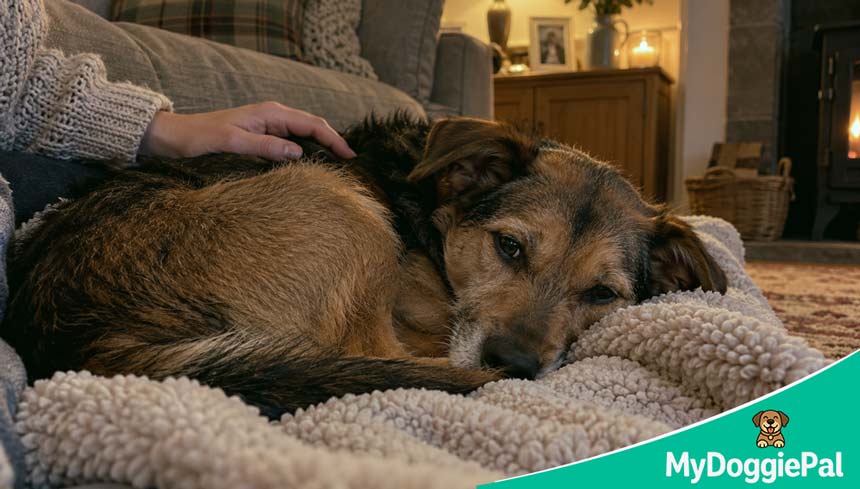
Rescue dog sleep problems are normal, and they almost always pass. If your adopted dog can’t sleep, you haven’t failed. They’re still learning they’re safe.
This guide covers why it happens, what’s normal week by week, bad dreams and gentle fixes that work. It’s all backed by shelter research and some welfare advice, so you can help your dog rest easier tonight.
Rescue dog sleep problems are very common after adoption. Most rescue dogs arrive tired and stressed, so the first nights are often the hardest. Expect light sleep, pacing or long daytime naps. A calm, predictable routine helps most dogs settle within days to weeks.
Let’s start with why sleep is so hard for them right now.
Why Rescue Dogs Struggle to Sleep

Your dog isn’t being difficult. Their body and brain are dealing with a huge change, and sleep is often the first thing to suffer.
Your Dog May Arrive Already Sleep-Deprived
Shelters do amazing work, but they’re loud, busy places. Dogs bark through the night, kennels are cleaned early, lights stay bright and new faces walk past all day. Even a calm dog finds it hard to rest properly.
The research backs this up. A study at Battersea and the University of Lincoln found shelter dogs slept for only about 3% of the daytime. Researchers at Arizona State University found that dogs in homes sleep around 14 hours a day, while shelter dogs manage just under 11.
Nights are tough too. A Utrecht University study tracked shelter dogs with night cameras and activity collars. They rested far less than pet dogs, especially on their first two nights, and they were still behind after 12 days.
So what does that mean for you? Your dog may come home carrying a big sleep debt. Some dogs can’t switch off at first and pace on night one. Others crash out for days once they finally feel safe. Both are part of normal shelter dog sleep adjustment.
Hypervigilance: When Your Dog Can’t Switch Off
Hypervigilance means your dog’s brain is stuck “on guard”. Deep sleep doesn’t feel safe yet, so you might see:
- Head lifting at every small sound
- Sleeping facing the door
- Jolting awake, then pacing
- Only short naps, never long stretches
A classic example is the dog who only dozes while you’re in the room, then leaps up the moment you move.
Interesting fact: Utrecht researchers found smaller dogs were more restless and stressed on their first nights than bigger dogs.
Past Experiences and Trauma
Some rescues have known neglect, street life or several homes. Many have no history at all. Traumatised dog sleep can look like extra jumpiness, hiding or bad dreams.
My view?
Don’t assume the worst story. Just treat every rescue gently, whatever their past. If you’d like to dig deeper, understand how fear and trauma affect your dog
A Hidden Cause: Kennel Cough
Here’s one that’s often missed. Stress can lower a dog’s immunity, and kennel cough often shows up in the first week or two after leaving a shelter. Watch for:
- A dry, honking cough, often worse at night or after excitement
- Gagging or retching
- A runny nose or sneezing
Coughing can easily keep a dog awake. The PDSA explains how kennel cough spreads and when to see a vet. Call your vet if you’re worried, especially if your dog is off their food or very tired.
But what if your rescue isn’t restless at all and just won’t wake up?
Sleeping Too Much or Too Little? Both Can Be Normal

Newly adopted dog sleep issues tend to show up in two very different ways. Some dogs barely sleep. Others barely wake up. Plenty swing between the two.
When Your Rescue Dog Barely Sleeps
A dog who paces, whines or wakes at every creak is usually stressed rather than ill. The home is new, the smells are new and they don’t know your routine yet.
Their brain is still scanning for danger, so it won’t let them drop into deep sleep.
This usually eases within days to a few weeks, as each calm night teaches your dog that nothing bad happens here. It’s worth getting help if there’s no change after six to eight weeks, or if your dog seems to panic rather than just fidget.
When Your Rescue Dog Sleeps All Day
Long naps can look worrying, but they’re often a good sign. Your dog may finally feel safe enough to catch up on the rest they missed in kennels.
Most settle into a more normal pattern within one to three weeks.
Do check with your vet, though, if your dog is off their food, seems sluggish even when awake or starts coughing. Heavy sleep plus those signs can point to illness rather than recovery.
Sleeping All Day and Pacing All Night
Lots of rescues do both. They doze through the day, then come alive when the house goes quiet. A bit more gentle activity in daylight, like sniffy walks and short play sessions, usually helps reset their body clock.
Don’t try to stop the daytime naps altogether, though. In the Battersea study, dogs who rested more during the day seemed calmer and more positive. Daytime rest is part of healing, not a problem to fix.
So how long does this unsettled stage last?
The 3-3-3 Rule: Your Rescue Dog’s Sleep Timeline

The 3-3-3 rule is a simple guide used by rescues. It says dogs need about 3 days to decompress, 3 weeks to learn your routine and 3 months to feel at home.
It’s a guide, though, not a deadline. Here’s what it often means for sleep:
| Stage | What sleep often looks like | How you can help |
|---|---|---|
| First 3 days | Little sleep, pacing and hiding, or crashing out from exhaustion | Quiet space, no visitors, no pressure |
| First 3 weeks | Longer naps, but still wakes easily | Same routine every single night |
| Weeks 3 to 8 |
The honeymoon dip: sleep may get worse as true worries surface |
Stay consistent and don't panic |
| By 3 months | Deeper sleep, stretching out, visible dreams | Keep the routine, start small changes |
That honeymoon dip catches so many people out. Your dog seemed fine, then suddenly they’re restless again. This is normal. It often means they feel safe enough to show you how they really feel.
I’ll never forget the night our rescue first slept belly-up, about ten weeks in. I nearly cried. And the science backs up that hope. A 2026 Virginia Tech study found that a week in a home lowered shelter dogs’ stress hormones and helped them rest more. Your home really does heal.
Tip: for the first week, jot down bedtime, wake-ups and anything that seemed to set your dog off. On a bad night, those notes show you how far you’ve both come.
Some of the most worrying moments, though, happen during sleep itself.
Rescue Dog Nightmares: What’s Normal and What to Do
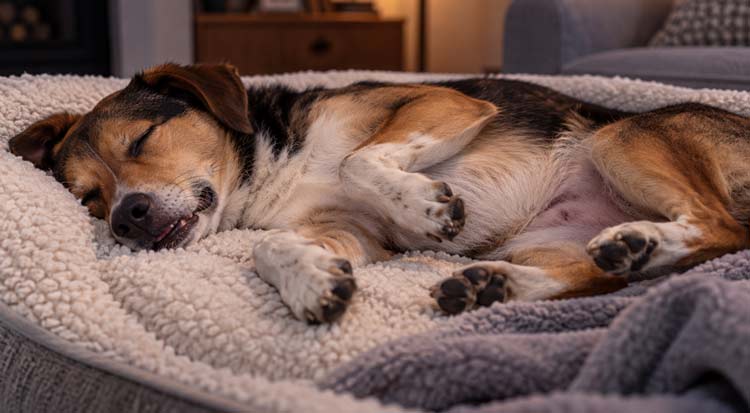
Watching your dog cry in their sleep is heartbreaking. But not every twitch is a nightmare.
Normal Dreaming vs a Bad Dream
| Normal dreaming | Possible bad dream |
|---|---|
| Soft twitches and paddling paws | Stiff, frantic movements |
| Quiet woofs or murmurs | Crying, howling or growling |
| Relaxed face | Lips pulled back, heavy panting |
| Settles back down quickly | Wakes confused, shaken or clingy |
Stress really does change dream sleep. Researchers in Hungary found that dogs who had a stressful day spent about 20 more minutes in REM sleep – the dreaming stage, and woke up more quickly.
So rescue dog nightmares may be more common in the early weeks, then fade as life calms down.
Should You Wake Them?
Yes, you can wake them and this is how to wake your dog safely:
- Don’t touch or shake them. A startled dog can snap before they’re fully awake.
- Say their name softly from a short distance.
- Wait for them to wake and look around.
- Let them come to you, then offer calm comfort.
And please don’t worry about “rewarding fear”. You can’t spoil a frightened dog with kindness. Just make sure children know never to wake a sleeping rescue dog by touching them.
So how do you help them sleep well in the first place?
Gentle, Trauma-Informed Settling Techniques
Build a Safe Den
Every scared dog needs a place to hide. Try a crate with the door left open, or a bed in a quiet corner, covered on three sides with a blanket. Keep it near you for the first week or two. Let your dog choose it, never push them in.
Keep the First Nights Boring
No visitors, no big days out and no busy pub trips. Just short sniffy walks and meals at the same times each day. I know you want to show them the world. It can wait. Boring feels safe.
The National Animal Welfare Trust has a lovely guide to helping a rescue dog feel safe at home that follows the same calm approach.
A Rescue-Friendly Bedtime Routine
- A gentle sniffy walk, because sniffing helps dogs unwind
- A last toilet break
- A lick mat or chew for calm focus
- Lights down and a soft voice
- The same bedtime cue, like “night night”, every evening
Why “Just Ignore the Crying” Isn’t Always Right
You’ll often read that you should ignore a crying dog. For a frightened rescue, though, being left alone to cry can deepen their fear. Instead, sit or sleep nearby at first, then move a little further away every few nights.
For a full first-week plan, get our settling tips for a new dog who won’t sleep
How Your Dog’s Past Shapes Their Sleep
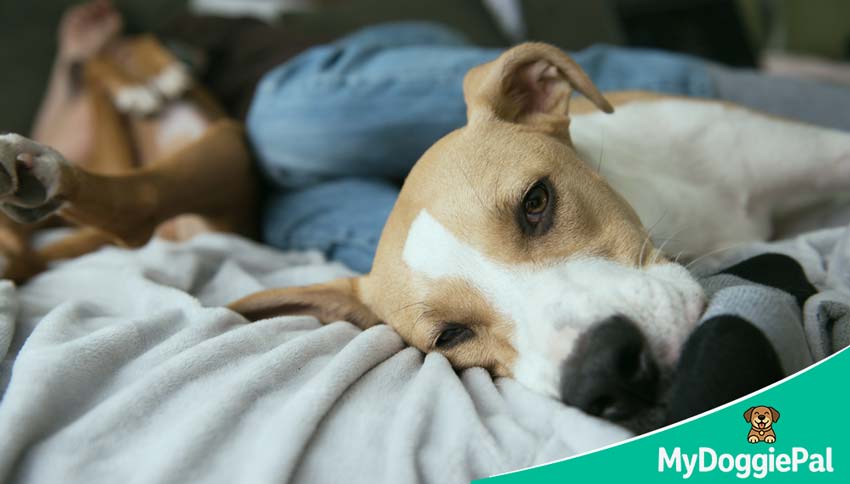
Street and overseas rescues may never have lived indoors before. Humming fridges, closing doors and the TV can all feel strange, and being shut in a room may feel like a trap. Leaving the door open, using soft white noise and placing their bed where they can see out often helps them relax.
Dogs who spent a long time in kennels sometimes find a quiet house unsettling. Silence is unfamiliar, and they may wake at the times staff used to arrive. A quiet radio and a very steady routine help them adjust.
Ex-breeding dogs often haven’t had their own bed or much gentle handling. Let them choose their sleeping spot, and never reach in to move them.
Rehomed family pets can be grieving the people they’ve lost. Keeping their old blanket and simply being nearby can make a real difference.
Past a mystery? Start with the basics and watch closely. Your dog will show you what they need.
Comfort Tools Worth Trying
- A worn T-shirt with your scent, tucked into their bed, builds a link with you. It’s great for clingy or anxious dogs.
- White noise or a calm radio masks sudden sounds, which helps dogs used to noisy shelters.
- A lick mat or long-lasting chew before bed works because licking and chewing are natural ways for dogs to calm down.
- A pheromone diffuser may ease mild stress for some dogs, though results vary.
- A heartbeat snuggle toy offers warmth and a steady rhythm for lonely or young dogs.
Start with the free options first. And please don’t give melatonin or any other sleep aid without talking to your vet.
If your dog seems truly anxious at bedtime, here’s a guide for calming solutions for dog sleep anxiety that actually work
If you are adopting near Bonfire Night or New Year, close the curtains early, turn on white noise and keep the den ready before the fireworks start.
Still stuck on one specific problem? Here’s a quick fix list.
Common Rescue Dog Sleep Problems and Quick Fixes
When your adopted dog can’t sleep, match the problem to the fix:
| Problem | Likely reason | Try this |
|---|---|---|
| Pacing at night | Can't switch off, needs the toilet | Late toilet trip, sniffy evening walk, smaller room |
| Whining or crying | Lonely and unsure | Sleep nearby for the first week, add a scent item |
| Waking at every sound | Hypervigilance | White noise, bed away from doors and windows |
| Won't use the bed | It doesn't feel safe yet | Let them pick a spot, then move the bed there |
| Hiding to sleep | Needs a den | Covered crate or a bed tucked in a corner |
| Coughing at night | Possible kennel cough | Call your vet |
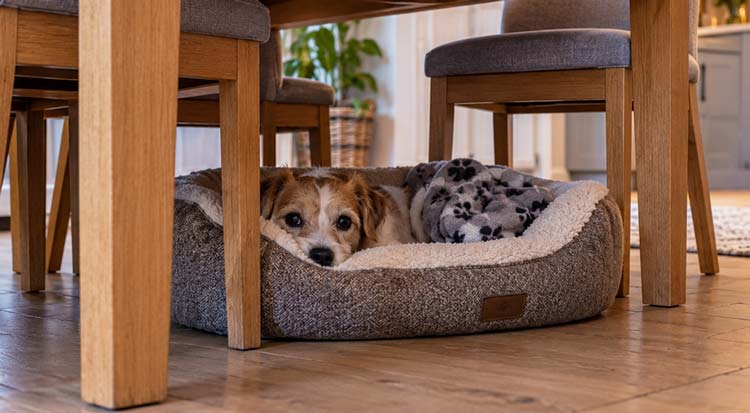
One rescue I know would only sleep under the dining table. So her owner moved the bed there for a month. Once she felt safe, she happily followed it back to the living room.
Most of these problems fade with time. But some signs mean it’s time for help.
When to Get Help
First, some reassurance. In an Italian study of 300 people returning adopted dogs, not one gave their dog back because it didn’t sleep at night. Rescue dog sleep problems are fixable, and they’re never a sign you’ve failed.
See your vet if your dog has:
- A cough, sneezing or runny nose
- No interest in food
- Vomiting or diarrhoea
- Pain when lying down or getting up
- Sudden heavy tiredness
Find a behaviourist if:
- Sleep hasn’t improved after 6 to 8 weeks
- Your dog panics, hurts themselves or destroys the crate
- They growl or snap when woken
The RSPCA recommends finding an ABTC-registered behaviourist, ideally through your vet. Asking for help isn’t giving up. It’s one of the kindest things you can do for your dog.
Rescue Dog Sleep FAQs
How long does it take a rescue dog to sleep through the night?
Many settle within three days to three weeks. Some need a few months, especially if they had a long shelter stay.
Should my rescue dog sleep in my bedroom?
Sleeping close to you often helps in the first weeks. Long term, it’s your choice.
Should I crate a newly adopted dog at night?
Only if they feel safe in it. Start with the door open and never force them inside.
Final Thoughts
Rescue dog sleep problems feel endless at 2am, but they’re usually temporary. Keep life calm, offer comfort without forcing and trust the 3-3-3 timeline. One night, you’ll find your dog stretched out belly-up and snoring. What small change will you try tonight?
For more help, explore our complete guide to dog sleep