
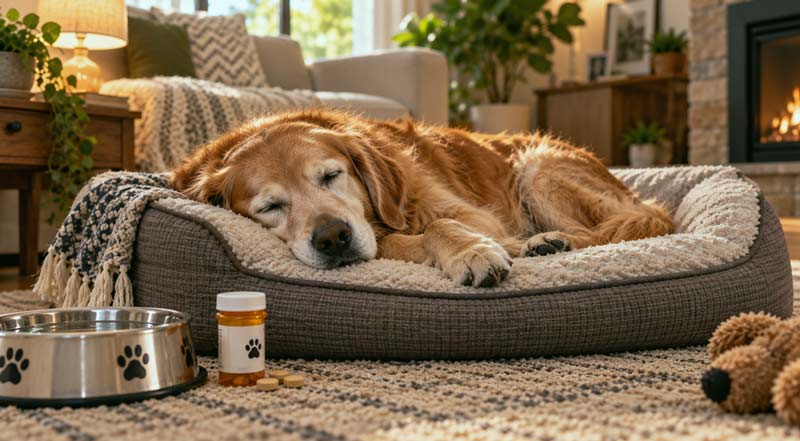
Dog medication affecting sleep is common, usually temporary and often nothing to worry about. Some medicines make dogs drowsy. Others keep them up at night.
This guide explains which medicines do what, what’s normal, how to help your dog rest and when to call your vet. It’s based on veterinary sources, so you can have a clearer, calmer chat with your vet.
Many medicines change how dogs sleep. Some cause drowsiness, while others cause thirst, panting or night toilet trips that break up sleep. Mild sleepiness is often normal and eases as your dog adjusts. Call your vet if your dog is hard to wake, very wobbly or unwell.
Why Medication Can Change Your Dog’s Sleep
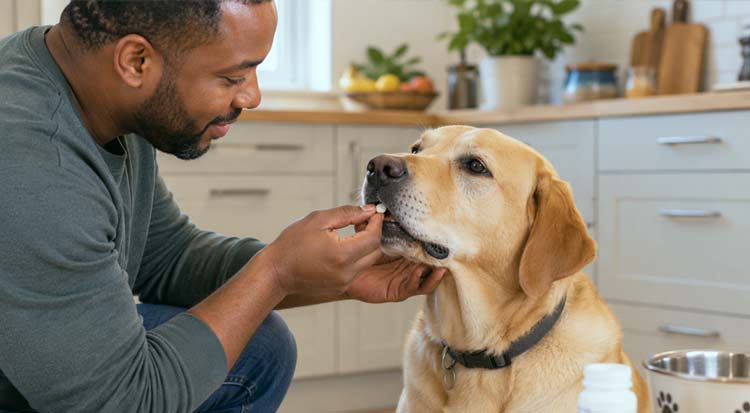
Medicines affect sleep in three main ways. Knowing which one you’re seeing makes it easier to judge whether something is wrong.
Some Medicines Cause Drowsiness
Certain medicines slow down the brain and nervous system. Some seizure medicines, some painkillers and calming medicines all work partly this way. Your dog may nap more or be slow to get up. These are classic dog sedation side effects, and they’re often strongest in the first days of treatment or after a dose change.
Some Cause Side Effects That Break Up Sleep
Other medicines don’t make dogs sleepy at all. Instead, they cause thirst, extra toilet trips, panting or hunger. Your dog wants to sleep but keeps getting woken by their own body. That’s why a dog on steroids can seem exhausted in the day and restless at night.
Many Help Your Dog Sleep Better
Now for the good news. When a medicine eases pain or itching, sleep often improves. A dog with sore joints or itchy skin may finally rest properly for the first time in months. So extra sleep isn’t always a side effect. Sometimes it’s a sign the treatment is working.
Either way, tell your vet what you’ve noticed and when it started.
So which medicines do what?
Common Medications and Their Sleep Side Effects
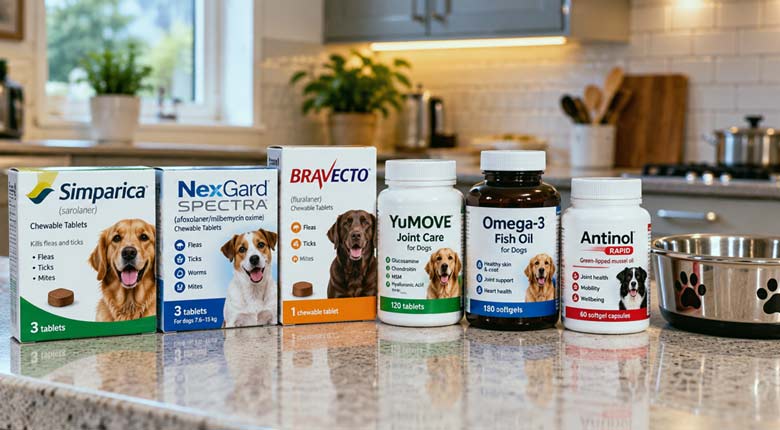
Steroids (Prednisolone)
Steroids like prednisolone treat allergies, inflammation and some immune conditions. They’re very useful, but well known for affecting nights.
The most common effects are thirst, more wees, panting and a big appetite. FirstVet notes that some dogs become more active on prednisolone while others become quieter and more tired. So steroids and dog sleep problems can go either way.
Steroids can affect mood too. In a 2015 study by Notari, Burman and Mills, owners of 44 dogs on corticosteroids reported them as more nervous or restless, more easily startled and less playful than 54 dogs on other medicines. If your dog seems on edge at night, the medicine may be part of the reason.
When our dog was on steroids, she needed a wee at 3am every night. A later last walk and a morning dose, agreed with our vet, calmed things within days.
Never stop steroids suddenly. Your vet will reduce the dose gradually, because stopping too fast can make your dog unwell.
Anti-Seizure Medicines
Medicines for epilepsy often cause sleepiness, especially at the start. The MSD Veterinary Manual lists sedation as a side effect of phenobarbital, potassium bromide, gabapentin and zonisamide. Levetiracetam tends to cause less sleepiness at normal doses.
Many dogs seem drowsy or a little wobbly for the first week or two, then improve as their body adjusts. Phenobarbital and bromide can also make dogs thirsty, which means more night toilet trips.
Never skip or stop anti-seizure medicine on your own. Missed doses can trigger seizures. If sleepiness worries you, your vet can adjust the plan safely.
Pain Relief
Not all painkillers affect sleep in the same way. Anti-inflammatories like meloxicam (Metacam) and carprofen don’t usually cause drowsiness. Gabapentin and opioid painkillers, on the other hand, often make dogs sleepy and unsteady.
The link between dog pain medication and sleep is mostly good news, though. In a study of 60 dogs with arthritis, owners rated their dogs’ sleep as clearly better on meloxicam than on a dummy tablet.
Collar monitors didn’t spot a clear change at first, but a later, more detailed analysis of the activity data found that pain relief did improve sleep. Owners noticed it before the data caught up.
Recovering from an operation? The anesthetic and painkillers can both affect rest, so learn how to help your dog sleep after surgery
Antihistamines and Itch Medicines
Some antihistamines can make dogs drowsy, while others cause very little sleepiness. Prescription itch medicines don’t usually sedate. Less scratching often means fewer wake-ups for your dog, and for you.
Many owners look up antihistamine dog sleep tips hoping for a sleeping aid. Please don’t use them that way. We explain why below.
Calming Medicines
Trazodone and gabapentin are often prescribed because they’re calming, for example before a vet visit or during fireworks season. The AKC lists sedation as a common side effect of trazodone. Here, drowsiness is usually the goal rather than a problem.
Here’s a quick reference to keep handy:
| Medicine type | Examples | Common sleep effect |
|---|---|---|
| Steroids | Prednisolone | Thirst, night wees, panting, restlessness or tiredness |
| Anti-seizure | Phenobarbital, potassium bromide | Sleepiness, especially early on |
| Pain relief | Gabapentin, opioids | Sleepiness, wobbliness |
| Pain relief | Meloxicam, carprofen | Usually better sleep as pain eases |
| Antihistamines | Varies | Mild drowsiness in some dogs |
| Calming medicines | Trazodone | Drowsiness, often intended |
| Water tablets | Furosemide | More night toilet trips |
Is Your Dog Sleeping Too Much on Medication?

If your dog is sleeping too much on medication, take a breath. Some extra sleep is common, and it often eases within the first week or two as your dog adjusts.
A Simple Way to Judge What’s Normal
Watch how your dog is when they’re awake, not just how long they sleep. A dog who wakes easily, knows you, eats, drinks, walks normally and still enjoys a fuss is usually adjusting well.
Be more cautious if your dog is hard to wake, seems confused, is very wobbly or loses interest in food. That isn’t normal drowsiness, and it needs a call to your vet.
Tip: for the first two weeks, jot down sleep, drinking and toilet trips. It gives your vet real information to fine-tune the dose.
Dogs Who Feel It More
Older dogs often process medicines more slowly, so effects can be stronger or last longer. Dogs on more than one medicine can feel a combined effect too. Make sure your vet knows everything your dog takes, including supplements.
Not sure how much sleep is normal for your dog in the first place? Find out when too much or too little sleep is a warning sign.
Next, here’s exactly when to pick up the phone.
When to Contact Your Vet
CALL YOUR VET STRAIGHT AWAY IF YOUR DOG:
- Is very hard to wake or can’t stand
- Is collapsing or stumbling badly
- Has slow or difficult breathing
- Has a seizure
- Has pale or yellow gums
- Is vomiting repeatedly
Call within a day or two if:
- Drowsiness isn’t easing after a week or two
- Appetite or thirst has changed a lot
- There are new night-time accidents
- Your dog seems newly restless or confused
Whatever you notice, never stop or change a dose yourself. Ring your vet first.
In the UK, you can also report a suspected side effect to the Veterinary Medicines Directorate (VMD). Your vet can do it, or you can report it yourself online. It helps keep medicines safer for every dog.
In the meantime, there’s plenty you can do at home.
How to Help Your Dog Sleep Well While on Medication
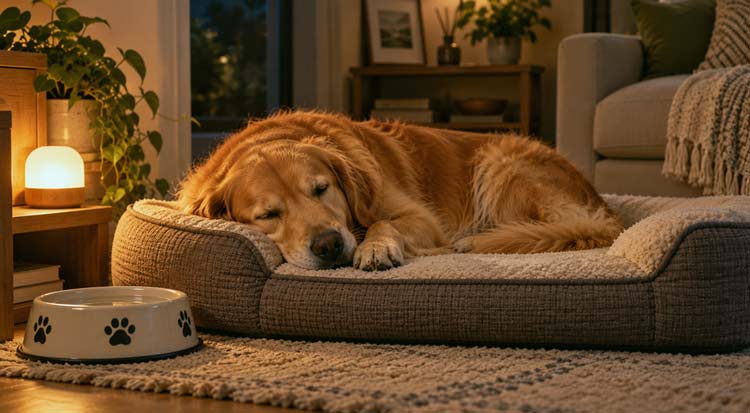
Ask About Dose Timing
Giving steroids in the morning, for example, can mean fewer night wees. Never change timing without your vet’s okay, though, especially with seizure medicines that need steady levels.
Plan for Thirst and Toilet Trips
If your dog’s medicine makes them thirsty, never restrict water. Instead, offer a later last walk and be ready for a night-time trip outside. A washable mat near the door can take the stress out of accidents. Please don’t tell your dog off. They genuinely can’t help it.
Make Their Space Safe
A drowsy or wobbly dog is more likely to slip or fall. A few simple changes help:
- A low bed that’s easy to step on and off
- A sleeping spot on the ground floor
- A baby gate across the stairs
- Rugs or runners on slippery floors
- Water within easy reach of the bed
Finally, keep walks, meals and bedtime at the same times each day, because routine helps the body adjust.
One last point, and it’s an important one.
Never Give Human Medicines to Help Your Dog Sleep
When your dog is restless and you’re exhausted, reaching into your own cupboard can feel tempting. I understand that. But it can be dangerous:
- Some human allergy tablets contain xylitol, which is toxic to dogs. PetMD warns that some Zyrtec formulations contain xylitol.
- Combination cold and allergy products may contain decongestants like pseudoephedrine, which can be dangerous for dogs.
- Human painkillers such as ibuprofen can cause serious harm.
- Melatonin and herbal sleep aids should only be given if your vet recommends them.
A quick call to your vet is always safer.
Dog Sleep and Medication FAQs
Does Apoquel make dogs sleepy?
It isn’t usually sedating. In trials, lethargy was reported in about 2% of dogs, close to the rate seen with a dummy tablet. Many dogs sleep better simply because they itch less.
Does Metacam make dogs sleepy?
Metacam (meloxicam) doesn’t usually cause drowsiness. If your dog sleeps more, it’s often because their pain has eased. Call your vet if they go off their food, vomit or have diarrhea.
Will my dog’s sleep go back to normal when the medicine stops?
Usually, yes, as the medicine leaves their system. Always follow your vet’s plan for stopping, especially with steroids.
Final Thoughts
Dog medication affecting sleep is common, and mild sleepiness often settles as your dog adjusts. Watch how your dog is when they’re awake, know the red flags and never change a dose without your vet.
Have you noticed a change since your dog started their medicine?
For more help, explore our complete guide to dog sleep