
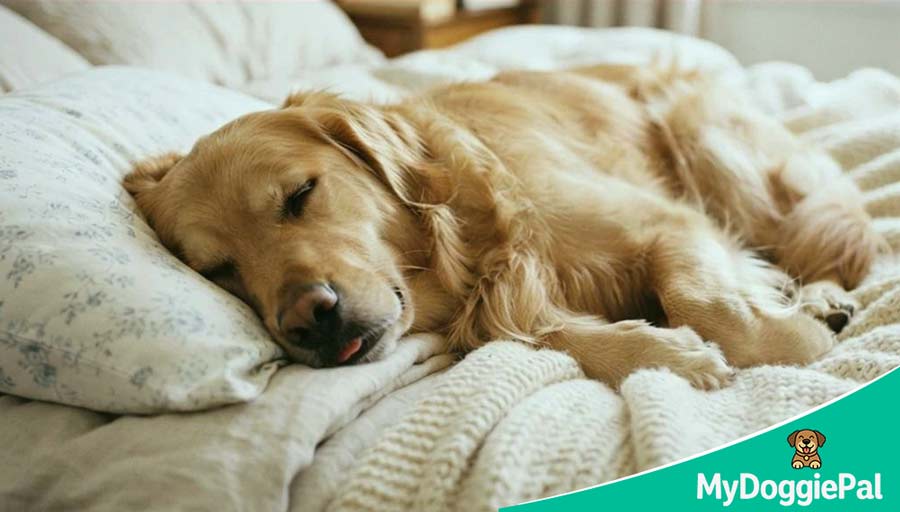
Most dog snoring is completely normal. It is the sound of relaxed throat tissue vibrating as air passes through during sleep, and it means your dog is resting well.
This guide covers what causes it, which breeds snore most, what to make of sudden new snoring, and the specific signs that actually need a vet call.
It also covers two things no other article gives you: how to tell the difference between two distinct airway sounds, and exactly what to record before you call the vet.
Is Dog Snoring Normal?
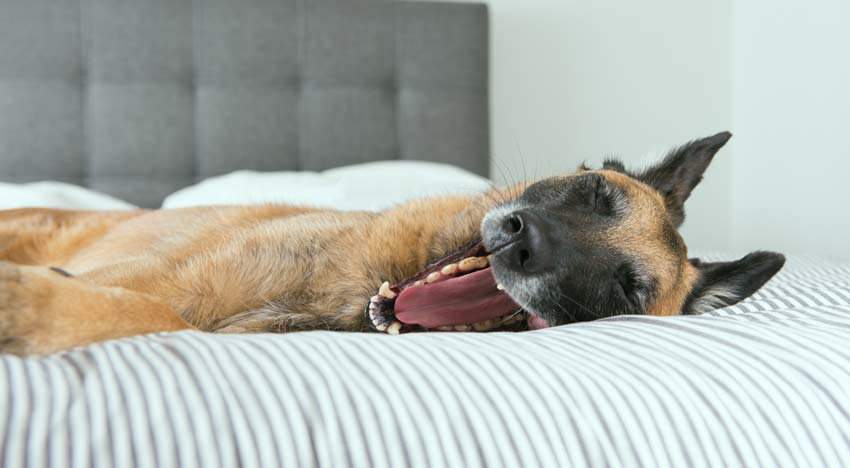
Yes, most of the time.
Dog snoring is the sound produced when air passes over relaxed tissues in the throat and airway during sleep, causing vibration. Dogs snore for exactly the same reason humans do.
When a dog falls into deep sleep, the muscles in the throat relax. Those relaxed tissues partially narrow the airway. Moving air past them produces sound. The medical term for this is stertor, a low-pitched rumbling noise originating in the nose or upper throat.
In most dogs, it is anatomy combined with the relaxed state of sleep. It is not a sign of poor health. The exceptions that matter are covered in Sections 4 and 5.
Dog Snoring Causes: Why Dogs Snore
Most dog snoring causes are benign. Here are the most common.
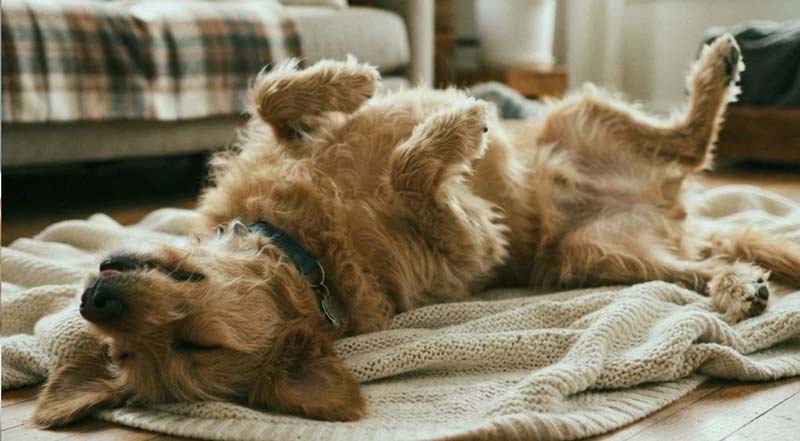
- Sleeping position. Dogs lying flat on their back allow soft tissue in the throat to fall backward and partially block airflow. This is temporary and position-dependent. When the dog shifts, the snoring stops.
- Weight. Extra tissue around the neck and throat increases airway restriction during sleep. Overweight dogs snore more, and modest weight loss often significantly reduces this type of snoring.
- Allergies. Environmental or seasonal allergens cause airway inflammation and increased mucus, narrowing the air passage. Snoring that appears seasonally or after exposure to a new product (a different air freshener, new bedding, cleaning products) often has this cause.
- Temporary congestion. A mild cold, upper respiratory infection, or nasal irritation produces snoring that resolves when the congestion clears. This is common and nothing to act on unless it persists.
- Sleep depth. Dogs in deep REM sleep have fully relaxed throat muscles and are more likely to snore during this stage than in lighter sleep.
Two different airway sounds: stertor and stridor.
Not all dog airway noise is the same. Stertor is low-pitched and rumbling, originating in the nose or upper throat. It is the most common type and typically benign.
Stridor is different: higher-pitched, harsh, and rasping, originating in the larynx or trachea. Stridor during sleep, or at rest when awake, is more likely to indicate a tracheal or laryngeal issue.
Knowing which sound your dog makes helps your vet triage the situation far more accurately.
Brachycephalic Dog Snoring: Why Flat-Faced Breeds Snore More
Some breeds are structurally built to snore. This is not a health change in them. It is anatomy.
Brachycephalic breeds, including Bulldogs, French Bulldogs, Pugs, Boxers, Shih Tzus, Boston Terriers, Cavalier King Charles Spaniels, and Pekingese, have shortened skulls but the same amount of soft tissue.
The result is proportionally narrower airways, often elongated soft palates, and sometimes stenotic nares (narrowed nostrils).
This anatomy makes restricted airflow the default, not the exception. Mild to moderate snoring in a brachycephalic dog that has always snored is expected. It does not mean the dog is in distress.
That said, there is a statistic worth knowing. Research cited by Great Pet Care found that 58% of pet parents of dogs with breathing problems like snoring believed their dogs were normal. More than half of owners whose dogs had clinically significant breathing issues had normalized the problem entirely.
This doesn’t mean all brachycephalic snoring is a problem. It means that “always been this way” is not the same as “everything is fine.” The pattern and intensity matter, not just whether the dog has always snored.
When it becomes a concern even in brachycephalic breeds:
- Snoring that has become significantly louder or more frequent compared to the dog’s own previous baseline
- Snoring accompanied by labored breathing, bluish gums, or breathing difficulty when awake
- A dog that appears to be working to breathe at rest, not just during sleep
If you own a flat-faced breed and are unsure whether their breathing is within normal range, a veterinary assessment of their airway (often called a BOAS evaluation) gives you a factual baseline rather than a guess.
Dog Snoring Suddenly: What New Snoring Means
New, sudden snoring in a dog that did not previously snore is the most clinically important signal in this article. It is different from a dog that has always snored, and it warrants attention.
Common causes of sudden new snoring:
- Allergies or seasonal irritants. The most common cause of new snoring. Can appear with a change in season, pollen levels, or after a new product enters the home.
- Respiratory infection. A mild cold, upper respiratory infection, or kennel cough produces congestion that causes snoring which resolves with the infection.
- Weight gain. If a dog has gained weight over several months, snoring can develop as extra throat tissue increases airway restriction.
- Dental or oral issue. A tooth abscess or inflammation near the nasal passage can produce new snoring. Worth ruling out if other causes are not obvious.
- Foreign object in the nasal passage. Uncommon but possible. Produces sudden, often one-sided snoring. A dog rubbing its nose against objects or showing reverse sneezing alongside new snoring should be seen by a vet promptly.
- Fungal infection. Nasal aspergillosis can produce new snoring alongside nasal discharge or nosebleeds, and is frequently misread as allergies.
Laryngeal Paralysis in Older Dogs
Laryngeal paralysis is one of the most commonly missed causes of new snoring in senior large breeds.
It is a progressive condition where the laryngeal cartilages gradually lose function, allowing the airway to partially collapse during breathing.
The snoring typically develops alongside a changed, harsher breathing sound, sometimes described as a roar or rasp, and may worsen in warm weather or after exercise.
According to Penny Paws veterinary guidance, older dogs often develop partial or complete laryngeal paralysis, which affects breathing and causes snoring that is distinctly different from ordinary sleep noise.
It is most commonly seen in Labradors, Golden Retrievers, and Irish Setters in their senior years. It is diagnosable and treatable. A dog whose snoring has changed significantly over months, especially an older large breed, is a good candidate for a laryngeal paralysis evaluation.
Snoring Dog Health Concern: When to See a Vet
Most dog snoring is a background noise of a healthy dog sleeping well. These specific signs are the exceptions.
Signs that warrant a vet visit:
- Snoring that appeared suddenly in a dog that did not previously snore
- Snoring that has become significantly louder or more frequent compared to the dog’s own previous baseline
- Snoring paired with labored, noisy, or effortful breathing when awake
- Blue, grey, or pale gums at any point. Treat this as an emergency
- Persistent colored nasal discharge alongside snoring
- Snoring in a dog that is also lethargic, off food, or showing other health changes
- Any gagging, choking, or audible breathing pause during sleep
SLEEP APNEA: A SPECIFIC PATTERN TO KNOW
Sleep apnea in dogs produces a specific, recognizable pattern: the dog snores or breathes noisily, there is an audible pause in breathing, then a snort or gasp as breathing restarts.
This pause-gasp cycle is different from ordinary snoring. It indicates the airway is collapsing enough to interrupt breathing, not just narrowing enough to produce noise.
According to Mendocino Animal Hospital, untreated sleep apnea causes chronic cardiovascular strain over time. It is most common in brachycephalic breeds and overweight dogs.
If you observe a consistent breathing pause pattern during sleep, describe it specifically to your vet.
WHAT TO NOTE BEFORE YOU CALL THE VET
- Before your appointment, write down the following. It helps your vet triage accurately and may save a follow-up visit.
- When did the snoring start or change?
- Is it every sleep, or occasional?
- Is it louder on one side, or both?
- Does it happen when the dog is awake?
- Has anything changed recently (new product, new food, weight gain, new environment)?
- Does the dog show any other symptoms (nasal discharge, lethargy, appetite change)?
→ For a broader guide to dog sleep problems beyond snoring, see our guide on dog sleep problems
→ For everything else dogs do during sleep, see our guide on dog sleep noises
Can You Reduce Dog Snoring?
For healthy dogs whose snoring has no medical cause, a few practical changes can help.
- Weight management. Even modest weight loss meaningfully reduces snoring in overweight dogs. It is the single most effective intervention for weight-related snoring.
- Sleeping position. A bolster or raised-edge bed encourages side sleeping rather than flat-back sleeping. Many dogs snore significantly less on their side.
- Air quality. An air purifier in the sleep space reduces airborne allergens and irritants. Useful for dogs whose snoring has an allergy component.
- Elevated head position. Some dogs snore less with their head slightly raised. A bolster-style bed or a small wedge can achieve this.
- Allergen reduction. Wash bedding regularly, use fragrance-free cleaning products, and reduce indoor dust. Simple changes that reduce the overall allergen load in the sleep environment.
None of these will help if the snoring has a medical cause. Address the underlying cause first.
The Bottom Line
Most dog snoring is normal. It needs nothing from you.
The two signals that matter are new snoring that wasn’t there before, and snoring paired with breathing difficulty when awake. For flat-faced breed owners: “always been this way” is not the same as “all is fine.”
For everything about dog sleep in one place, visit our complete guide to dog sleep