
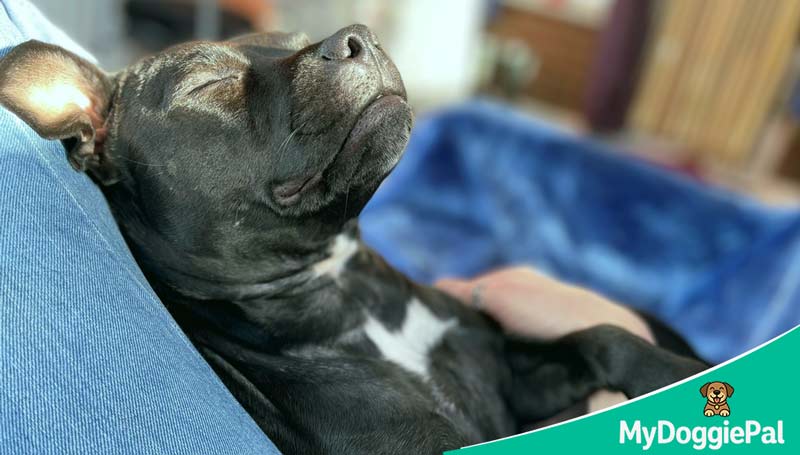
Your dog sleeping on you is not random. It is not just habit. Why does my dog sleep on me has a real answer, and it is a mix of biology, instinct, and genuine emotional attachment.
This guide covers what dog sleeping on owner behavior actually means, why dogs choose one person over another, what each position signals, and whether you should let it continue.
Why Does My Dog Sleep on Me? The Real Reasons
1. Warmth: Dogs are heat-seeking animals. Your body generates consistent warmth that no dog bed fully replicates. Dog body heat sleeping is one of the primary drivers of this behavior, not sentiment.
Small breeds and short-haired dogs lose body heat faster than larger or double-coated breeds, which is why they are often the most persistent about sleeping on people. The behavior increases in winter and in cooler homes.
2. Security: Sleep is the most vulnerable state for any animal. Dogs feel genuinely safer when sleeping in physical contact with a trusted companion. In ancestral terms, sleeping pressed against others meant protection.
That instinct has not been bred out of domestic dogs. Your scent, your breathing, and your heartbeat are all active calming signals that your dog’s nervous system is tuned to register.
3. Bonding and affection: Sleeping on you is an act of trust. Research on human-dog bonding shows that physical proximity to their owner increases oxytocin levels in dogs, reinforcing emotional attachment. This is not neediness. It is healthy, secure attachment.
4. Habit: Some dogs do it because they always have and the behavior was never redirected. Knowing whether yours is doing it out of genuine preference or conditioned habit is useful, because it determines whether you can change it easily if you want to.
There is a fifth factor most owners don’t consider:
5. Reinforcement: When your dog first climbed on you, it was natural to respond with a stroke or a scratch. In the dog’s mind, climbing on you produced a reward. That behavior gets repeated and strengthened over time.
Some of what feels like your dog’s natural preference for you is a behavior they learned because you taught them it was welcome. That doesn’t make it wrong, it makes it conscious, and reversible if you want it to be.
Why Does My Dog Sleep on Me and Not My Partner?
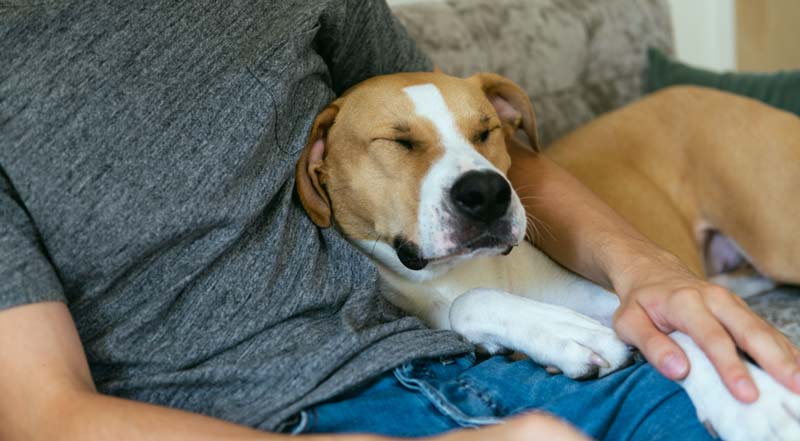
This is one of the most searched questions on this topic which needs to be answered properly. Dogs choose their preferred sleep person based on several specific factors.
- Scent. Dogs identify and bond with pack members primarily through smell. The person whose scent is most strongly associated with positive experiences becomes the preferred person. This is called olfactory imprinting, and it is the biggest driver of dog sleep preference in multi-person households.
- Activity association. Whoever feeds the dog most, walks them most, or spends the most daytime hours with them is more likely to be sought out at night. Nighttime preference follows daytime relationship quality.
- Energy. Dogs gravitate toward calmer, quieter resting energy. The person who reads quietly is a more appealing sleep surface than the person who moves around and watches loud TV.
- Body temperature. If there is a meaningful temperature difference between two people sharing a bed, the dog will often choose the warmer one. This is straightforward heat-seeking.
The preferred person can also shift over time. Pregnancy changes a person’s scent and hormone profile significantly, and dogs often register this shift before anyone else in the household does.
A change in who walks or feeds the dog, a period of illness, or one person returning after extended travel can all move the dog’s preference within days. The dog is not being disloyal. It is responding to real, detectable changes in its environment.
What the Position Says About Why They’re Doing It
Different dog sleeping on owner positions reflect different primary motivations. Here is what each one usually means.
| Position | What It Usually Means |
|---|---|
| On your chest or stomach | Maximum closeness and warmth. The dog wants both. Some research suggests dogs find the sound of a heartbeat calming at close range |
| On your legs or lap | Warmth and contact without full vulnerability. Common in dogs that like closeness but remain ready to move |
| On or against your feet | Ancestral guardian positioning. The dog can detect movement and respond while resting. Common in protective or alert-oriented breeds |
| Pressed against your side in bed | Equal mix of warmth, security, and belonging. This dog does not just want to be near you. They feel they belong there |
| Lying across your body | Warmth-seeking on the most heat-rich surface. Also common in dogs who have been reinforced heavily for physical contact |
The dog sleeping on feet position is often misread as less affectionate because the dog is not seeking full-body contact. In reality, it is rooted in alert-guardian behavior and represents a specific kind of trust and protectiveness.
→ For a full guide to what different dog sleeping positions reveal, see our guide on dog sleep positions
Should You Let Your Dog Sleep on You? The Honest Answer
If your dog always wants to sleep with you and you are comfortable with it, the short answer is: Yes, it is fine.
There is no evidence that co-sleeping creates dominance issues. That idea comes from outdated dominance theory that modern behaviorists have moved away from.
The health benefits are real.
Research published in peer-reviewed journals has linked regular physical contact with dogs to reduced cortisol levels, lower blood pressure, and decreased loneliness.
The warmth and rhythmic breathing of a dog resting on or near you can produce a genuine parasympathetic calming response.
For many people, according to a Mayo Clinic study on co-sleeping with pets, the presence of a dog improves rather than disrupts sleep quality. This is not just anecdotal.
Reasons you might want to set a boundary:
- Your sleep is being disrupted. A large dog on your legs restricts movement and can reduce sleep quality in measurable ways, even if you are not fully waking
- Allergies. Direct contact overnight significantly increases dander exposure. Even people with mild allergies often notice a worsening of symptoms after a few weeks of co-sleeping
- The dog has become possessive: growling when a partner tries to get in bed, or refusing to move. This is worth addressing regardless of how much you enjoy the co-sleeping otherwise
- You anticipate needing them to stop in the future. A dog that has never learned to settle independently will struggle significantly when the arrangement changes, whether for a new baby, travel, or health reasons
The key principle: Allowing it because you have made a conscious choice is different from it happening because you never addressed it. Both outcomes can be valid. The conscious choice is what matters.
When Clingy Bedtime Behavior Is Worth Watching
Most dogs that sleep on their owners are doing so for the reasons above. But a sudden change in behavior, a dog that previously slept elsewhere and now cannot be separated at bedtime, is worth paying attention to.
The first thing to do is read the body language. Comfortable sleep-on-owner behavior and anxious sleep-on-owner behavior can look similar from a distance. Up close, they are different.
COMFORT OR ANXIETY? WHAT THEIR BODY LANGUAGE TELLS YOU
Use this to read what your dog is actually communicating when they sleep on you.
COMFORTABLE SLEEP-ON-OWNER
- Soft eyes, relaxed face
- Heavy, loose muscle tone
- Sighing, settles quickly
- Happy to be gently moved
- Sleeps deeply once settled
- Behavior is consistent and longstandin
ANXIOUS SLEEP-ON-OWNER
- Whale eyes, tense face
- Pressed hard, rigid against you
- Panting, unable to fully settle
- Panics or whines when you shift
- Restless even when on you
- Behavior changed suddenly
Signs that dog clingy at bedtime behavior may reflect anxiety rather than attachment:
- The dog cannot settle anywhere unless physically touching you, not just prefers to be with you
- Behavior changed suddenly rather than being a longstanding pattern
- The dog shows distress when you leave the bed rather than simply following you
- Panting or whining at bedtime even when you are present
A gradual increase in clingy sleep behavior in older dogs is worth mentioning to a vet at the next routine visit. It can be an early sign of canine cognitive dysfunction, which becomes more treatable the earlier it is identified.
→ Thinking about adjusting where your dog sleeps? See our full guide: where dogs sleep best
How to Gently Set a Boundary If You Want One

If you have decided you want to redirect this behavior, here is how to do it without stress for either of you.
- Give the dog a specific, comfortable sleep spot near you, not across the room. The transition goal is proximity without contact. Most dogs accept this well when the alternative is still close
- Use a consistent settle cue every time you direct them to their spot. A word like “settle” or “place,” used the same way each time, becomes a clear signal
- Reward calm settling in the designated spot with quiet praise. Not excited praise. Calm and low-key
- Be consistent every night. One exception resets the learning significantly. Partners, guests, and family members all need to follow the same approach
- Redirect, do not repel. Never push the dog away physically. Calmly guide them to the right spot. The association with their own bed needs to be positive
Most dogs adjust within one to two weeks of consistent, gentle redirection. For more on managing social behavior and attachment in dogs, see our guide on dog social behavior
The Bottom Line
Your dog sleeps on you because you are warm, safe, and the most important part of their world. The dog sleeping on owner meaning is almost always a compliment.
Whether you let them keep doing it is entirely your call. Both choices are completely valid. What matters is that it is a choice you are making, not something that just happened.
For everything about dog sleep in one place, visit our complete guide to dog sleep.