
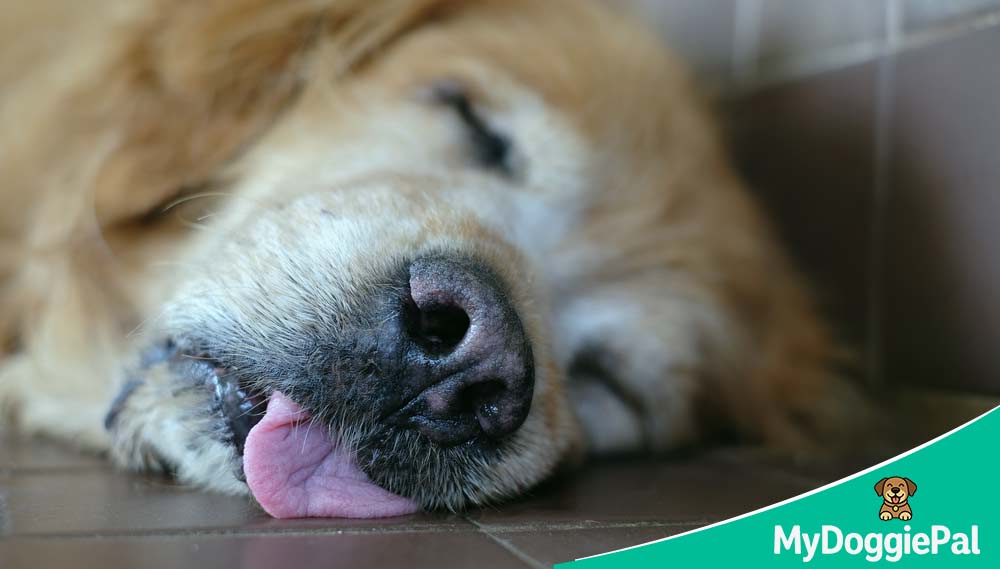
If your dog is making noises while sleeping, it is almost certainly nothing to worry about. The barking, whining, growling, snorting, and whimpering you hear are almost always normal sleep behaviours.
But not all sleep noises come from the same place, and knowing which type you are hearing tells you whether to watch, act, or just go back to sleep.
Why Is My Dog Making Noises While Sleeping?
Before going through each noise, it helps to understand the two categories. Every dog sleep noise falls into one of them.
Category 1: REM noises. Barking, whining, growling, whimpering, crying, and howling. These come from the dreaming brain. During REM sleep, the emotional and vocalisation centres of the brain are highly active, processing the day’s experiences. Sound gets through even though the body is largely still. This is dog sleep talking: the vocal expression of an active dreaming brain.
Category 2: Airway noises. Snoring, snorting, grunting, and gasping. These come from the anatomy of the throat and airway, not from dreams. They happen in any sleep stage and have nothing to do with dream content. Flat-faced breeds and overweight dogs produce these more, and some of them warrant a vet conversation.
Knowing which category your dog’s noise falls into is the most useful thing this article can give you.
What Each Dog Sleep Noise Means and Why Your Dog Makes It
Category 1 noises are the sounds of the dreaming brain. Different sounds reflect different emotional states being processed. Category 2 noises are anatomical. Both are covered below.
Dog Barking in Sleep
Dog barking in sleep is the most startling noise for owners and usually the least concerning.
It reflects an alert or excited dream state. The dog’s brain is processing a stimulating experience from the day. They are not in any distress.
Short, sharp barks are the most common. Some dogs produce a muffled version because the vocal cords are only partially active during REM. Others produce a full-volume bark that wakes the entire household.
Sleep barking tends to be louder and more frequent in vocal breeds: working dogs, herding breeds, and dogs with high daily stimulation. It is often accompanied by paw twitching, whisker movement, or visible eye movement beneath the lids.
Dog Whining in Sleep
Dog whining in sleep is the noise owners most often mistake for distress.
It is not distress. It is the vocal expression of an emotionally engaged dream state: play, attachment, anticipation, or connection. The dog is not suffering. They are processing something that mattered to them.
Rhythmic, low whining is typical REM behavior. Sharp, high-pitched whining that escalates rather than fades is different and worth noting. Puppies whine more in sleep than adult dogs because their brains are processing far more new information per day.
Dog Crying While Sleeping
Dog crying while sleeping follows the same mechanism as whining but is typically softer and more continuous.
It is most common in puppies adjusting to a new home, dogs processing separation experiences, and anxious dogs whose emotional processing during sleep is more active. Almost always normal.
It is also often harder to hear without wanting to intervene. The right response in almost every case is to leave them.
Dog Growling in Sleep: What Does It Mean?
Growling is the noise that alarms owners most, usually because it sounds territorial or aggressive.
It is neither.
A growling dog in REM sleep is processing a tension or conflict scenario from the day. The brain is doing exactly what it should: working through an experience that produced some level of alertness or unease.
This is particularly common after experiences involving other dogs, strangers, or anything that raised the dog’s alertness during the day. The dog growling in sleep bears no relationship to waking temperament.
A calm, gentle dog may growl in sleep because they are replaying something tense. It does not signal developing aggression.
One practical note: do not reach in to comfort a growling sleeping dog. The REM startle response means they can snap reflexively before they are fully awake. Use your voice from a distance if you need them to settle.
WHAT THE SOUND MIGHT TELL YOU ABOUT THE DREAM
Dogs rely heavily on smell and hearing rather than vision when they process the world.
Different sleep sounds may reflect different sensory experiences being replayed:
- Sniffing or snorting sounds: smell-based dream, possibly tracking, exploring, or reacting to a scent.
- Licking or chewing sounds: taste-based dream, often a giveaway in the hour before breakfast.
- Sharp barking: alert or chase dream, something exciting or threatening in the dream environment.
- Low growling: tension or conflict scenario being processed.
- Soft whimpering: emotional or attachment-based dream, play, connection, or separation.
Howling in Sleep
Less common but not abnormal. More often seen in breeds that howl when awake: Beagles, Huskies, Malamutes, Basset Hounds.
The dreaming brain activates the same vocal patterns the dog uses when awake. A Beagle that bays is a Beagle that bay-dreams. The volume can be impressive. The cause is not.
Snoring and Snorting During Sleep
Snoring and snorting are Category 2 noises. They come from the airway, not from dreams.
They are caused by air passing over relaxed throat tissue during sleep, producing vibration and sound. Mild, occasional snoring in an otherwise healthy dog is not a concern.
Brachycephalic breeds including Bulldogs, Pugs, French Bulldogs, and Boxers snore structurally. Their shortened airways and soft palates create restricted airflow, and snoring is the sound of that restriction.
According to Dogster, studies confirm that flat-faced dogs snore significantly more than other breeds. For these dogs, some degree of snoring is expected. That does not mean it is harmless.
Snoring becomes worth a vet conversation when it appears suddenly in a dog that did not previously snore, when it is loud enough to regularly disrupt the dog’s own sleep, or when it is paired with gasping or breathing pauses.
Sleep apnea in dogs produces a specific pattern: repeated gasping or choking sounds during sleep, sometimes with audible breathing pauses of 15 to 20 seconds or longer. The dog may startle awake with a sharp inhale.
It is most common in brachycephalic breeds and overweight dogs of any breed. The daytime sign to watch for: a dog that snores heavily at night and seems unusually tired the next day.
According to SleepApnea.org, dogs with obstructive sleep apnea may also show reduced interest in play or activity during the day, reflecting the sleep debt from a disrupted night.
Sleep apnea in dogs is treatable. A vet visit is the right step if gasping or breathing pauses are occurring regularly.
Do Sleep Noises Mean My Dog Is Having a Bad Dream?
Probably not in the way owners mean. Dogs do not appear to have nightmares with narrative fear the way humans do. What they do have is emotional processing of experiences that carried tension or stress.
A dog that had a tense interaction, visited the vet, or experienced something startling may replay aspects of that during REM sleep. The dog crying while sleeping or whimpering is the sound of that processing, not evidence of suffering.
In almost all cases, the dog wakes normally, reorients within seconds, and moves on completely unaffected. The experience does not carry over.
If a dog wakes from a noisy sleep episode and seems confused or distressed for more than a few seconds, that is worth noting. A brief moment of confusion is normal. Prolonged disorientation is not.
For a full explanation of what dogs dream about and what the science suggests about dog dream content, see our guide on dog dreaming.
Should You Wake a Dog Making Noises in Their Sleep?
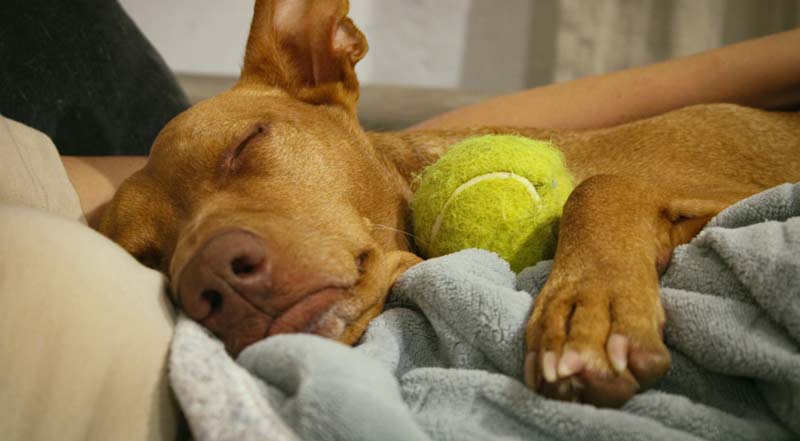
Generally, no.
During REM sleep, the brain is operating at near-waking levels of activity. The transition from REM to full wakefulness is abrupt rather than gradual. A dog startled from REM sleep may snap reflexively before they are fully conscious. This is disorientation, not aggression, but the result is the same.
If you genuinely feel the dog is in distress, say their name calmly from a distance. Wait for a physical response before approaching or touching them. Never shake a sleeping dog to wake them.
In most cases, the noise is the brain doing its work. Intervention is not needed.
| What You Hear | What It Probably Is | What to Do |
|---|---|---|
| Barking, whining, growling, howling | REM dreaming, normal vocalisation | Nothing. Let them sleep. |
| Escalating noise that does not settle; dog seems distressed after waking | Intense REM or an external sound that disturbed them | Calm voice from a distance. Check the room for what may have woken them. |
| Gasping, choking, breathing pauses, or stiff rigid body | Possible seizure or obstructive sleep apnea | Do not restrain. Time the episode. Call your vet if it lasts over 2 minutes. |
When Dog Sleep Noises Are a Warning Sign
The vast majority of sleep noises require nothing from you. But two specific patterns are worth knowing: seizure activity and persistent airway problems.
The most important thing to know is how to tell REM sleep apart from a seizure. They can look similar to an untrained eye, but the differences are clear once you know what to look for.
SIGNS OF NORMAL REM SLEEP
- Dog can be woken with a calm voice
- Reorients quickly within a few seconds
- Sounds and movements are intermittent, not sustained
- Episode ends on its own and dog resumes sleep
SIGNS THAT MAY INDICATE A SEIZURE
- Cannot be woken or does not respond to name
- Rigid, stiff muscle tone rather than relaxed
- Sustained, continuous movement without pausing
- Loss of bladder or bowel control during episode
- Prolonged confusion after waking: more than 30 seconds
- Drooling or foaming at the mouth
IF YOU SUSPECT A SEIZURE
Do not restrain the dog. Restraining a dog during a seizure can cause injury to both of you.
Time the episode from the start. Duration matters when you speak to your vet.
Keep the dog safe from hazards: stairs, hard furniture, sharp objects.
Call your vet immediately if the episode lasts more than 2 minutes, or if the dog does not return to normal within a few minutes of waking.
For a broader guide to sleep problems that go beyond normal dreaming, including insomnia, restlessness, and sleep disorders, see our guide on dog sleep problems.
Which Dogs Make the Most Sleep Noises?
Not all dogs are equally vocal in sleep. Several factors reliably predict which dogs will keep their owners entertained overnight.
More likely to be vocal sleepers (Category 1, REM noises):
- Puppies and young dogs: more REM sleep, more new information to process every day
- Working and herding breeds (Border Collies, German Shepherds, Belgian Malinois): high daily stimulation means more to process in dreams
- Hound breeds (Beagle, Basset Hound, Bloodhound): vocal when awake, vocal in sleep
- High-stimulation dogs of any breed: an exciting day reliably produces a noisier night
The principle behind all of this is consistent: dogs vocalize in sleep the way they vocalize when awake.
A Husky howls awake and howls in sleep. A Beagle bays awake and bays in sleep. A German Shepherd that whines when worried will whine in sleep when processing something tense. You can largely predict your dog’s sleep noise profile from watching how they communicate during the day.
More likely to be noisy sleepers (Category 2, airway noises):
- Brachycephalic breeds: Bulldogs, Pugs, French Bulldogs, Boxers, Shih Tzus. These dogs snore by anatomy, not by dream content
- Overweight dogs of any breed: excess tissue around the throat increases airway restriction during sleep.
Less likely to be noisy sleepers:
- Adult dogs in calm, consistent, low-stimulation households
- Older dogs: less total REM sleep, quieter dreaming overall
The Bottom Line
Most dog sleep noises are the sound of a working, dreaming brain. The dog barking in sleep, whining, growling, and whimpering are all normal REM behaviours that need nothing from you.
Snoring and gasping are different: airway noises, not dream noises, and persistent gasping or breathing pauses are worth a vet visit.
The seizure checklist in Section 5 is the only reason to act urgently. For everything else, let them dream.
For everything about dog sleep in one place, visit our complete guide to dog sleep.