
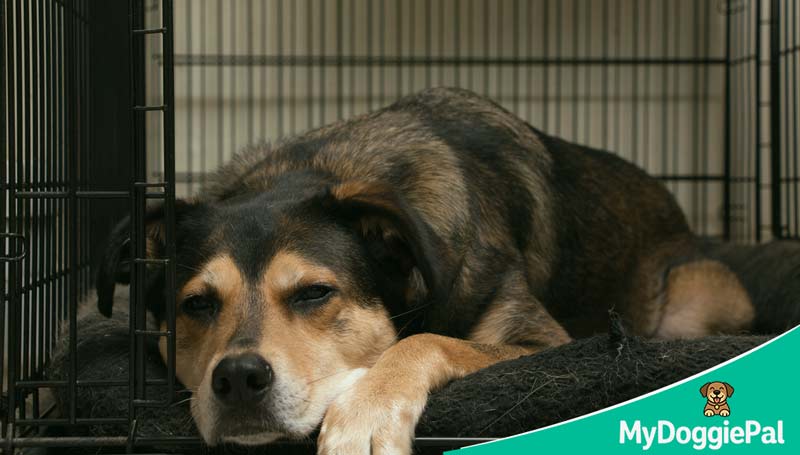
A dog that goes into its crate at night and stays settled is not a fantasy. It is the outcome of a specific process, done in the right order, at the right pace.
This guide covers crate training for sleep from day one through the first full month. It covers puppies and adult dogs separately, includes the decompression step most guides skip, and walks through every common setback so you know what is normal and what needs a different approach.
Start at the beginning. Work through each step in order. Skipping ahead is the most common reason crate training takes months instead of weeks.
Before You Begin: Setting Up for Success
Crate training success is partly about process and partly about setup. Get the setup wrong and even a well-executed introduction will struggle.
– Crate Size
The crate should be large enough for your dog to stand up, turn around, and lie down comfortably.
No larger.
A crate that gives a puppy room to sleep at one end and eliminate at the other undermines the house training benefit entirely.
For puppies, choose a crate with a divider panel.
You adjust the space as they grow rather than buying a new crate at each stage. For large breeds, size up as needed, but do not over-size during the active training period.
– Crate Placement
Place the crate in your bedroom or just outside it for the entire introduction period. Proximity to you significantly reduces anxiety during the early nights. Once overnight settling is established, you can move it gradually to wherever you intend it to stay.
– What Goes Inside
- A soft, washable liner or mat
- A piece of your worn clothing placed in or near the bed. Your scent is the single most effective anxiety reducer available at no cost. Use something worn that day
- No collar or ID tags during overnight use. Collars can snag on crate bars and become a choking hazard in an unmonitored environment
- No loose toys with parts that can be chewed off or swallowed
– Choosing the Right Crate Type for Sleep
- Wire crates provide good ventilation and allow the dog to see its surroundings. Best for confident dogs who settle better with visual connection to their environment
- Plastic crates are darker and more enclosed, creating a den-like feeling. Better for anxious dogs that settle faster with more enclosure. Also the right choice for travel
- Soft-sided crates are not suitable for overnight use with dogs still in training or with any chewing tendency. Reserve these for fully trained, calm dogs only
Why Crate Training for Sleep Actually Works
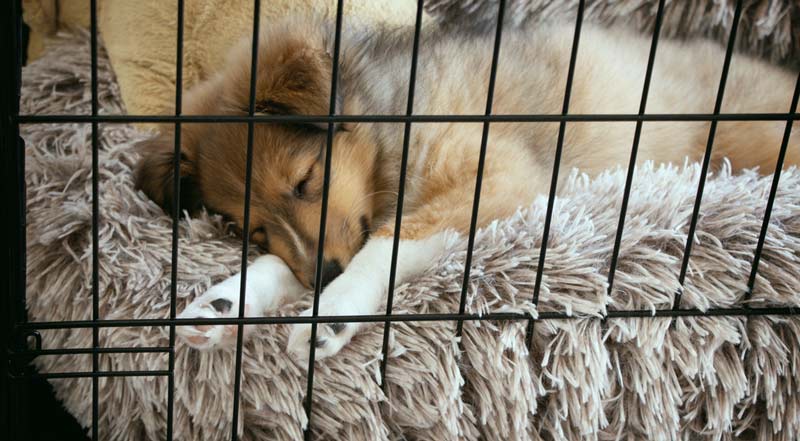
Dogs are den animals. Enclosed, protected spaces are naturally calming for them when introduced correctly. This is not a trainer’s opinion, it is rooted in the same ancestral wiring that leads dogs to crawl under desks and into corners voluntarily.
The crate gives your dog ownership of a space that is consistently safe, consistently theirs. A dog that associates the crate with safety and routine will seek it out voluntarily. A dog that associates it with punishment or being shut in before it was ready will resist it.
The introduction process exists to build the positive association before you ask the dog to sleep there overnight.
According to the American Kennel Club, the goal is not confinement but predictability. A dog that knows its crate is its space is a calmer, more secure dog overall.
Every problem in crate training for sleep traces back to one cause: asking for overnight use before the association was strong enough.
How to Crate Train Your Dog at Night: The Step-by-Step Process
Each step builds on the one before it. Moving to the next step before the current one will almost always means going back. The expected total timeline is 1 to 3 weeks for most dogs.
1. Introduce the crate with no expectations (Days 1 to 3)
Place the crate in a living area with the door open and secured so it cannot swing shut and startle the dog. Let them explore freely with no expectation of going inside.
Place a treat near the entrance, then just inside the door, then further in. Do not close the door. Do not prompt them in. Let the crate become familiar on their terms.
Goal: dog enters the crate voluntarily.
2. Feed all meals inside the crate (Days 2 to 5)
Move feeding progressively – just outside the entrance, then just inside, then with the dog fully inside. This is the fastest and most durable way to build a positive association.
Once the dog is eating comfortably inside, close the door during the meal and open it before they finish. Extend the closed-door time by a minute or two per session.
Goal: dog eats inside with the door closed without protest.
3. Close the door for short periods while the dog is awake (Days 4 to 7)
Begin with 5 to 10 minutes, then build to 20, then 30. Stay in the room, do not leave during this phase. You are building the dog’s confidence that the closed door is not threatening, not testing their independence.
Goal: dog is settled with the door closed and you present.
4. Leave the room with the dog in the closed crate (Days 6 to 10)
Once the dog is relaxed with you in the room, start briefly stepping out but return before they become anxious. The principle is critical – return before the protest, not in response to it.
Returning when they cry teaches that crying brings you back. Returning before they need to cry teaches that your absence is temporary and safe.
Goal: dog is settled with the door closed and you out of sight.
5. Begin overnight use (Days 8 to 14)
Use the same pre-sleep sequence every single night: decompression, toilet trip, settle cue, into the crate. See the callout below before starting this step.
THE STEP MOST GUIDES SKIP: DECOMPRESSION BEFORE THE CRATE
Exercise before bed raises adrenaline as much as it burns energy. What a dog needs before crating is decompression. These are not the same thing.
Before crating for the night, run through one or two of the following:
- A slow sniff walk (10 to 15 minutes, dog sets the pace, no heel required)
- Scatter feeding: toss a small handful of kibble on grass or a snuffle mat for them to sniff out
- A Kong or lick mat stuffed with something calming. The repetitive licking action directly reduces cortisol
A dog whose nervous system has had 20 to 30 minutes to come down before being crated will settle significantly faster than one that goes from active play straight into the crate.
Start with the crate in the bedroom. Expect some protest the first few nights but do not respond to quiet whining.
A single calm verbal check is appropriate for sustained distress, with no physical interaction. Once overnight settling is consistent, move the crate gradually to its permanent location.
PROTEST CRYING VS DISTRESS CRYING: THE DIFFERENCE AT 2AM
This is the question every owner searches at 2am. Here is how to tell them apart.
Protest crying: escalates then reduces. Rhythmic. The dog pauses to listen. Usually settles within 20 to 30 minutes. Do not respond. The dog is testing whether crying produces a result. It does not.
Distress crying: sustained and escalating with no natural reduction. Accompanied by panting, drooling, scrabbling at the door, or vomiting. This is panic, not protest.
If distress crying does not reduce within a few minutes of a calm verbal check, the dog needs to come out and the process needs to step back to where they were last comfortable.
Responding to protest teaches protest. Ignoring distress causes harm. Learning the difference is the most important skill in crate training.
IMPORTANT NOTE: The most common mistake is skipping steps. If your dog is struggling at any step, return to the previous step for 2 to 3 days before moving forward again. There are no shortcuts in this process. Every skipped step adds time to the overall timeline.
Puppy Crate Training at Night: What’s Different
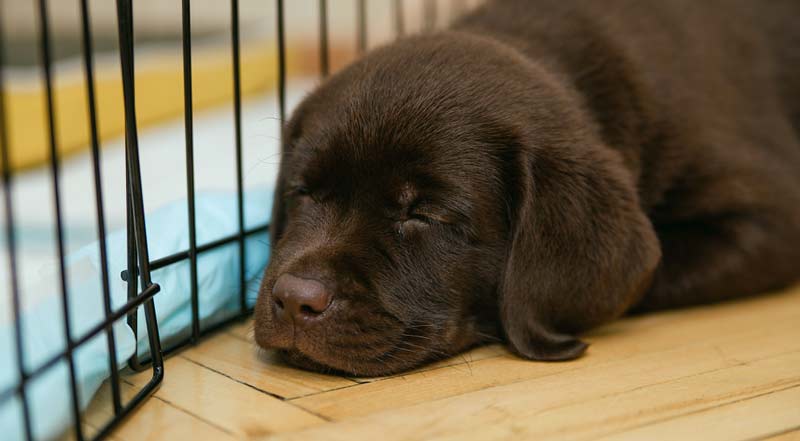
Puppies follow the same fundamental steps with different expectations. The introduction phase often moves faster because they carry no negative associations. The overnight phase takes longer because their bladder forces interaction during the night.
For a full guide to puppy sleep needs and age-by-age expectations, see our puppy sleep guide.
– Bladder Control
Puppies cannot hold their bladder through the night. The working rule: approximately one hour of bladder control per month of age. A 10-week-old puppy can hold roughly two to three hours. A 4-month-old can hold four to five hours.
Set an alarm to take them out before they wake and cry. Responding to a toilet need is correct. Responding to attention-seeking is counterproductive. Taking them out before they need to signal removes the ambiguity entirely.
According to VCA Animal Hospitals, the following are the recommended maximum crate times by age for both daytime and overnight use.
| Puppy Age | Max Daytime | Max Overnight |
|---|---|---|
| 8 to 10 weeks | 30 to 60 minutes | 3 to 4 hours |
| 10 to 12 weeks | 1 hour | 4 to 5 hours |
| 3 to 4 months | 1 to 3 hours | 5 to 6 hours |
| 4 to 6 months | 3 to 4 hours | 6 to 8 hours |
| 6 months+ | 4 to 5 hours | Up to 8 hours |
| Adult dog | 4 to 5 hours | 8 to 10 hours |
These are maximums, not targets. Overnight limits are longer because the dog is asleep and not experiencing active confinement distress. The numbers also assume the training is going well. A puppy still resisting the crate should not be held to these limits.
– Comfort Additions for Puppies
- Warm water bottle under the blanket simulates the body warmth of littermates. Use a covered bottle to prevent burns
- Heartbeat toy or ticking clock simulates the sounds of the litter
- Crate cover creates darkness and reduces visual stimulation. Most puppies settle faster in a covered crate
- Your worn clothing in the crate. Your scent is deeply reassuring during the first weeks in a new home
– Timeline Expectation
Most puppies managed consistently are sleeping through the night in the crate by 16 to 20 weeks. The process is not linear. There will be better nights and harder nights. Stay consistent and the overall arc trends toward settled.
Crate Training an Adult Dog for Sleep: What to Expect
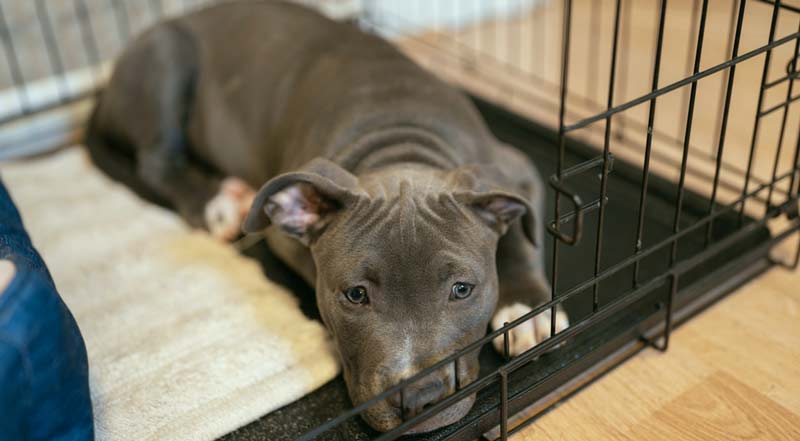
Adult dogs follow the same steps as puppies. They typically need more time at each stage, not fewer stages. The introduction phase is more important for adult dogs, not less, because they have formed habits and existing associations.
– Previous Negative Associations
A dog that has been crated as punishment, or that has experienced confinement-related distress, needs extra time and care at Steps 1 and 2. Do not rush toward closing the door. Spend a week feeding meals in the crate before you even consider closing the door briefly.
Signs of genuine panic, not protest, include panting, drooling, attempts at self-injury, and full-body distress that does not reduce.
If you see these, stop the process and speak with your vet or a certified behaviorist before continuing. This may be separation anxiety, which requires specific treatment rather than crate training alone.
– Existing Sleep Habits
A dog that has been sleeping on the bed or sofa will resist the crate more than a dog that already sleeps on the floor.
This is completely normal and does not mean the training will fail. It means the introduction needs to run longer and the positive association needs to be stronger before you move to overnight use.
Do not remove access to the previous sleep spot abruptly. Reduce it gradually while building crate value at the same time.
If you block the bed on night one and put them in the crate, you are asking for resistance. If you build the crate value for two weeks first and then redirect, the transition is far smoother.
– Advantages Adult Dogs Have
- Better bladder control: most can hold through the night from the first crated night
- Better impulse control: once the positive association is in place, adult dogs often settle more quickly and more deeply than puppies
- No overnight toilet trips: the process runs uninterrupted, which means progress accumulates faster once they are settled
Dog Won’t Sleep in Crate: What’s Going Wrong and How to Fix It
REGRESSION IS NORMAL: IT IS NOT FAILURE
A dog that was settling well in the crate and then suddenly resists it again has not unlearned the training. Regression is a recognized, expected phase in crate training for both puppies and adult dogs.
In puppies, it is often triggered by developmental changes: teething, fear periods, and the 4-month sleep cycle shift all produce temporary regression. In adult dogs, regression is usually triggered by routine changes, environmental stress, or a health issue that made the crate temporarily uncomfortable.
The response to regression is always the same: go back two steps, not one. Two. Rebuild the association at the point where the dog was last reliably comfortable. Pushing through regression with more crate time makes it worse. Stepping back and rebuilding fixes it.
Problem 1: Dog Cries Within Minutes of the Door Closing
Most likely cause: steps were moved too quickly. The positive association is not strong enough to support closed-door confinement yet.
Fix: return to Step 2 or Step 3. Spend 3 to 5 additional days at that stage before attempting to move forward. No shortcuts.
Problem 2: Settles During the Day but Not at Night
Most likely cause: overnight confinement is a bigger emotional ask than daytime confinement. The dog has not had enough closed-door practice during the day to handle it at night.
Fix: increase daytime Step 3 and Step 4 sessions specifically. Extend the duration of closed-door daytime sessions before returning to overnight attempts.
Problem 3: Cries Through the Night Without Settling
Most likely cause: overnight was introduced too quickly, or the crate is too isolated from the owner.
Fix: move the crate back to the bedroom. Add familiar scent. Return to partial nights of 2 to 3 hours before attempting a full overnight again.
Problem 4: Settles for the First Hour Then Wakes and Protests
For puppies: almost always a genuine toilet need. Schedule the outing before the waking time rather than waiting for the cry.
For adult dogs: light-sleep waking in an environment that is not fully familiar yet. This typically resolves within 5 to 7 nights of consistent management.
Problem 5: Won’t Enter the Crate at All
Most likely cause: a negative association has formed, or there is underlying anxiety.
Fix: remove the door entirely. Feed every meal in the crate for a full week with no door closing at all. Strip the setup back to Step 1 and rebuild from scratch.
CRATE RESISTANCE VS SEPARATION ANXIETY
Crate resistance during training is normal and fixable with the process above. Separation anxiety is different and requires a different approach.
Separation anxiety involves panic-level distress that does not improve with crate training steps, that occurs whenever the dog is separated from the owner (not just in the crate), and that may include self-injury attempts, persistent drooling, and full-body distress.
If this describes your dog, speak with your vet before continuing crate training. Crate training does not treat separation anxiety. It can make it worse if applied to a dog that needs behavioral or medical intervention first.
Not sure whether a crate is the right sleeping arrangement for your dog at all? See our full comparison of crate, dog bed, and co-sleeping setups to help you make the right call.
After the First Two Weeks: Keeping the Routine Solid
Keep doing:
- The same pre-sleep sequence every night: decompression, toilet trip, settle cue, crate
- Occasional daytime crate sessions to keep the association fresh, not just overnight use
- Calm verbal praise when you pass by a settled dog in the crate. Reinforce the behavior you want
Stop doing:
- Using the crate as punishment. The crate is a safe space. It stays that way, permanently
- Leaving the dog crated longer than the age-appropriate limits in the table in above
- Skipping the routine on weekends. Consistency maintains what consistency built
– When to Stop Using the Crate Overnight
Not every dog needs to be crated indefinitely. Some dogs become fully trustworthy overnight and do better with more freedom. Signs a dog may be ready:
- Reliably no destructive behavior when left unsupervised for comparable durations during the day
- Solid overnight toilet habits with no accidents
- The crate door is left open during the day and the dog chooses to sleep in it anyway
When these are consistently true, introduce overnight freedom gradually. Start with one room rather than full house access. Try it for a week before expanding. If accidents or destructive behavior reappear, return to the crate for a few more weeks and try again. There is no rush.
For a full guide to the sleep environment beyond the crate, see our dog sleep environment guide.
How Long Does Crate Training for Sleep Take?
Here is an honest timeline by dog type and these are averages. Every dog is individual, and the timeline matters far less than the consistency of the process.
| Dog Type | Expected Timeline |
|---|---|
| Young puppy (8 to 16 weeks) | 1 to 2 weeks for introduction; overnight settling by 16 to 20 weeks |
| Adolescent dog (4 to 18 months) | 2 to 3 weeks full process |
| Adult dog, no prior crate history | 2 to 4 weeks |
| Adult dog, negative crate history | 4 to 6 weeks or longer |
| Senior dog | Variable; often responds well once association is built |
A dog that takes 5 weeks to fully crate-settle is no different from one that takes 2 weeks. The end result is the same. Do not rush the process to hit an arbitrary deadline. Rushing extends the overall timeline rather than shortening it.
The Bottom Line
Follow the steps. Do not skip. Do not rush.
For everything about dog sleep in one place, visit our complete guide to dog sleep