
We all love our dogs and want to make sure every little movement, every sigh, every twitch is nothing to worry about.
The truth is, most of the time, those cute little spasms are completely normal. But sometimes, twitching can mean more than just dream chasing.
In this article, we’ll uncover what’s really going on when your dog twitches in their sleep, what’s normal, what’s not, and how you can tell the difference.
Let’s start by understanding what’s really happening when your dog drifts into dreamland.
Table of Contents
ToggleWhat’s Actually Happening When Dogs Twitch in Their Sleep
What’s happening is actually pretty amazing.
Just like us, dogs go through sleep cycles – and one of them is called REM sleep, short for Rapid Eye Movement. It’s the stage where dreams happen.
During REM, your dog’s brain sends little “dream signals” to the body. The brain tries to keep the body still, but sometimes those signals slip through, causing small jerks or movements.
That’s why you see paws paddling, tails flicking, or ears twitching. It’s like your dog’s body can’t help but join in on the dream.
Puppies and older dogs tend to twitch even more.
Why?
Their brains are either still learning to control muscles or slowing down with age. So more signals “leak” out – completely normal, and actually a sign their brain’s doing what it should.
You might even notice patterns like a quiet bark, a tail wag, or a leg kick. Each one is your dog acting out a dream scene, right there in front of you.
Do Dogs Dream When They Twitch?
Most definitely.
When your dog twitches, it’s usually during a dream. You can tell because the movements are gentle and random – like little bursts of memory.
Think about it.
Dogs spend their days chasing, playing, sniffing, and exploring. When they sleep, their brains replay those moments.
So that paw movement? It might be them running after a ball.
That soft bark? Maybe greeting a friend.
That tail wag? Reliving a happy walk with you.
Scientists even believe dogs dream about the people and experiences they know best which means yes, they might be dreaming about you.
It’s comforting, isn’t it? Knowing those tiny twitches are part of a happy dream world.
Normal vs. Abnormal Twitching – How to Tell the Difference
The truth is, most twitching is totally harmless. But sometimes, it can point to something more.
So, how do you tell the difference?
Let’s start with what normal looks like.
When dogs dream, normal twitching is light, brief, and rhythmic. You might see their legs move gently, their tail flick, or hear a soft bark.
It usually lasts a few seconds and then fades away as they drift into a deeper sleep. They look peaceful even cute during it.
But abnormal twitching is different.
It feels… off.
The movements are more intense, stiffer, or longer. Your dog might look frozen or unresponsive.
Sometimes, you’ll notice drooling, whining, or even loss of bladder control. That’s when it’s time to pay closer attention.
Twitching vs. Seizures – How to Spot the Difference
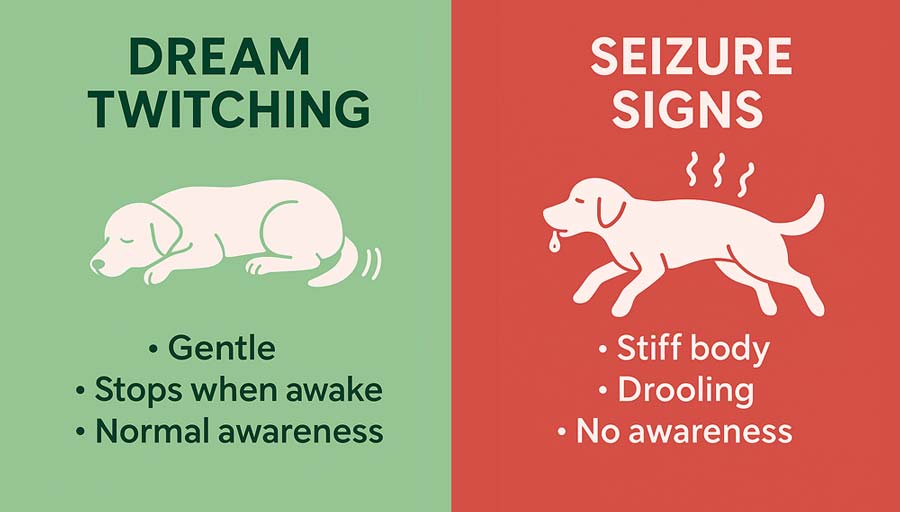
This is the part that really matters. Because seizures can sometimes look like deep dream twitching but they’re not the same thing.
Here’s a quick guide you can save or remember:
| Dream Twitching | Seizures |
|---|---|
| Gentle, short, and random movements | Rigid, jerky, or violent movements |
| Happens during sleep only | Can happen awake or asleep |
| Stops when your dog wakes | Dog seems confused or scared after |
| No drooling or loss of control | May drool, foam, or lose bladder control |
If you’re ever unsure, here’s a tip:
Try calling your dog’s name softly. Dreaming dogs usually wake up and glance at you. A dog having a seizure won’t respond right away.
And if it happens more than once, or lasts longer than a minute, record it on your phone and show your vet. That short clip could be really helpful.
Remember, don’t panic. Most twitching is just part of normal sleep, not a medical emergency.
When to See a Vet
There’s no need to rush to the vet every time your dog twitches but sometimes, it’s the smart thing to do.
Here are a few red flags to watch for:
- Twitching becomes more frequent or intense
- Episodes last longer than usual
- You notice drooling, trembling, or stiff muscles
- Your dog seems dazed or unsteady after waking
- Appetite or mood suddenly changes
If any of these sound familiar, call your vet. It doesn’t always mean something serious, but getting checked early can give you peace of mind and that’s worth a lot.
Normal Reasons Why Dogs Twitch in Their Sleep
Now that you know what’s normal and what’s not, let’s talk about why dogs twitch in the first place.
Spoiler: it’s usually something sweet, not scary.
Sometimes, twitching is just your dog’s brain replaying the highlights of their day. Other times, it’s the body doing small reflex things that keep muscles healthy.
Here are the most common (and harmless) reasons behind those cute nighttime spasms.
1. Dreaming During REM Sleep
When your dog drifts into REM sleep – the dream stage – their brain comes alive. It’s sorting memories, processing emotions, and replaying moments they loved.
That’s when you’ll see the magic: a paw twitch, a quiet bark, a tail wag in mid-air.
They’re probably dreaming about things they know: chasing squirrels, playing fetch, meeting friends at the park, or just curling up beside you.
Researchers at MIT even found that animals show brain patterns during REM sleep similar to when they’re awake, meaning they’re literally reliving their day.
So when you see that twitch, it’s not distress, it’s a little dream dance.
And if you’re wondering, yes, puppies and senior dogs tend to twitch more.
Puppies because their brains are still growing, and seniors because their systems slow down with age. Both are normal, both adorable.
2. Partial Muscle Relaxation
Here’s something most people don’t realize. During REM sleep, the brain tries to keep the body still.
It does this by sending signals that relax the muscles so your dog doesn’t actually “run” or “jump” while dreaming.
But sometimes, that control isn’t perfect. A few signals escape, and the result is small twitches, jerks, or paw movements.
Think about it like when you’re falling asleep and your body suddenly jolts, that’s your muscles reacting to mixed brain messages. Dogs experience something similar.
So when you see those tiny leg movements or that little shiver, it’s not fear or pain. It’s just healthy REM activity showing that your dog’s brain and body are working together beautifully.
3. Daytime Energy and Stimulation
Ever notice how much more your dog twitches after a busy day? There’s a reason for that.
Dogs who’ve had lots of exercise or mental play often have more vivid dreams.
A long walk, a training session, or even a playdate with another dog can keep their brain buzzing long after bedtime.
Their dreams might be filled with running, jumping, or exploring, basically, a replay of their best moments.
So, if you’ve had an adventure-filled day, don’t be surprised if bedtime comes with extra twitches. It’s your dog’s way of reliving all that excitement.
A busy day = a busy dream night.
4. Breed and Size Differences
Believe it or not, breed and size can influence how much a dog twitches in sleep.
Active and working breeds like Border Collies, Huskies, or Labradors tend to have more energetic dream movements.
They’re used to running, chasing, and staying alert, so their dreams reflect that energy.
Smaller or toy breeds, on the other hand, may twitch lightly or make tiny paw movements that barely show.
Their nervous systems respond differently, and they often settle into sleep more gently.
So if your big dog looks like they’re training for a marathon in their dreams, don’t worry, it’s probably just their personality shining through.
Dogs twitch for many normal, healthy reasons from dreaming to releasing a little extra energy.
But sometimes, twitching can hint at something deeper.
When Twitching Could Signal a Health Problem
Most of the time, twitching is just your dog chasing dreamland adventures.
But once in a while, those movements can mean something else. Something your pup can’t tell you in words.
As loving owners, we notice every little change, right?
So if your dog’s twitching starts looking stronger, lasts longer, or feels… off, it’s worth paying attention. Here’s what might be happening.
1. Seizures
This is the one that worries most dog owners and for good reason.
Seizures can sometimes look like dream twitching, but they’re very different.
Let’s break it down simply, seizures are:
- Rigid, violent, or uncontrolled jerks
- Seizure can happen awake or asleep
- Your dog will look confused, scared, or tired afterward
- Your dog may drool, foam, or lose bladder control
If you’re not sure which it is, here’s what you can do:
Try calling your dog’s name softly. If it’s just a dream, they’ll usually wake up and look at you. If it’s a seizure, they won’t respond right away.
2. Muscle Spasms or Pain
Sometimes, twitching isn’t about dreams or seizures at all. It might just be a muscle reacting to strain, dehydration, or fatigue.
You might notice one area twitching maybe a leg or shoulder instead of the whole body.
That’s often a sign of a muscle spasm, not a dream.
It can happen if your dog has been running hard, jumping a lot, or even sleeping in a weird position.
Other times, it’s because they’re a bit low on water or electrolytes.
Here’s what you can do:
- Check if the same spot twitches over and over.
- Make sure your dog is drinking enough water.
- Try a gentle massage on the area if they’re comfortable.
If it keeps happening or your dog seems sore when they wake, talk to your vet. They can rule out anything more serious, like nerve pain or arthritis.
3. Neurological Disorders / REM Behavior Disorder
This one’s quite rare, but it does happen especially in older dogs or those who’ve had brain trauma.
It’s called REM Behavior Disorder, and it makes dogs act out their dreams instead of staying still.
You might see them thrashing, growling, kicking, or even “running” in place. It looks dramatic, but they’re not awake.
Their brain just isn’t turning off the muscles during REM sleep like it should.
If this happens often or seems intense, record it and share it with your vet. There are treatments and adjustments that can help, and catching it early makes a big difference.
So don’t feel helpless, awareness is the first step in helping your dog rest peacefully again.
What You Should and Shouldn’t Do When Your Dog Twitches
When your dog starts twitching in their sleep, your first instinct might be to reach out, shake them gently, or whisper their name.
You just want to make sure they’re okay, right? Totally understandable – we all do it.
But here’s the truth:
Most of the time, you don’t need to do anything at all.
That little twitch is just your dog’s dream in motion. And the best thing you can do for them? Let them dream.
DOs: What Helps
Let them sleep peacefully: Your dog’s brain is working hard during REM sleep. Interrupting it can leave them startled or confused.
Keep the sleep area calm and dark: A quiet environment helps them stay settled through sleep cycles. It’s especially helpful for anxious or easily startled dogs.
Observe, don’t overreact.
If your dog twitches often, just take note: when it happens, how long it lasts, what it looks like.
If anything changes suddenly, you’ll have details ready for your vet.
Use your voice, not your hands, if you must wake them.
A soft call like “Hey buddy, you’re okay” can gently bring them back without shocking their nervous system.
DON’Ts: What to Avoid
Don’t shake or yell: Waking a dog abruptly can frighten them. Imagine being pulled out of a deep dream, you’d be startled too.
Don’t assume it’s bad: Twitching is usually a healthy sign that your dog’s body and mind are relaxed enough to dream.
Don’t create too much noise or light while they’re sleeping. Even small disruptions can interfere with deep, restful sleep.
If you ever do have to intervene maybe the twitching looks intense, or your dog seems distressed – do it gently.
A calm voice, a soft touch, a reassuring word. That’s all they need.
Because sometimes, they just need to know you’re there.
Why Do Some Dogs Twitch More Than Others?
It’s possible you’ve noticed that some dogs twitch like they’re running a marathon in their sleep, while others lie perfectly still?
It’s not your imagination, dogs really do differ in how much they move when they dream.
There’s no single reason for it, but a few key factors make a big difference.
Let’s break it down.
1. Age Plays a Big Role
Puppies are the twitch champions of the dog world.
Their little bodies and brains are still growing, and their nervous systems are learning how to manage signals during sleep.
That means their brains don’t yet have a firm “off switch” for muscle movement, so all those kicks and wiggles spill out freely.
On the other hand, senior dogs may twitch more too, but for different reasons.
Their nerve sensitivity and muscle tone change with age. The “barriers” that keep the body still during dreaming can weaken, allowing more movement to slip through.
So whether your dog is young or old, a little extra twitching usually just means their body is doing what it’s meant to do.
2. Breed and Temperament Factors
It’s not just about age, breed and personality also play their part.
Working and sporting breeds like Border Collies, German Shepherds, and Labradors often have more active dreams.
These are dogs bred for energy, focus, and action. When they sleep, that drive shows up in their dream movements.
You’ll see more paw running, tail flicking, and maybe a few soft “woofs” thrown in.
On the flip side, toy breeds or lap dogs may twitch less, or in smaller bursts. Their dreams might be gentler, their sleep quieter.
Temperament matters, too.
Nervous or anxious dogs sometimes have busier minds, even at night. They process emotions differently and may dream more vividly just like people who stress-dream before a big day.
So, a calm personality often sleeps still. An active or sensitive soul might toss a little more.
Neither is bad, it’s just who they are.
Emotional and Environmental Influences
Just like us, dogs don’t sleep the same every night. Their dreams, movements, and even how deeply they rest are shaped by how they feel and where they sleep.
We’ve all had a restless night after a stressful day? Dogs do too.
Their emotions – happiness, anxiety, excitement, or fear – all follow them into dreamland.
A dog who feels calm and safe usually sleeps quietly.
But one who’s nervous, stressed, or overstimulated might twitch more, whimper, or even paddle their paws like they’re trying to run away.
Talking about environment:
When dogs live in a noisy or unpredictable environment, their bodies stay slightly “on alert,” even in sleep.
That constant readiness can make them move more during dreaming. Loud traffic, fireworks, or sudden sounds may not wake them up completely but they can stir their subconscious.
That’s why a quiet, safe, familiar space makes such a difference. It helps your dog drift into deeper, more peaceful sleep.
Does Sleeping Position Matter?
Yes! It actually can.
Dogs who sleep on their sides are usually in deeper sleep stages, which means you’ll see more visible twitching, paw movements, and tail flicks. They’re relaxed enough to dream freely.
Dogs who curl up tightly may appear stiller. That position protects their body heat and limits movement. So even if they’re dreaming, you’ll barely see it.
And then there are the belly-up sleepers, those carefree, all-four-paws-in-the-air dreamers. When you see that, you know your dog feels safe, loved, and completely at ease.
Sleeping With You – Does It Affect Twitching?
Oh yes, it can.
Sleeping beside you can make your dog feel secure. Your scent, your warmth, your breathing – all of it signals safety. That closeness often leads to deeper sleep and happier dreams.
But here’s the flip side:
If you toss and turn, or if your bed gets too warm or crowded, it can disturb them.
Some dogs may twitch or move more because they’re adjusting to you.
Others might dream more vividly because they feel safe enough to let go completely.
So, if you love those quiet cuddle nights, go for it. Just make sure your pup has space to stretch, move, and dream without bumping into you.
Conclusion
So now you know, those little twitches, paw kicks, or soft barks aren’t random at all.
They’re part of your dog’s sleep story.
Most of the time, it’s nothing to worry about, just your best friend lost in a happy dream, chasing tennis balls or running free in the park.