

If you’re searching why won’t my dog sleep, you’re probably running on fumes. We get it. Living with a dog who won’t sleep is genuinely draining, physically, emotionally, and for your relationship with your dog.
Sleep deprivation makes everything harder. You’re shorter-tempered, less patient, and it’s easy to start resenting the animal you love.
That doesn’t make you a bad owner. It makes you a tired human with a real, unmet need. And you’re not alone.
The good news?
There are surprisingly few reasons dogs struggle with sleep and most of them are fixable. This guide covers 9 of the most common dog sleep problems, what’s causing each one, and exactly what to do about it.
For the full picture on dog sleep, start with our complete guide to dog sleep
How to Use This Guide
Each of the 9 problems below follows the same format: what it looks like, why it happens, and how to fix it. Scan the list, find the one that matches your dog, and start there.
Some dogs have more than one issue going on at once. If your dog’s sleep doesn’t improve after addressing the most obvious cause, work through the others.
If your dog’s sleep has changed suddenly and significantly, skip straight to #9 (medical causes) and see your vet. Sudden changes are always worth investigating.
⚠️ Emergency note: If your dog is suddenly restless with a swollen or hard abdomen and retching without producing anything, this could be bloat (GDV). A life-threatening emergency most common in large and giant breeds.
Don’t wait. Go to the emergency vet immediately.
9 Common Dog Sleep Problems and How to Fix Them
1. Anxiety and Stress – The #1 Reason Dogs Can’t Sleep

What it looks like: Pacing, panting, whining, inability to settle, following you room to room before bed. Some dogs tremble or drool. Others lie down, get back up, lie down again – over and over. Your dog restless at night but seemingly not in pain.
Why it happens: Separation anxiety. Your dog can’t sleep anxiety because they can’t stand being away from you. Noise anxiety from storms, fireworks, or neighborhood sounds.
Generalized anxiety. Or situational stress: new home, new family member, schedule change, recent move. Senior dogs can even develop nighttime separation anxiety, viewing sleep as isolation.
How to fix it:
Create a safe, den-like sleeping space, covered crate, quiet room, consistent location. Establish a calming bedtime routine: same time, same sequence, dim lights, calm voice.
A DAP (Adaptil) diffuser near the sleeping area releases calming pheromones. A white noise machine masks triggering sounds. For serious anxiety, consult your vet about medication options like trazodone or fluoxetine as an adjunct to behaviour modification.
Don’t accidentally reinforce it. If your dog wakes at night and you respond with attention, play, or treats, they learn that waking up has benefits.
Keep night time interactions minimal – calm, quiet, boring. Address the need and back to bed. For the full deep dive on anxiety-related sleep issues, read our guide on dog sleep anxiety: signs, causes, and calming solutions that actually work
2. Pain and Physical Discomfort
What it looks like: Restlessness, frequent position changes, reluctance to lie down, getting up and down repeatedly, panting without obvious cause, whimpering when shifting position. Your dog waking up at night and seeming stiff or slow to get moving.
Why it happens: Arthritis (extremely common in older dogs), hip dysplasia, dental pain, ear infections, post-surgical discomfort, undiagnosed injury, or gastrointestinal pain. Pain often feels worse at night because there are no distractions.
How to fix it:
Orthopaedic or memory foam dog bed takes pressure off joints. A raised bed if getting up from the floor is difficult. Keep the sleeping area warm, because cold worsens joint pain. Pain management through your vet using anti-inflammatories or pain relief. Gentle massage or a warm compress before bed if your dog tolerates it.
When to see a vet: If you suspect pain, always get a professional assessment. Pain-related sleep disruption rarely resolves without treating the underlying cause.
3. Itchy Skin and Allergies

What it looks like: Scratching, licking, biting at skin, chewing paws, shaking head repeatedly. Your dog settles briefly, then gets up to scratch again. Restlessness that’s focused on their body, not the environment.
Why it happens: Flea bites (even one flea can cause intense itching in a sensitive dog), environmental allergies like pollen or dust mites, food allergies or sensitivities, hot spots, ear infections, or contact irritation from bedding.
How to fix it:
Check flea treatment is up to date. Wash bedding regularly in hypoallergenic detergent. If scratching is persistent, a vet assessment for allergies is the next step. Antihistamines (vet-approved), medicated shampoos, or dietary changes may be needed. For food-related itching, an elimination diet under vet guidance can identify triggers.
Why this gets missed: Itchiness is one of the most common and most overlooked causes of dog sleep problems. Owners notice the restlessness but don’t connect it to the scratching because it doesn’t seem “severe.” But mild itching that’s tolerable during the day becomes maddening in the quiet of night just like it does for us.
4. Poor Sleep Environment
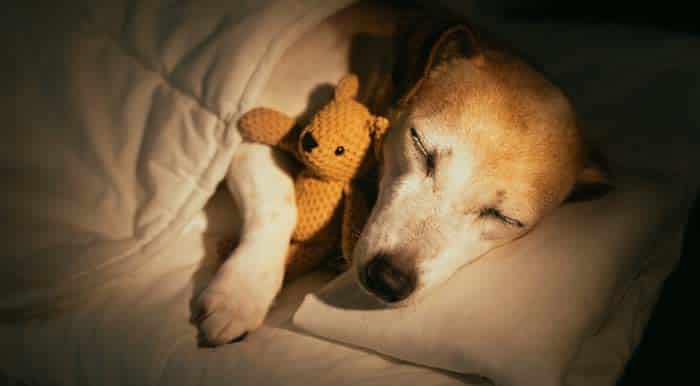
What it looks like: Dog won’t settle in their bed, moves around the house looking for a comfortable spot, sleeps in odd places like the bathroom floor or hallway, wakes frequently.
Why it happens: Too hot, too cold, too noisy, too bright. Uncomfortable bed. Sleeping area too close to household activity, drafts, or a bed that’s the wrong size.
How to fix it:
Temperature: Dogs sleep best in a cool (not cold) room. 15–21°C / 60–70°F is ideal for most breeds.
Light: Dark room or covered crate. Even standby lights on electronics can disturb some dogs.
Noise: White noise machine or low radio to mask sudden sounds like traffic, foxes, neighbors.
Bed: Right size (your dog should be able to stretch fully), right type for their sleep position. Bolster for curlers, flat for sprawlers, orthopaedic for seniors.
Location: Quiet, low-traffic area. Away from doors that bang, boilers that click, or windows with street light.
For the complete environment setup, read our guide on how to create the perfect sleep environment for your dog
5. Lack of Routine or Inconsistent Schedule
What it looks like: Dog doesn’t seem to know when it’s bedtime. Wired at 11 PM. Sleeping at random times during the day. No pattern to their rest.
Why it happens: Irregular walk times, inconsistent mealtimes, no established bedtime, owner works shifts, or the household simply has no predictable daily rhythm.
How to fix it:
Set a consistent bedtime and wake time even on weekends. Regular mealtimes anchor the day. Feed the last meal 2 to 3 hours before bed.
Establish a wind-down routine: final toilet break, dim lights, calm settle, bed. Same sequence every single night. Activity at predictable times during the day – because a dog with a structured day sleeps better at night.
Nighttime toilet needs – not just a puppy issue. Dogs of all ages may need to toilet at night if they have UTIs, diabetes, Cushing’s disease, or kidney problems.
Senior dogs may also have reduced bladder capacity. Limit water 2 to 3 hours before bed (never restrict during the day), and schedule the last toilet break as late as possible. If nighttime toileting is new and persistent, see your vet to rule out medical causes.
Dogs are creatures of habit. It typically takes 1 to 2 weeks for a new routine to stick. Stay consistent and patient.
6. Not Enough Physical or Mental Exercise
What it looks like: Dog seems restless at bedtime but not anxious, just not tired. Pacing, bringing toys, nudging you for attention. Dog restless at night without any obvious distress.
Why it happens: Under-exercised or under-stimulated dogs have pent-up energy at bedtime. This is especially common in working breeds, high energy breeds, and young adults who aren’t getting enough daytime activity.
If you’re out most of the day, chances are your dog slept while you were gone and now they’re wide awake.
How to fix it:
- Increase daily physical exercise by longer walks, off-lead time, fetch, swimming.
- Add mental stimulation: puzzle feeders, sniff walks, training sessions, food-dispensing toys.
- Schedule the most active session in the afternoon or early evening (not right before bed, that’s stimulating, not tiring).
- A “decompression walk”: slow, sniff-heavy, low-energy – about 1 to 2 hours before bed helps dogs wind down beautifully
7. Age-Related Sleep Changes
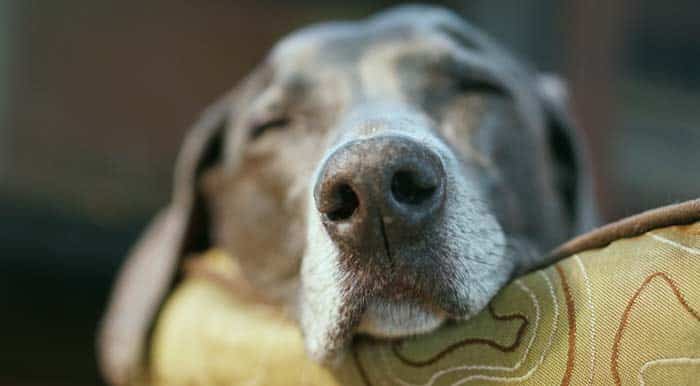
What it looks like: Senior dog sleeping more during the day but restless or waking at night. Pacing in the dark. Confusion or disorientation. Reversed sleep-wake cycle, sleeping all day, up all night. You may notice your dog waking up at night with no apparent trigger.
Why it happens: Cognitive dysfunction syndrome (CDS / canine dementia) affects around 60% of dogs over age 11. Arthritis pain worsens at night when there are no distractions. Reduced bladder capacity. Vision or hearing loss causing confusion in the dark. General age-related decline.
How to fix it:
- Night lights to help dogs with failing vision navigate.
- Consistent environment: don’t rearrange furniture.
- Orthopaedic bed with a low entry point.
- Vet assessment for CDS: medication (selegiline) and supplements (omega-3, SAMe) can help.
- Extra toilet breaks before bed and during the night.
- Patience and compassion – this is a difficult stage for owners and dogs alike.
For a complete guide to navigating this stage, read our article on senior dog sleep changes.
8. Noise Sensitivity and Environmental Disturbances
What it looks like: Dog wakes at specific times e.g. when neighbors come home, bin lorries roll past, or early-morning birdsong kicks off. Or reacts to sudden sounds: foxes, fireworks, thunder. May bark, whine, or pace. Some dogs hear things you can’t like critters in the attic, animals under the deck, neighborhood cats prowling.
Why it happens: Dogs have far more sensitive hearing than humans. Sounds you barely notice can be genuinely distressing or arousing especially at night when everything else is quiet.
How to fix it:
A white noise machine is the single most effective tool for noise-sensitive dogs at night. Move the sleeping area away from windows and external walls. Heavy curtains dampen sound.
If your dog is reacting to wildlife, check the loft, under decking, and around the garden. Address the source if possible. For severe noise phobia (storms, fireworks): a desensitization programme and/or vet-prescribed situational medication.
According to PetMD’s guide to canine sleep disorders, anxiety-driven sleep disruption often responds well to a combination of environmental management and, where needed, medication.
9. Medical Conditions and Dog Sleep Disorders
What it looks like: Sleep issues that don’t respond to any of the above fixes. Persistent dog insomnia, excessive daytime sleepiness, sudden collapse during activity, breathing difficulties during sleep, or dramatic behavior changes alongside sleep disruption. This is the category where dog sleep disorder enters the picture.
Medical causes to rule out:
- Hypothyroidism: disrupted sleep patterns and lethargy.
- Cushing’s disease: increased thirst and urination leads to night waking.
- Urinary tract infections: frequent need to toilet at night.
- Heart disease: coughing at night, difficulty breathing when lying flat.
- Cognitive dysfunction syndrome (CDS): reversed sleep-wake cycle in senior dogs.
- Sleep apnea: common in brachycephalic breeds. Loud snoring, gasping, poor sleep quality. Weight loss and sometimes surgery (widening nostrils, soft palate correction) can help.
- Narcolepsy: this is rare. Sudden collapse into sleep during activity.
- REM sleep behavior disorder: violent movements during sleep: growling, biting, howling while asleep. Often starts in younger dogs, over half show signs before age one. Not the same as normal dream twitching. Movements are intense and rhythmic. Video the behavior and show your vet as they’re unlikely to see it in the clinic.
- Seizures at night: more common during sleep, especially in older dogs. Seizures are less well suppressed at night. Can look like confusion, paddling, stiffening, or pacing. A seizing dog is rigid and unresponsive; a dreaming dog is soft and can be gently roused.
- Medication side effects: some medications list dog insomnia or restlessness as a side effect. If your dog’s sleep changed after starting a new medication, tell your vet. A different drug or dosage may resolve it.
- Nutritional factors: Some dogs have food sensitivities that cause low-grade GI discomfort, not severe enough to show on bloodwork but enough to make them restless. If your dog’s sleep problems coincide with a diet change, or they show signs of digestive discomfort (gurgling stomach, soft stools, gas), discuss a dietary trial with your vet.
How to fix it:
You can’t fix medical dog sleep problems at home. If your dog’s sleep has changed suddenly, dramatically, or without an obvious environmental cause, see your vet.
Bring notes on when the change started, what the disruption looks like, and any other symptoms. For a deeper guide on when sleep changes signal something medical, read our article to see if your dog is sleeping too much or too little
When to See a Vet About Your Dog’s Sleep

See your vet if:
- Sleep disruption came on suddenly with no obvious environmental cause.
- Your dog is also showing other symptoms like appetite changes, weight loss or gain, increased thirst, lethargy, behaviour changes, coughing, or limping.
- Breathing is noisy, laboured, or includes gasping during sleep.
- A senior dog’s sleep-wake cycle has reversed.
- Sleep problems persist for more than 2 to 3 weeks despite fixing environment, routine, and exercise.
- You suspect pain or persistent itchy skin.
- Your dog’s sleep changed after starting a new medication.
- Your dog can’t sleep anxiety is severe enough to cause destructive behaviour or self-harm.
⚠️ EMERGENCY (bloat/GDV): Sudden restlessness + pacing + swollen or hard abdomen + retching without producing anything = life-threatening emergency.
Most common in large and giant breeds. Do not wait. Emergency vet immediately.
What to bring to the vet:
A sleep diary (1 week of notes), video of the sleep behaviour if possible (especially for suspected REM disorder or seizures), a list of any other changes you’ve noticed, current medications, and details of any recent life changes or stressors.
Most dog sleep problems have straightforward solutions. But the ones that don’t, need professional attention sooner rather than later
Quick Troubleshooting Checklist
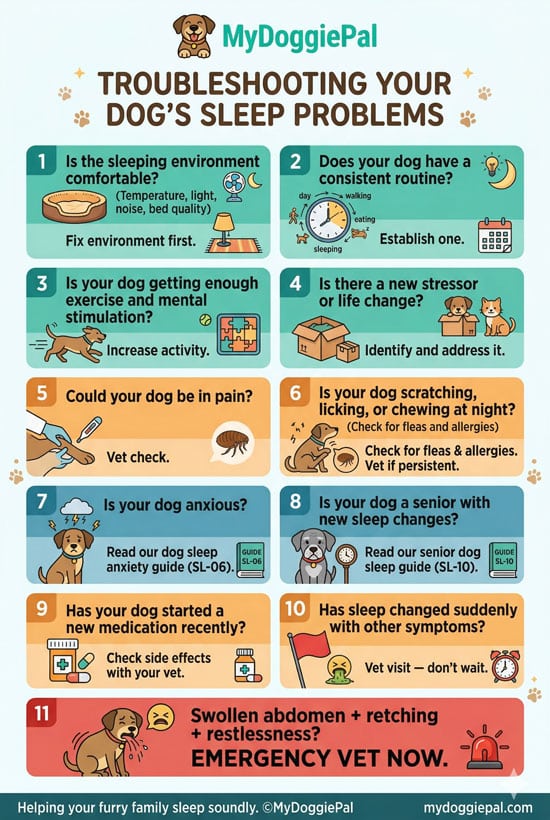
If you’re asking why won’t my dog sleep, work through this list from top to bottom
- Is the sleeping environment comfortable? (Temperature, light, noise, bed quality) → Fix environment first.
- Does your dog have a consistent routine? → Establish one.
- Is your dog getting enough exercise and mental stimulation? → Increase activity.
- Is there a new stressor or life change? → Identify and address it.
- Could your dog be in pain? → Vet check.
- Is your dog scratching, licking, or chewing at night? → Check for fleas and allergies. Vet if persistent.
- Is your dog anxious? → Read our dog sleep anxiety guide.
- Is your dog a senior with new sleep changes? → Read our senior dog sleep guide
- Has your dog started a new medication recently? → Check side effects with your vet.
- Has sleep changed suddenly with other symptoms? → Vet visit — don’t wait.
- Swollen abdomen + retching + restlessness? → Emergency vet NOW.
Frequently Asked Questions
Why is my dog suddenly not sleeping at night?
Sudden sleep changes usually point to pain, illness, anxiety, or a dog sleep disorder. Check for obvious causes first (environment, routine, stressor). If nothing’s obvious, see your vet, especially if other symptoms are present.
Can dogs have insomnia?
Yes. Dog insomnia is real and usually has an underlying cause like pain, anxiety, cognitive dysfunction, medication side effects, or itchy skin. Dogs with insomnia often pace, whine, or act confused at night and appear much more tired during the day. Treatment depends on identifying and addressing the root cause.
Why is my dog pacing at night?
Pacing can signal anxiety, pain, cognitive dysfunction (especially in senior dogs), the need to toilet, or reaction to sounds you can’t hear. If it’s a new behavior, start by ruling out medical causes with your vet.
Is it normal for old dogs to wake up at night?
Somewhat. Older dogs may have reduced bladder capacity or mild discomfort that causes occasional waking. But frequent night waking, pacing, or confusion in a senior dog can indicate cognitive dysfunction syndrome or untreated pain. Always worth a vet visit to rule out treatable causes.
Should I let my dog sleep with me if they can’t sleep alone?
If it helps both of you sleep and you’re happy with it, there’s nothing wrong with it. But if your dog’s inability to sleep alone is driven by separation anxiety, co-sleeping can reinforce the dependency. Address the anxiety itself rather than just the symptom.
Can anxiety cause a dog not to sleep?
Absolutely. Anxiety is the single most common cause of dog sleep problems. If your dog can’t sleep, anxiety is the issue. A combination of environment changes, routine, and potentially vet-guided medication is the way forward.
Could my dog’s food be affecting their sleep?
It’s possible. Food sensitivities can cause low-grade GI discomfort that makes dogs restless at night. Meal timing also matters. Feeding too close to bedtime can cause discomfort. If sleep problems started after a diet change, or your dog shows digestive symptoms (gas, soft stools, gurgling stomach), discuss a dietary trial with your vet.
The Bottom Line
If your dog isn’t sleeping, there’s always a reason and usually a fix.
Start with the basics: environment, routine, exercise. These three things solve the majority of dog sleep problems. If those don’t work, look deeper: anxiety, pain, itchy skin, medical conditions.
Never ignore a sudden change in sleep. Your dog is telling you something.