
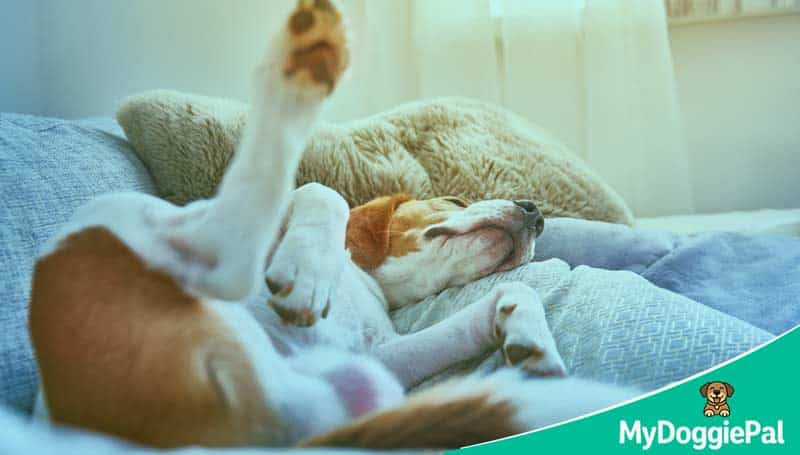
I have once glanced over at my dog and thought “how on earth is that comfortable?”
Dogs sleep in some truly bizarre positions. Legs in the air. Face buried in a cushion. Twisted into shapes that would send a human straight to the chiropractor.
But here’s the thing: those positions aren’t random.
Each one tells you something real about how your dog is feeling. Their temperature. Their comfort. How safe they feel. Even whether something might be wrong.
We’re going to walk through 10 common dog sleep positions, what each one actually means, and when you should pay attention. We’ll also cover what your dog’s sleep behaviors and sleep location reveal.
For the full picture on dog sleep, start with our complete guide to dog sleep
What Your Dog’s Sleep Position Really Tells You
Dogs can’t tell us how they’re feeling.
But their body language speaks volumes and that includes how they sleep.
A sleep position can reveal three things at once:
- how physically comfortable your dog is (including temperature)
- how safe and trusting they feel in their environment,
- and their emotional state – relaxed, anxious, guarded, or playful.
One important thing to know: most dogs cycle through several positions in a single sleep session. No single position defines your dog. What matters is the overall pattern and whether that pattern changes.
Some breeds also gravitate toward certain positions because of their body shape. Deep-chested large breeds often prefer side sleeping to avoid pressure on the chest.
Short-legged breeds like Corgis sploot more naturally because their joints allow it.
With that context in mind, let’s decode each position.
10 Dog Sleep Positions Decoded
1. The Side Sleeper
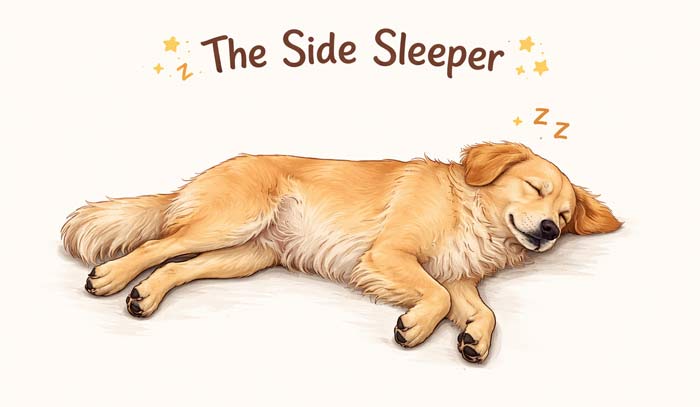
What it looks like: Lying on one side, legs extended or loosely relaxed. The belly and chest are partially exposed.
What it means: This is the “I feel completely safe” position. Your dog’s vital organs are out in the open, which means they trust you and their environment. It’s also the position that allows the deepest REM sleep. So you’ll often see twitching, paddling, and little dream-barks here.
Side sleeping also helps release body heat since more skin is exposed to the air. Dogs who seek cool tile or hardwood floors often choose this position.
According to PetMD’s veterinary sleep guide, large deep-chested breeds like Great Danes and Greyhounds default to side sleeping because it avoids pressure on the ribcage.
When to pay attention: If your dog never side-sleeps, they may not feel fully secure. And if a dog who doesn’t usually side-sleep suddenly starts, it could mean they’re avoiding pressure on a sore joint or muscle
2. The Curled-Up Ball (The Donut)
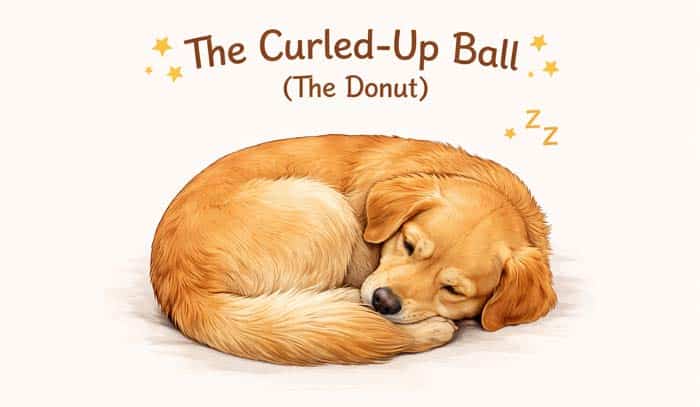
What it looks like: Nose to tail, legs tucked underneath, curled into a compact circle. Your dog might circle the bed a few times before settling into this shape.
What it means: The most instinctive sleep position there is. It conserves body heat and protects the vital organs – belly, throat, and face. You’ll see it a lot in new environments, rescue dogs, and during colder weather.
That circling before lying down? Totally normal. It’s an instinctive behavior, checking the area and flattening the surface. But excessive circling or trouble settling could point to arthritis or a neurological issue. Mention it to your vet if it seems over the top.
Does curling up mean anxiety? Not necessarily. Loads of dogs just find it comfortable. But if your dog only ever sleeps curled up and never relaxes into an open position, it could signal insecurity or cold. Smaller breeds and short-coated dogs curl up more often simply for warmth.
3. The Superman (The Sploot)
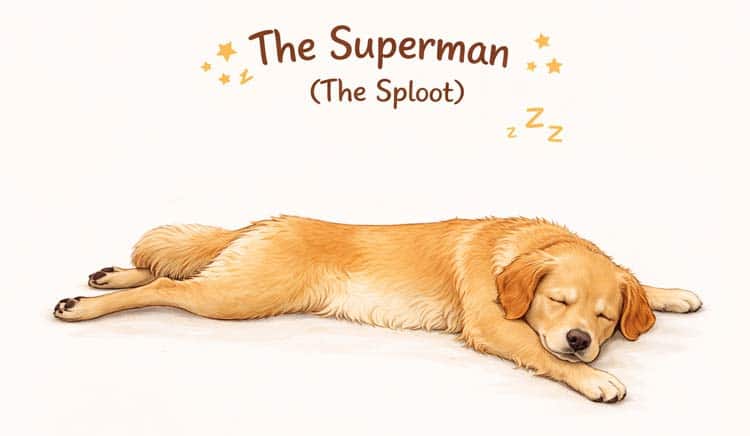
What it looks like: Flat on the belly, front legs stretched forward, back legs stretched out behind, like a furry superhero mid-flight. Some dogs do a half-sploot with only one back leg extended.
What it means: Ready to go at a moment’s notice. This position is common in puppies and high-energy dogs who don’t want to fully switch off. It’s a napping position, not a deep-sleep position so that they can spring up the second something exciting happens.
It’s also a cooling position. Pressing the belly against a cool floor helps regulate temperature. If your dog suddenly starts seeking cold floors to lie flat on, they may be running warm.
Especially adorable in Corgis, French Bulldogs, and other short-legged breeds. Puppies sploot more than adult dogs because their joints are still limber and flexible.
4. The Belly-Up Sleeper
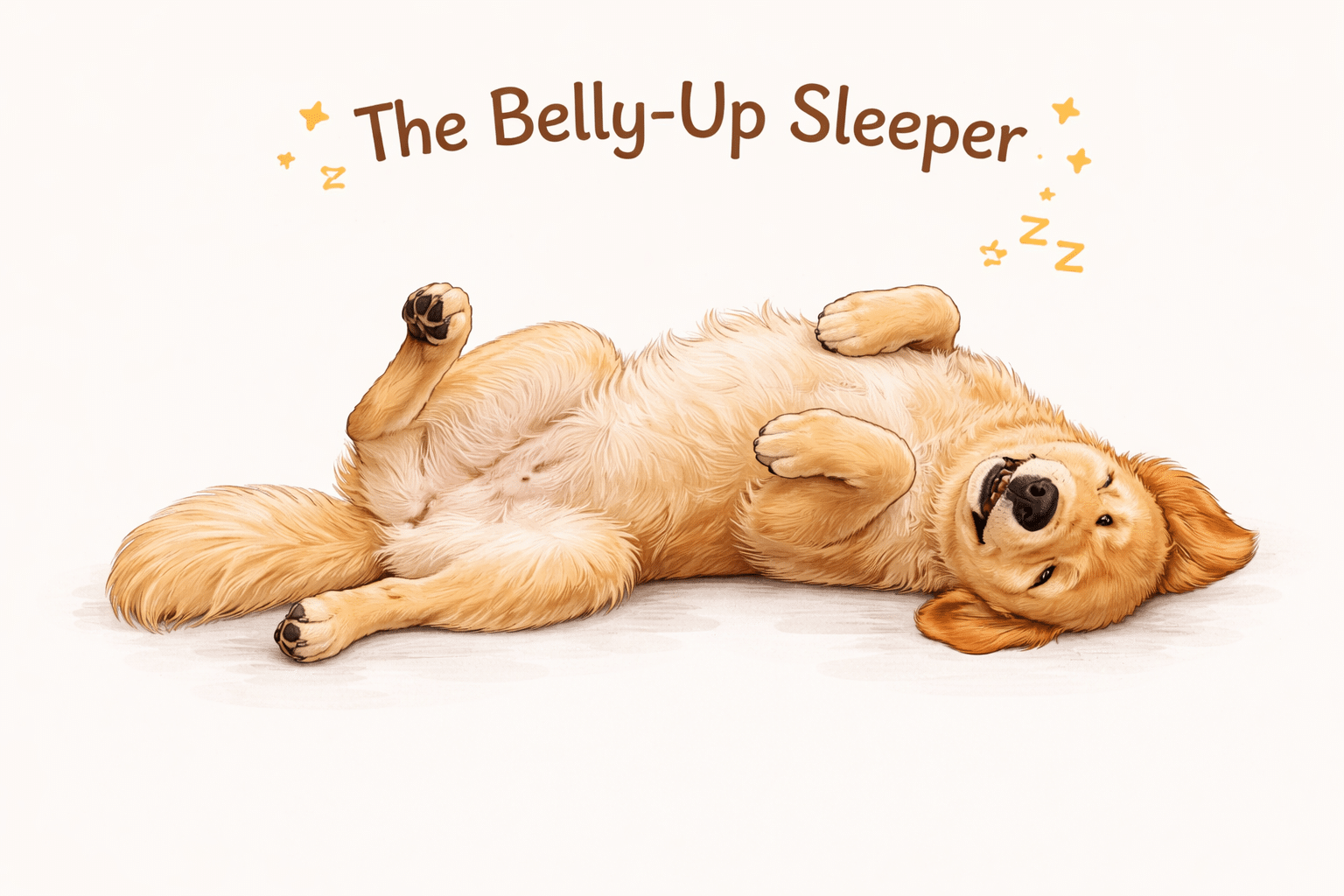
What it looks like: On their back. Belly fully exposed. Paws flopped in the air at ridiculous angles. Often looks absolutely hilarious.
What it means: This is maximum vulnerability, maximum trust. Throat, belly, organs – all completely unprotected. A dog who sleeps like this feels utterly safe in their home.
It’s also a temperature thing.
Dogs don’t have much fur on their belly, so exposing it releases body heat fast. You’ll see more belly-up sleeping in summer or in warm houses. Greyhounds and Whippets are famous for this, sometimes called “roaching” or “the dying cockroach.”
When to pay attention: If a dog who usually belly-sleeps suddenly stops, something in their environment may have changed and made them feel less secure. Think about what’s different.
5. The Cuddler
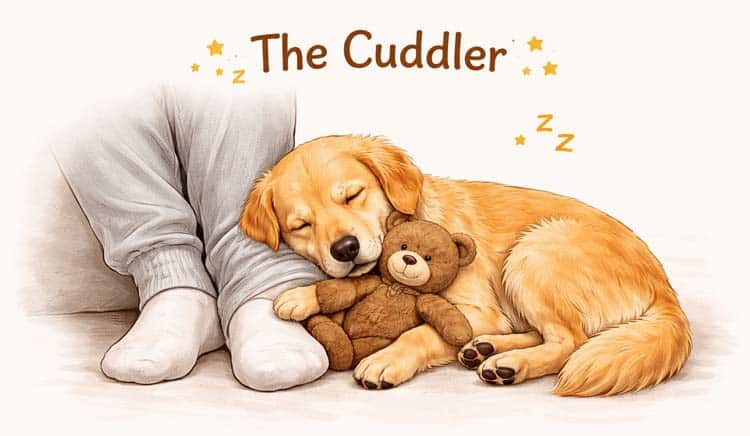
What it looks like: Pressed against your leg, your back, another pet, or even a favorite toy. Seeking physical contact during sleep.
What it means: Bonding and security. Dogs are social sleepers by nature and wild canids sleep in piles. Your dog is treating you as part of the pack. And honestly? That’s one of the best feelings in the world.
Some dogs fall asleep clutching or buried in their toys. Same idea; comfort-seeking behavior. They feel safe and at home.
That said, there’s a subtle difference between relaxed cuddling and clingy contact.
If your dog can’t sleep without pressing against you and shows other anxiety signs, the cuddling might be more about needing reassurance than affection. Learning your dog’s body language helps you tell the difference.
6. The Lion’s Pose (The Sphinx)
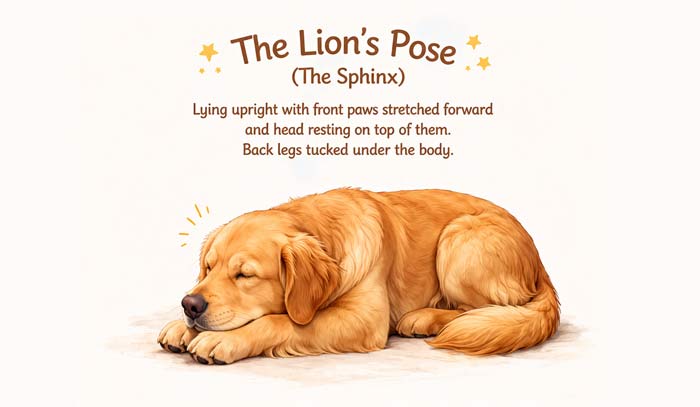
What it looks like: Lying upright with front paws stretched forward and head resting on top of them. Back legs tucked under the body.
What it means: Think of it as “standby mode.” Your dog is resting but not fully switched off. They can get up in a heartbeat from this position. It’s common at the start of a nap or when your dog is keeping half an eye on the room.
Not anxious, just alert. Dogs often start in the lion’s pose and transition to a side or belly-up position once they’re deeper asleep. It’s especially common in protective dogs and breeds with a strong guarding instinct.
From standby mode, let’s look at a position that’s the complete opposite — the dog who wants to disappear entirely.
7. The Burrower
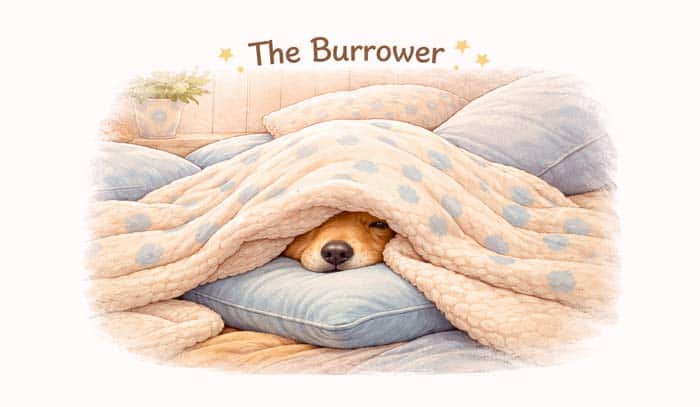
What it looks like: Tunnelled under blankets, pillows, cushions, or jammed between sofa cushions. Sometimes only a nose sticking out.
What it means: Comfort and security. The gentle pressure of blankets has a calming, swaddling effect, similar to a weighted blanket for humans. It’s also a warmth-seeking strategy for dogs who run cold.
Very common in terriers and dachshunds, which were literally bred to go into burrows. It’s in their DNA.
Anxiety note: Some anxious dogs burrow as a coping mechanism. It reduces visual stimulation and creates a den-like feeling. If burrowing is new behaviour and accompanied by other stress signs, it’s worth looking into.
Our guide on sleep anxiety in dogs and how to help your dog relax at night covers this in depth.
8. The Head Elevated Sleeper
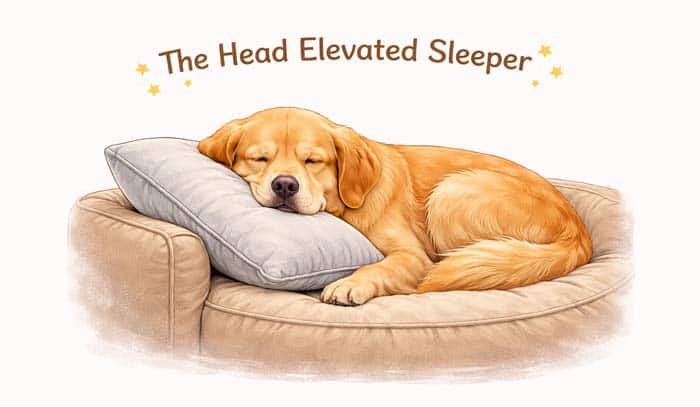
What it looks like: Head resting on a pillow, the arm of a sofa, a raised dog bed edge, or your leg. Anything that elevates the head above the body.
What it means: Usually just a comfort preference. Some dogs like a pillow. But for brachycephalic breeds like Pugs, Bulldogs, and Boxers, a slightly raised head can make breathing easier.
When to pay attention: If your dog consistently seeks a raised head position and this is new behaviour, it could indicate breathing difficulty, nasal congestion, or even early signs of heart-related fluid buildup. Watch for faster breathing, noisy breathing, or reduced exercise tolerance.
According to Casper’s veterinary-reviewed sleep guide, chronic head elevation during sleep is one signal worth raising with your vet.
9. The Back-to-Back Sleeper
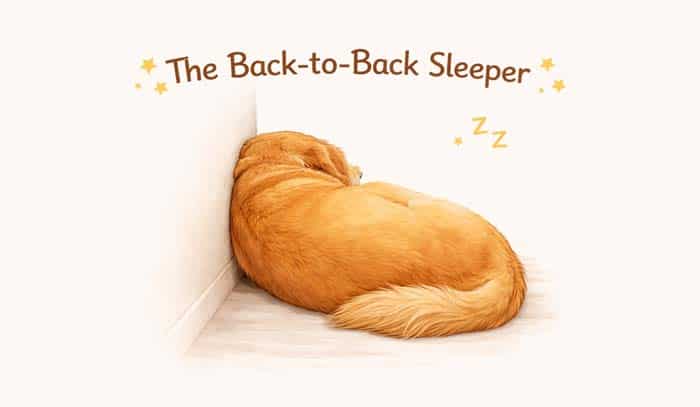
What it looks like: Back or spine pressed firmly against you, another dog, or a wall. Facing away from the contact point.
What it means: Trust and protection combined. By pressing their back against you, your dog is saying “I trust you to watch the other direction.” It’s a cooperative security position, common in bonded pairs of dogs and dogs who are deeply attached to their owner.
This is one of the sweetest sleep positions. If your dog does this, they feel genuinely safe with you. Take it as the compliment it is.
10. The Tightly Wound Sleeper (Tense and Tucked)
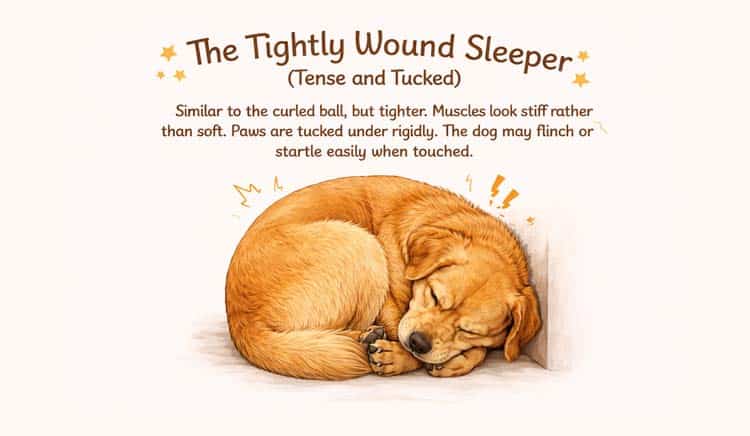
What it looks like: Similar to the curled ball, but tighter. Muscles look stiff rather than soft. Paws are tucked under rigidly. The dog may flinch or startle easily when touched.
What it means: This dog is sleeping because they need to, but they don’t feel safe enough to let their guard down. It’s a position that says “I’m ready to react.”
Common in shelter dogs, newly rehomed dogs, and dogs dealing with anxiety or pain.
When to pay attention: If this is your dog’s only sleep position and they never relax into something more open, take it seriously.
Now that we’ve covered positions, let’s talk about what your dog actually does while they’re asleep.
Sleep Behaviors Decoded: What Your Dog Does While Sleeping
Positions tell you one story. But the twitching, barking, and heavy breathing? That’s a whole different chapter.
Twitching and leg paddling. Completely normal. This is REM sleep – your dog is dreaming. You’ll see it most during side sleeping and belly-up positions. Soft paw movements, facial twitches, and tail flicks are all signs of healthy, deep sleep.
Barking, whimpering, or growling in sleep. Also normal and dream-related. Your dog is reacting to whatever is playing out in their dream. No need to wake them, let them sleep through it.
Heavy or fast breathing while sleeping. Usually normal during REM. But if your dog breathes heavily outside of dreaming phases, consistently and during light sleep, it could signal a respiratory issue, overheating, or stress. Worth keeping an eye on.
Dreaming vs seizure (how to tell the difference). This is the one that worries owners most. And rightly so.
During a dream, movements are soft, intermittent, and your dog can be gently woken with a quiet voice.
During a seizure, the body stiffens, movements are rigid and rhythmic, and the dog is difficult or impossible to rouse. They may drool, lose bladder control, or seem confused afterwards.
If you’re unsure, gently call your dog’s name from a distance. A dreaming dog will usually stir. A seizing dog won’t respond. If you suspect a seizure, contact your vet right away.
Want to know more about what’s happening inside your dog’s brain while they sleep? Read our guide on dog dreaming: what do dogs dream about and should you worry.
Beyond how your dog sleeps and what they do in their sleep, there’s one more clue that’s easy to overlook – where they choose to sleep.
Sleep Positions and Anxiety: When to Worry
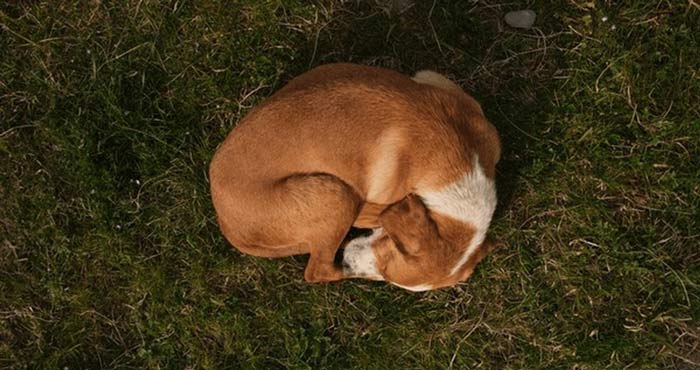
Anxious dogs tend toward closed, protective positions – curled ball, burrowed, tense and tucked.
They rarely belly-up sleep or side-sleep in open spaces. If your dog avoids exposed, vulnerable positions, it’s worth thinking about why.
Other anxiety signs during sleep include frequent waking, inability to settle, panting, whimpering, and sudden changes in sleep location, like a dog who moves from their bed to a closet or starts sleeping by the front door.
If your dog’s sleep position has changed and they’re showing waking anxiety signs, the two are almost certainly connected.
Dog Sleep Positions at a Glance
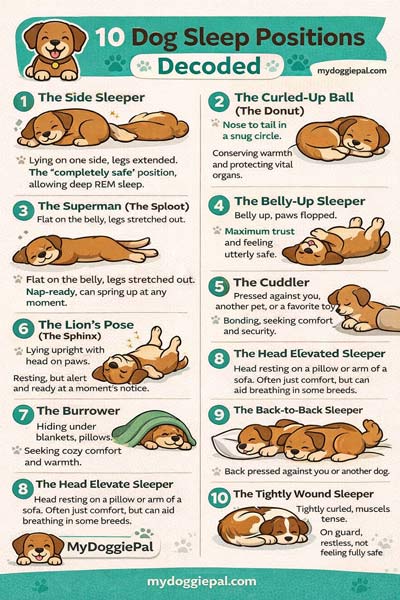
Save this, pin it, or share it with a fellow dog lover. Because once you know what to look for, you’ll never watch your dog sleep the same way again.
Frequently Asked Questions
Why does my dog sleep on their back with legs in the air?
Maximum trust and cooling. Your dog feels completely safe and is releasing body heat through their less-furry belly. It’s also a sign of deep, restful sleep. Consider it a compliment.
Is it bad if my dog always sleeps curled up?
Not usually. Many dogs just prefer it. But if they only sleep curled and never relax into open positions, it could indicate they feel insecure or cold. Watch for other signs of anxiety.
What does it mean when my dog sleeps facing away from me?
Usually trust, not rejection. When a dog puts their back to you, they’re saying “I trust you enough to not watch you.” Back-to-back sleeping is actually one of the most bonded positions there is.
Why does my dog change sleeping positions throughout the night?
Totally normal. Dogs cycle through sleep stages just like humans, and different stages feel more comfortable in different positions. Shifting around is a sign of normal, healthy sleep.
Should I choose a dog bed based on my dog’s sleep position?
It actually helps. Side sleepers do well with flat mattresses. Curlers love bolster beds. Burrowers thrive in hooded or cave-style beds. Matching the bed to the position means better sleep for your dog.
The Bottom Line
Your dog’s sleeping position is one of the quietest but most honest signals they give you.
Most positions are perfectly normal. They shift with temperature, mood, tiredness, and whatever your dog got up to that day.
The thing to watch is change. A dog who suddenly stops sleeping in their usual position, or who only ever sleeps in a tense, closed posture, is telling you something important.
Pay attention to how your dog sleeps tonight. You might learn something new about them.