
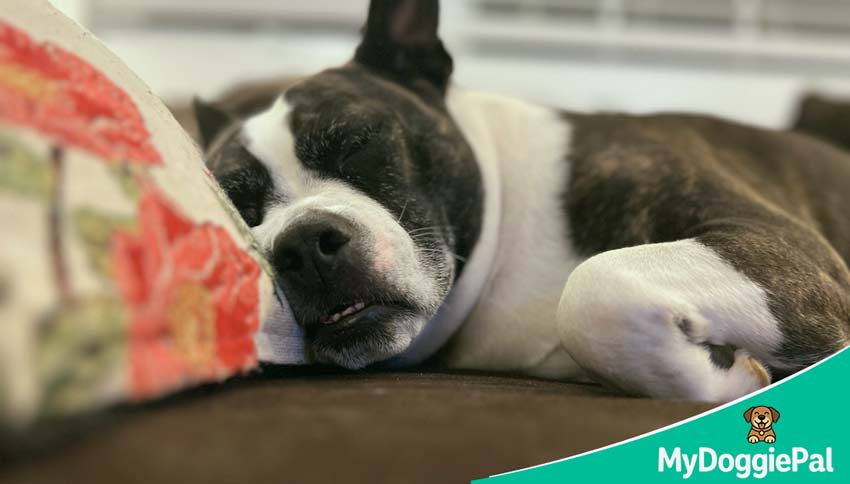
Dogs nap a lot. More than most owners expect. And almost all of it is completely normal.
This guide covers how many naps do dogs take at each life stage, what a normal dog napping schedule looks like, the overtired paradox that trips up nearly every puppy owner, and when dog napping all day tips into something worth paying attention to.
Is Napping Bad for Dogs? Why It’s Actually How They’re Built
Napping is not a sign of laziness. It is not a behavior problem. It is how dogs are biologically designed to sleep.
Dogs are polyphasic sleepers, meaning their sleep is distributed across many short bouts throughout the day and night rather than consolidated into one overnight block. A dog sleeping in short bursts throughout the day is not a dog with a sleep disorder. It is a dog with a dog sleep pattern.
This is adaptive by design. An animal that sleeps in one long uninterrupted block is vulnerable for those hours. Short bouts allow the dog to rest while remaining responsive to its environment.
Not all dog sleep is equal. Most naps do not reach deep slow-wave sleep or full REM. They are light, restorative bouts designed for quick energy recovery.
Deep slow-wave sleep and REM, where physical repair, immune function, and memory consolidation actually happen, are achieved primarily during overnight sleep.
Think of it this way: naps top up energy. Night sleep does the deep repair work. A dog that naps freely during the day and sleeps well overnight is getting both. That is the design.
How Many Naps Do Dogs Take? Normal Napping Patterns by Age
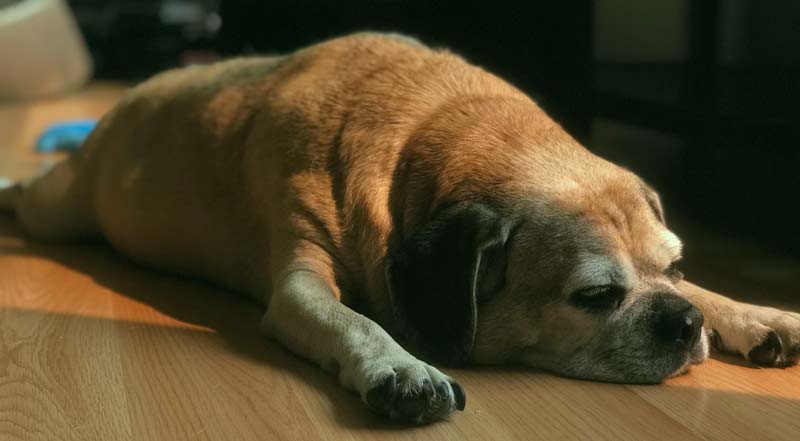
The number of naps varies significantly by life stage. Use this as your reference.
| Life Stage | Age | Daily Sleep Total | Nap Pattern |
|---|---|---|---|
| Newborn puppy | 0 to 4 weeks | 20 to 22 hours | Almost continuous dozing between feeds |
| Young puppy | 4 to 16 weeks | 18 to 20 hours | 4 to 6 naps daily, 30 min to 2 hours each |
| Adolescent puppy | 4 to 12 months | 16 to 18 hours | 3 to 4 naps daily, varies by activity level |
| Adult dog | 1 to 7 years | 12 to 14 hours | 2 to 4 naps daily, typically 30 to 90 min each |
| Senior dog | 7+ years | 14 to 18 hours | 3 to 5 naps daily, lighter and more frequent |
A few notes alongside the table: Large and giant breeds sleep more overall and tend to nap longer per bout. Working breeds in active households often nap less during the day and compensate with deeper overnight sleep.
Both patterns fall within a normal dog napping schedule for those dogs.
According to Rover, adult dogs typically take 2 to 4 naps per day, with each nap lasting anywhere from 30 minutes to 2 hours. What looks like constant napping usually adds up to 12 to 14 hours total when counted alongside overnight sleep.
→ For a full breakdown of total sleep needs by life stage, see our guide: how much sleep dogs need
Napping Through Life: Puppies, Adults, and Senior Dogs
Puppy Nap Schedule
The puppy nap schedule is not optional. It is a biological requirement at the same level as food and water.
4 to 6 naps a day is completely normal for a young puppy. Each nap supports brain development, physical growth, and immune function. The AKC reports that puppies may nap every hour or so, with each nap lasting 30 minutes to 2 hours. All of it is normal.
The key practical point: if a puppy seems drowsy, guide them to their sleep spot and let them rest. Pushing through tiredness produces worse behavior, not better.
THE OVERTIRED PARADOX: WHY A WIRED DOG OFTEN NEEDS A NAP
An overtired puppy does not look tired. It looks wired.
Bitey, clumsy, whiny, suddenly unable to follow a command it knew five minutes ago. This is the overtired paradox: the more sleep-deprived a young dog becomes, the more manic and reactive its behavior appears. The instinct is to add stimulation. The right response is to enforce the nap.
The same pattern exists in adult dogs. A dog that becomes unusually reactive, restless, or difficult in the late afternoon has often been interrupted during a nap or has not had enough rest during the day.
If your dog seems to need calming down, try a quiet settle first. A 30-minute nap often does more than a 20-minute walk at that point.
→ For a full guide to puppy sleep needs and building a routine, see our puppy sleep guide
Adult Dog Nap Patterns
Adult dogs typically nap 2 to 4 times in a typical day. The pattern usually mirrors the household routine: a morning nap after the early walk, a midday lull, and sometimes a short afternoon doze.
Active dogs nap less during the day and sleep more heavily overnight. Dogs in quieter, lower-stimulation households nap more.
Post-meal napping is entirely normal. After eating, blood flow increases to the digestive system and parasympathetic nervous system activity rises, producing a natural sleepiness. A dog that reliably naps after breakfast or dinner is not over-eating. It is digesting.
Post-exercise naps are equally normal and expected. The body needs recovery time after physical exertion. Let them have it.
Senior Dog Nap Patterns
Senior dogs nap more frequently but for shorter, lighter bouts. They wake more easily from naps than they did as adults. A gradual increase in daytime napping as a dog moves into its senior years is expected and normal.
A sudden increase in napping in a dog whose pattern was previously stable is different and worth paying attention to.
→ If your senior dog seems to be sleeping far more than usual, see our guide: Why dogs sleep so much
Dog Napping All Day: Normal or a Problem?
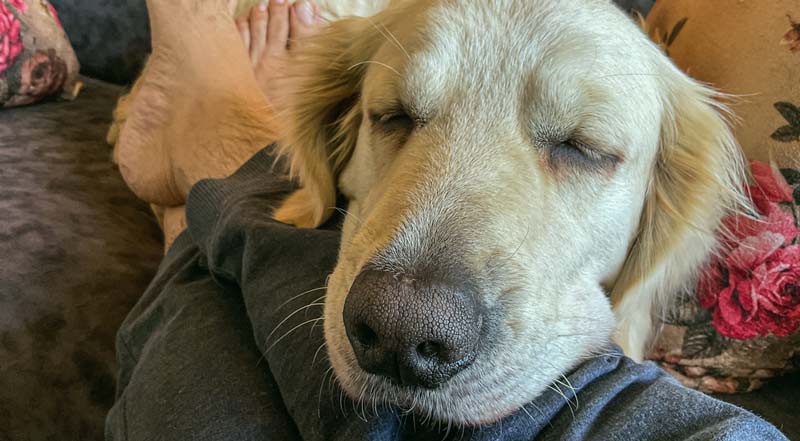
A dog napping all day sounds alarming. It almost never is.
When all-day napping is completely normal:
- Recovery after a high-activity day: a long hike, a training session, a social event with other dogs
- Hot weather: dogs are more heat-sensitive than humans and sleep more when warm
- Older dogs naturally sleep more throughout the day as part of normal aging
- Dogs in quiet, low-stimulation households with little reason to stay alert
What about dogs left home alone?
Research on shelter dogs found that those in busier, noisier environments got less daytime sleep but compensated by sleeping more deeply overnight, reaching the same total daily sleep as dogs who napped freely.
The tradeoff: Dogs that napped freely during the day appeared more relaxed and content overall, according to data reported by the Sleep Foundation. If you work away from home, your dog is almost certainly sleeping while you are out. That is healthy, not lazy.
When all-day napping may indicate boredom:
A dog that sleeps out of lack of anything better to do is not a healthy sleeper. It is an under-stimulated one.
Signs this is boredom sleep: napping stops the moment something interesting happens; the dog seems flat and aimless between naps rather than genuinely rested; there is no depth or settled quality to the sleep.
What helps: more varied walks, puzzle feeders, short training sessions. Breaking the boredom cycle improves both waking behavior and overnight sleep quality.
When all-day napping warrants attention:
A sudden change in a dog whose pattern was previously stable. Any napping that is paired with reduced appetite, personality shift, weight change, or difficulty waking. See Section 5 for the specific signs.
When Dog Napping Becomes a Warning Sign
Most daytime napping is normal. These specific signs are the exception.
- A sudden increase in napping in a dog whose pattern was previously stable
- Difficulty waking from naps: groggy, slow to respond, or reluctant to rouse
- Napping paired with reduced appetite or refusal of food
- Napping paired with weight change in either direction
- Flat, subdued personality when awake between naps (lethargy, not just tiredness)
- Napping paired with increased thirst or urination
- Any other behavior change alongside the extra sleep
A dog napping all day is not a concern on its own. It becomes one when the waking hours between naps look different too.
What a Normal Dog Day Looks Like: Sample Napping Schedule
Here is a sample daily schedule for an adult dog in a typical household.
| Time | Activity |
|---|---|
| 7:00 am | Wake, morning walk |
| 8:30 am | Breakfast, then morning nap begins (about 1 hour) |
| 9:30 am | Awake, alert period |
| 12:00 pm | Midday nap (1 to 1.5 hours) |
| 1:30 pm | Awake, playtime or enrichment |
| 4:00 pm | Afternoon nap (30 to 45 min) |
| 5:00 pm | Evening walk and dinner |
| 7:30 pm | Post-dinner nap (about 30 min) |
| 9:00 pm | Wind-down, settles |
| 10:00 pm | Overnight sleep begins (8 to 9 hours) |
Total daytime naps: approximately 3 to 3.5 hours across 4 nap bouts.
Total overnight: 8 to 9 hours.
Grand total: 11 to 12.5 hours, sitting at the lower end of the adult range for an active dog.
This schedule is built around a morning walk and an evening walk. Every element shifts depending on when the owner walks and feeds the dog. The nap windows follow the activity windows, not the clock.
How to Support Good Napping Habits
- Consistent nap spots. A dog with a reliable, familiar sleep location naps more deeply and settles faster. Moving the bed or changing the spot regularly disrupts this.
- Protect the nap. Do not constantly disturb a napping dog. Repeated interruptions reduce the quality of rest and can produce an irritable, reactive dog that seems to need more calming.
- Pre-nap activity. A short walk or a play session before a scheduled nap deepens the sleep. Physical activity primes the body for rest in a way that passive waiting does not.
- Avoid boredom naps. Make sure there is enough stimulation in waking hours so that sleep comes from genuine tiredness rather than absence of anything else to do.
WHAT YOUR DOG’S NAP LOCATION TELLS YOU
Dogs choose their nap spot based on instinct. Understanding the choice removes the worry.
Cold tile floor in summer: temperature-seeking. The dog is regulating body heat, not rejecting the bed.
Enclosed space under the desk or behind the sofa: security-seeking. The enclosure triggers the natural denning instinct.
Near the front door or a window: alert-positioning. The dog is resting but maintaining environmental awareness.
Right next to you or on your feet: attachment. This is simply where they feel safest.
None of these require correction. They all reflect a dog making intelligent comfort choices.
The Bottom Line
Dogs nap a lot because that is how they are built. 2 to 4 naps for an adult dog is normal. 4 to 6 for a puppy is expected.
The naps themselves are not the concern. The waking hours between them are the giveaway. A dog that naps freely and wakes up engaged and alert is doing exactly what it should.
For everything about dog sleep in one place, visit our complete guide to dog sleep.