
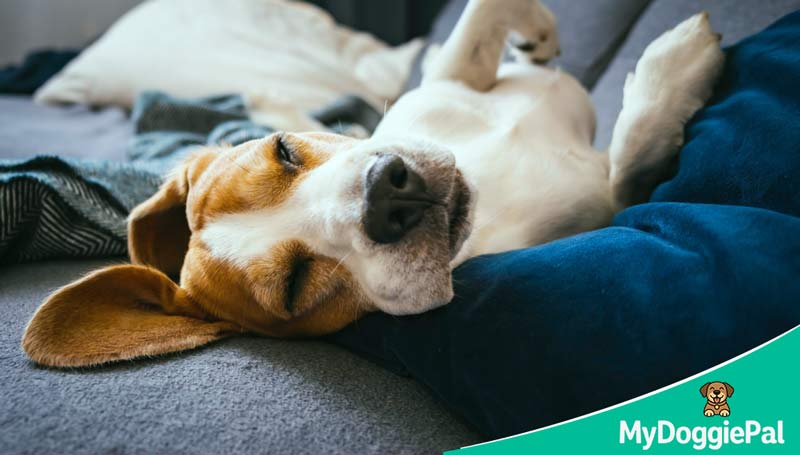
It is not uncommon to see your dog fast asleep and suddenly, their legs start moving. Their tail gives a little wag. A soft whimper escapes. Then a muffled bark.
And you think… is my dog dreaming right now?
It’s one of the most heartwarming things to witness. And honestly, one of the most common questions we hear from dog owners.
The good news? Science has some pretty compelling answers.
In this guide, we’ll walk you through what’s actually happening in your dog’s brain during sleep, what all those twitches and whimpers really mean, whether dogs dream and can have nightmares, and most importantly, when you should be concerned and when you can simply smile and enjoy the show.
Here’s what most owners don’t realise: those sleep movements aren’t random. They’re a sign of a healthy, active, emotionally rich brain doing exactly what it’s supposed to do.
Curious? Let’s get into it.
What Happens in a Dog’s Brain During Sleep
Here’s something that might surprise you.
Your dog’s sleeping brain looks a lot like yours.
Dogs go through the same basic sleep stages as humans: light sleep, deep sleep, and REM (Rapid Eye Movement) sleep. They cycle through all of them, just like we do.
So what actually happens in each stage?
Light sleep (NREM) is where it all begins. Your dog’s body starts to relax but they’re still easy to wake. You’ve probably seen this – a small noise and their eyes pop open.
Deep slow-wave sleep comes next. This is where the body does its repair work. Tissues heal, the immune system strengthens, and heart rate slows right down.
Then comes the stage we’re really here to talk about.
REM sleep, and this is where things get interesting.
During REM, your dog’s brain activity spikes dramatically. It looks almost identical to a wide-awake brain on a scan. This is the stage most closely linked to dreaming, and it’s when you’re most likely to see all that twitching and paddling. So it’s central to understanding dog twitching in sleep.
Here’s the key to understanding why your dog moves during sleep.
A part of the brainstem called the pons acts like an off-switch for the muscles during REM. It stops your dog from physically acting out whatever is happening in their dream. But – and this is important – it doesn’t switch off completely. Small signals leak through. That’s what causes the twitches.
A single sleep cycle in dogs lasts around 20 minutes, with roughly 6 of those minutes spent in REM. Dogs spend about 10–12% of their total sleep time in REM, less than humans, but enough to support rich dream activity.
And here’s something really worth knowing.
Dreaming isn’t just cute to watch. It actually serves a real purpose. Scientists believe REM sleep is when the brain consolidates memories, processes emotions, and reinforces learning.
If your dog had a great training session today, there’s a genuine chance they’re practising it tonight in their sleep.
Pretty incredible, right?
Want to go deeper on how your dog’s sleep works from start to finish? Discover everything about dog sleep science in our complete guide
Do Dogs Actually Dream? What the Science Says
So here’s the big question.
Do dogs actually dream?
The honest answer is we can’t know for absolute certain. We can’t exactly ask them. But the scientific evidence points strongly in one direction.
Yes. Dogs almost certainly dream.
And we’re not just guessing here. Let’s look at what the research actually tells us.
It’s Not Just Dogs
First, it helps to zoom out a little.
Dreaming isn’t unique to humans. Scientists now believe that most vertebrates dream and some research suggests even insects might. We know that rats dream about mazes they ran through during the day.
Zebra finches literally practise their songs in their sleep. If animals that simple can dream, dogs, with their far more complex brains almost certainly can too.
The Brain Wave Evidence
Neuropsychological researcher, Stanley Coren has spent years studying dog sleep. His findings are striking.
The brain wave patterns of sleeping dogs are remarkably similar to those of sleeping humans, going through the same stages of electrical activity, including the patterns we see in humans when they’re actively in dog REM sleep and dreaming.
That’s not a small thing. That’s the same biological signature of dreaming showing up in a completely different species.
You can read more about Coren’s work and the wider science of animal dreaming over at Psychology Today — it’s fascinating reading.
The Pons Experiment
This is the piece of evidence that really seals it.
In studies where the brainstem mechanism (the pons) was temporarily disabled in sleeping dogs, something remarkable happened. The dogs began to physically act out their dreams. Pointers started pointing. Retrievers appeared to be fetching. Dogs ran, chased, and explored all while completely asleep.
Their bodies were doing exactly what their dreaming brains were telling them to do.
That’s not coincidence. That’s dreaming.
What Do Dogs Dream About?
We can’t know exactly but we can make a pretty good guess.
Scientists believe dogs dream about their everyday experiences: the walk they went on, the dog they met at the park, the game of fetch in the garden. Emotionally significant moments seem especially likely to show up in dreams.
And yes, your dog almost certainly dreams about you.
The bond between a dog and their owner is one of the most emotionally significant relationships in a dog’s life. It would be surprising if that didn’t show up in their dreams.
Breed instincts appear to play a role too. Spaniels may dream about flushing birds. Pointers may point at imaginary prey. Your dog’s REM sleep seems to reflect not just their day but their deepest instincts.
There’s something quietly wonderful about that.
The American Kennel Club has a great breakdown of what dogs likely dream about if you want to explore this further.
Now that we know dogs dream, the next question is what all those twitches, whimpers, and running movements actually mean. And that’s exactly what we’re covering next.
What Those Sleep Movements Actually Mean
Not all sleep movements are the same. Each one tells a slightly different story. Let’s break them down one by one.
Twitching and Paddling
This is the most common one.
During REM sleep, the pons doesn’t fully suppress every muscle signal. Small bursts of movement leak through and that’s what you’re seeing when your dog’s legs twitch or paddle rhythmically. This is the most typical form of dog twitching in sleep.
It’s completely normal. It’s not pain. It’s not distress. It’s simply their dreaming brain sending tiny signals their body partially responds to.
You’ll notice it more in puppies and senior dogs, and there’s a good reason for that. In puppies, the pons is still developing. In older dogs, it becomes less efficient with age. Both ends of the age spectrum = more twitching.
Here’s something most owners don’t think about.
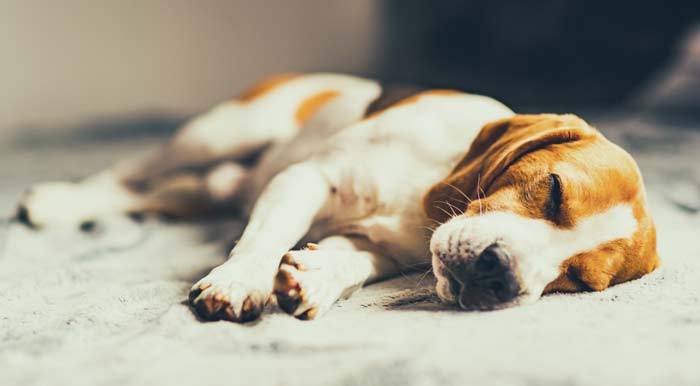
Sleeping position actually affects how much your dog twitches. A dog sleeping stretched out on their side, muscles fully relaxed, will twitch far more than a dog curled up in a ball. Curled positions keep muscles slightly tensed, which dampens those dream signals getting through.
So if your dog sprawls out flat and goes absolutely wild in their sleep, that’s just a very relaxed, deeply sleeping dog.
Want to understand what your dog’s sleeping position says about them? Explore the full meaning behind every dog sleep position
Whimpering, Barking, or Growling
Your dog isn’t in pain.
When your dog whimpers, lets out a soft bark, or even growls during sleep, their brain is replaying emotionally charged experiences.
That bark you’re hearing? They’re probably barking at a dream squirrel the exact same way they would during the day.
It’s their brain doing what brains do: processing, replaying, reacting.
Growling during sleep doesn’t mean your dog is aggressive. Whimpering doesn’t mean they’re suffering. These are simply the sounds of a busy, dreaming mind.
That said, intensity matters. A soft whimper is very different from prolonged yelping or distressed crying. We’ll cover that in the nightmares section coming up.
Running Movements: Dog Running in Sleep
Full leg cycling. Big paddling motions. Sometimes the whole body seems to be going somewhere.
This is what owners often describe as their dog running in sleep — and the brain is genuinely running in a dream, while the legs are along for the ride.
It tends to be more dramatic in larger, more active breeds. A working Labrador or a Border Collie is more likely to put on a full sleep performance than a laid-back Basset Hound.
Usually resolves on its own within seconds. Nothing to worry about.
Tail Wagging and Lip Movements
This one surprises a lot of owners.
Dogs don’t just twitch their legs in sleep. They can also wag their tail, curl their lip, snarl, twitch their nose, or even let out a little howl – all completely normal dream-state responses.
Some dogs even startle themselves awake mid-dream with a sudden bark. You’ve probably seen the look – that slightly confused “where am I?’ expression before they settle straight back down.
It’s completely harmless.
Eye Movement and Flickering
If you look closely at a deeply sleeping dog, you can sometimes see their eyes moving rapidly beneath their closed lids.
That’s dog REM sleep – Rapid Eye Movement – happening in real time. Your dog is literally watching dream images play out as if they were real. Their eyes are tracking the action.
It’s one of the clearest signs your dog has entered active dream sleep.
Do Dogs Have Nightmares?
This question has been asked a lot.
Can my dog have bad dreams?
The answer is: almost certainly yes.
Because dogs dream about real experiences and real emotions, it makes complete sense that not every dream is a happy one. Fear, stress, and unpleasant memories don’t disappear when your dog closes their eyes.
What Might Trigger a Dog Nightmare?
Think about the experiences that unsettle your dog during the day.
Nightmares likely replay those same moments. For example, a thunderstorm that scared them, an aggressive dog they encountered at the park, a stressful vet visit, or a period of separation anxiety.
Whatever triggers fear or stress when they’re awake can resurface when they’re asleep.
Rescue dogs and dogs with a difficult past may be especially prone to unsettled sleep as their brains have more difficult material to process.
Signs Your Dog May Be Having a Nightmare
- Intense whimpering or yelping. Not just soft sounds
- Aggressive growling or snarling during sleep
- Thrashing or very distressed body movements
- Appearing tense rather than relaxed
- Waking suddenly in a startled or confused state
The difference between a vivid dream and a nightmare usually comes down to intensity and duration. A short whimper that passes in seconds is almost always fine. Prolonged distress that doesn’t settle is worth paying attention to.
What Should You Do?
In most cases, nothing. Let it run its course.
Nightmares in dogs are usually brief. Interrupting them can actually make things worse. More on that in the next section.
If you feel you really need to help your dog, call their name softly from a distance. Don’t lean over them. Don’t touch them suddenly. Give them the chance to come back to consciousness gently before you offer any comfort.
And once they’re awake, absolutely go and give them a cuddle. They might need it.
When Nightmares Become a Red Flag
Here’s something important that most articles don’t mention.
If your dog suddenly starts having frequent, intense nightmares out of nowhere and nothing obvious has changed in their life, it’s worth a conversation with your vet.
Sudden changes in sleep behavior can sometimes signal an underlying medical issue. It’s always better to check than to wonder.
Should I Wake My Dog From a Dream?
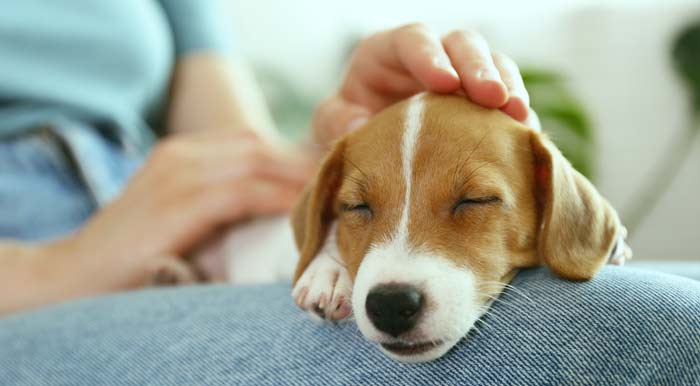
When you see your dog whimpering in their sleep. Every instinct you have says go and comfort them.
But should you? The short answer is no – and here’s why that actually matters.
Roughly 6% of all dog bites happen when a dog is woken abruptly from sleep.
That’s not a small number.
And it’s not because those dogs are aggressive or dangerous. It’s simply biology. A dog pulled suddenly from deep REM sleep can snap reflexively before they’ve even registered where they are or who’s touching them.
Even the gentlest, most loving dog in the world can do this.
The old saying – let sleeping dogs lie – is genuinely good advice in its most literal sense.
So What Should You Do Instead?
In most cases, simply watch and wait.
The vast majority of dreams, even dramatic ones, resolve on their own within 30 to 60 seconds. Your dog will settle. Their breathing will slow. And they’ll drift back into peaceful sleep.
If the movements are prolonged, escalating, or your dog seems genuinely distressed and unable to settle, then it’s reasonable to gently intervene.
Here’s how to do it safely:
- Sit or crouch nearby but don’t loom over them
- Say their name in a calm, quiet voice
- Wait for a response before reaching out to touch them
- Once they’re awake and oriented – then offer reassurance
After the Dream
Brief disorientation after waking from a vivid dream is completely normal. Your dog may look around with a slightly puzzled expression for a few seconds.
Give them a moment. Let them find their bearings. Then absolutely go ahead and offer all the comfort you want.
The important thing to remember is this: a vivid, dramatic dream is a sign of a healthy brain. It means your dog is sleeping deeply, processing their experiences, and doing exactly what a healthy dog brain should be doing.
That’s not something to interrupt. That’s something to be grateful for.
Now here’s where we need to have a slightly more serious conversation because not every movement during sleep is a dream. Sometimes it’s something that needs attention. Let’s talk about how to tell the difference.
Normal Dream Twitching vs. Seizure: How to Tell the Difference
This is the section that matters most.
Because while dog twitching in sleep is almost always completely harmless, there are times when what looks like a dream is actually something that needs urgent attention.
Knowing the difference could genuinely protect your dog.
The Key Differences at a Glance
| Feature | Normal Dream Behaviour | Seizure |
|---|---|---|
| Duration | Seconds to ~1 minute | Often longer — may not stop |
| Movement | Rhythmic, relaxed paddling | Rigid, violent, uncontrolled |
| Body tension | Flexible and relaxed | Stiff and rigid |
| Responsiveness | Wakes when called | Unresponsive or confused |
| Eyes | Flickering under closed lids | Open, glazed, or rolled back |
| Recovery | Alert within seconds | Prolonged confusion, weakness |
| Bladder/bowel | Not affected | May lose control |
| Drooling/foaming | Absent | May be present |
The Single Most Important Test
If you’re ever unsure whether what you’re watching is a dream or a seizure, say your dog’s name.
A dreaming dog will stir, shift, or wake. A dog in the middle of a seizure will not respond to your voice.
That one simple test can tell you a lot.
Beyond Seizures: Other Reasons for Excessive Twitching
Seizures aren’t the only medical concern worth knowing about.
Excessive or unusual twitching during sleep can also be a sign of low blood sugar, malnutrition, infection, or significant stress. These are less dramatic than seizures but still worth taking seriously.
And here’s a red flag many owners miss entirely.
If your dog’s twitching is so intense or frequent that it wakes them repeatedly or prevents them from settling into proper restful sleep, that’s a problem in its own right.
Disrupted REM sleep affects your dog’s memory, mood, immune function, and overall health. It’s not something to brush off.
When to Call Your Vet: Don’t Wait If You See These
- Confusion or disorientation lasting more than a few minutes after waking
- Loss of bladder or bowel control during sleep
- Repeated episodes in a short period of time
- Physical injury during a sleep episode
- Twitching so severe or frequent it disrupts normal sleep consistently
If you’re ever in doubt — video the episode on your phone if it’s safe to do so and show your vet. A 30-second clip is worth more than a description.
For a deeper understanding of the difference between normal sleep movements and neurological events, the American Kennel Club’s veterinary guidance is an excellent resource.
Now let’s look at how dog dreaming differs across the stages of your dog’s life — because puppies, adults, and senior dogs all experience sleep and dreams in very different ways.
Do Puppies and Senior Dogs Dream Differently?
Yes. Quite a lot differently actually.
Age has a significant effect on how often your dog dreams, how intensely they dream, and what those dreams might mean for their health.
Puppies: The Champion Dreamers
If you’ve ever owned a puppy, you already know this.
They twitch constantly.
There’s a very good reason for that. Puppies are absorbing an extraordinary amount of new information every single day: new sights, sounds, smells, people, experiences. Their brains need more REM sleep to process all of it.
A puppy can enter dog REM sleep and begin dreaming every 10 minutes or so, with each dream lasting around 60 seconds. That’s a lot of dreaming packed into a nap.
Their pons, the brainstem mechanism that suppresses muscle movement during sleep is also still developing.
So, more signals leak through.
More twitching.
More vocalizations.
More dramatic sleep performances.
It can look alarming if you’ve never seen it before. But in a healthy puppy, it’s one of the best signs you can see.
Adult Dogs: Fewer Dreams, Longer Ones
As dogs reach adulthood, their sleep patterns settle down.
Dream cycles become less frequent but longer. A large adult dog might have a 5-minute dream and then go an hour with no dreams at all. Twitching becomes less pronounced.
Sleep generally looks calmer.
Small breeds continue to dream more frequently than large breeds throughout adulthood — a small dog might still cycle into REM sleep every 10 minutes, while a large breed dreams far less often but for longer durations.
This size difference in dream patterns is one of the more fascinating quirks of canine sleep science.
Senior Dogs: When to Watch More Closely
Older dogs often become more active in their sleep again, more vocalization, more movement, more frequent waking.
Some of this is completely normal. The pons becomes less efficient with age, just like in puppies, so more movement leaks through during dreams.
But in senior dogs, there’s an additional layer to consider.
Cognitive Dysfunction Syndrome (CDS): the canine equivalent of dementia, can cause sleep disturbances, disorientation on waking, and increased vocalization during sleep.
If your older dog seems genuinely confused after waking, or their sleep behavior has changed noticeably, it’s worth raising with your vet sooner rather than later.
Pain is another factor. Arthritis, dental discomfort, and other age-related conditions can disrupt sleep and increase restlessness. A dog in physical discomfort often shows it at night first.
Want to understand exactly how your dog’s sleep needs change from puppyhood to old age? See our complete guide to dog sleep by life stage
Frequently Asked Questions
Is it normal for my dog to cry in their sleep?
Yes. Soft crying or whimpering during REM sleep is completely normal. It almost certainly reflects emotional dream content. If it’s frequent, intense, or seems to be waking your dog repeatedly, mention it to your vet.
Why does my dog twitch so much in their sleep?
Dog twitching in sleep is most common during REM and is especially pronounced in puppies, small breeds, and senior dogs. It happens because the brain’s muscle-suppression system doesn’t switch off completely during dreams. It’s a healthy sign of active dreaming – not pain or distress.
Should I wake my dog if they seem to be having a bad dream?
Resist the urge to touch them immediately. Speak softly from a distance first and wait for them to respond. Around 6% of dog bites happen when a dog is startled awake, even the most gentle dogs can snap reflexively when pulled from deep REM sleep.
How long does REM sleep last in dogs?
Dogs enter dog REM sleep roughly 20 minutes after falling asleep. Small dogs cycle through REM approximately every 10 minutes for around 60 seconds at a time. Large dogs dream less frequently but for longer, sometimes up to 5 minutes per cycle.
Do dogs dream about their owners?
Almost certainly yes. Dogs form their strongest emotional bonds with their owners and because dogs dream about emotionally significant experiences, you’re very likely making regular appearances in your dog’s sleep.
Can my dog’s nightmares be a sign of something wrong?
Occasional nightmares are completely normal. But if your dog suddenly starts having frequent, intense episodes during sleep with no obvious cause. A vet visit is a good idea. Sudden changes in sleep behavior can sometimes point to an underlying medical issue.
What’s the difference between a dog dreaming and having a seizure?
A dreaming dog will respond when you call their name and will be alert within seconds of waking. A dog having a seizure will be unresponsive, may have a rigid body, open glazed eyes, and may show confusion, drooling, or loss of bladder control afterwards. When in doubt – video it and call your vet.