
Watching my dog nap through most of the day used to make me worry; was he bored, lazy, or maybe sick?
But over time, I learned that dogs have their own rhythm, one that’s very different from ours.
In this article, we’ll dig into why dogs need so much sleep, the reason behind their daily snoozes, when it might signal a problem, and how you can help them get the best rest possible.
I’ll share what I’ve discovered through experience, research, and a few sleepless nights watching my pup dream.
So let’s start by clearing up one thing: do dogs really need that much sleep?
Table of Contents
ToggleDo Dogs Really Need That Much Sleep?
It might surprise you, but yes dogs really do need that much sleep.
While most of us humans push through the day on 7 or 8 hours, our furry friends can easily clock double that.
Adult dogs typically sleep 12–14 hours a day, while puppies, senior dogs, and larger breeds can snooze for up to 20 hours.
That doesn’t mean they’re lazy – far from it.
Dogs have a polyphasic sleep pattern, which means they rest in short bursts throughout the day instead of one long stretch at night like we do.
They’re built to nap, wake, and nap again. It’s simply how their bodies recover energy, process stimulation, and stay balanced.
Of course, a dog’s lifestyle plays a big role.
Active working breeds or dogs that get plenty of mental stimulation may sleep a bit less, while laid-back or older pups spend more time recharging.
Even things like weather, diet, and household noise can influence how much shut-eye they get.
Dogs sleep a lot because their world runs on energy bursts play hard, nap harder. But how much sleep is normal for your dog’s age?
Let’s break it down next.
How Much Sleep Do Dogs Actually Need by Age?
Just like people, dogs go through different sleep patterns as they grow and understanding those stages can save you a lot of worry.
What’s normal for a puppy might look excessive for an adult dog, and what seems like laziness in a senior pup could just be age catching up gently.
Puppies are the real sleepers. They need around 18–20 hours of rest each day.
Their little bodies and brains are growing fast, and sleep helps with everything from muscle development and learning commands to building a strong immune system.
Adult dogs typically do well on 12–14 hours a day. The more active or mentally stimulated they are, the less they’ll need to nap.
A long walk, training session, or playtime burns off energy and helps them settle into deeper, more restful sleep.
Senior dogs drift back to needing 16–20 hours daily. Aging slows their metabolism, weakens muscles, and can make joints ache so rest becomes recovery. They’re not being lazy; they’re just pacing themselves.
Working breeds (like Border Collies, Huskies, or Shepherds) may sleep less because their bodies are built for stamina and constant movement. Once they retire or have fewer tasks, their sleep gradually increases.
| Age / Type Average Sleep Hours Notes | Average Sleep Hour | Notes |
|---|---|---|
| Puppies | 18–20 hrs | Essential for growth, learning & immunity |
| Adult Dogs | 12–14 hrs | Depends on activity, routine & stimulation |
| Senior Dogs | 16–20 hrs | Slower metabolism, joint stiffness |
| Working Breeds | 10–12 hrs | High energy; need mental & physical tasks |
Knowing these numbers can help you tell when your dog’s habits are totally normal or when something might be off.
Now that you know how much dogs sleep, let’s look at why they sleep so much and what’s happening behind all those naps.
Why Dogs Sleep So Much? 6 Common Reasons
When your dog spends most of the day napping, it’s easy to think something’s wrong. But in most cases, there’s a simple, natural reason behind all that shut-eye.
Let’s break it down and I’ll share a few personal insights from life with my own sleepy pup along the way.
1. Energy Recovery
Dogs live in bursts of energy – one minute they’re chasing a ball like a rocket, the next they’re out cold.
Unlike us, dogs burn through energy quickly, especially during play or walks. Sleep is how they recharge their batteries.
Think of it this way: your Labrador crashing for hours after a long fetch session isn’t being lazy – it’s his body refueling.
I used to worry my dog was overdoing it, but once I learned this rhythm, it made perfect sense.
2. Natural Instinct
Dogs might live in our homes now, but their bodies still follow ancient instincts. In the wild, canines conserved energy for hunting and survival.
Resting between bursts of activity was vital and that instinct hasn’t disappeared.
Even though your dog’s biggest “hunt” might be finding crumbs under the couch, his biology still tells him to rest often. It’s built into who they are.
3. Boredom or Lack of Stimulation
Sometimes, dogs sleep because… well, there’s just not much else to do.
When dogs don’t get enough mental or physical stimulation, they often nap out of boredom.
I’ve noticed this on rainy days when my dog can’t go out, he’ll wander, sigh, and then curl up for another nap.
Try adding puzzle toys, training games, or even a short indoor play session. You’ll be amazed how a bit of fun can cut down on all-day snoozing.
4. Weather
Ever feel sleepy on a cold, grey afternoon? Dogs do too. Weather affects their mood and activity levels more than we think.
Cold or rainy days make them cozy up and sleep more, while hot days slow them down to avoid overheating.
If your dog sleeps extra during gloomy weather, don’t panic, they’re just responding to nature. A little indoor play or gentle brushing can still keep them engaged.
5. Diet
Food plays a big role in how energetic or sluggish your dog feels.
A heavy meal or poor-quality diet can leave them sleepy and slow.
On the other hand, balanced nutrition keeps their energy steady throughout the day.
When I switched my dog to a better-quality kibble, I noticed his sleep became deeper but less excessive.
He seemed more refreshed after naps. It showed me how much diet can affect sleep patterns.
6. Age & Breed Factors
Lastly, your dog’s age and breed matter more than you might think.
Larger breeds like Mastiffs or Great Danes tend to sleep more simply because their bodies need more recovery time.
Meanwhile, older dogs nap longer due to slower metabolism and less stamina.
Puppies, of course, are the true champions of sleep – they grow, learn, and dream through most of their day.
So if your Saint Bernard seems glued to the couch, don’t stress. His size and nature demand those extra hours.
Now that you know the “why” behind all that sleep, let’s figure out how to tell when it’s too much – and when it might be a sign of something deeper.
Normal Sleep vs Lethargy – When to Worry
Here’s where things get real.
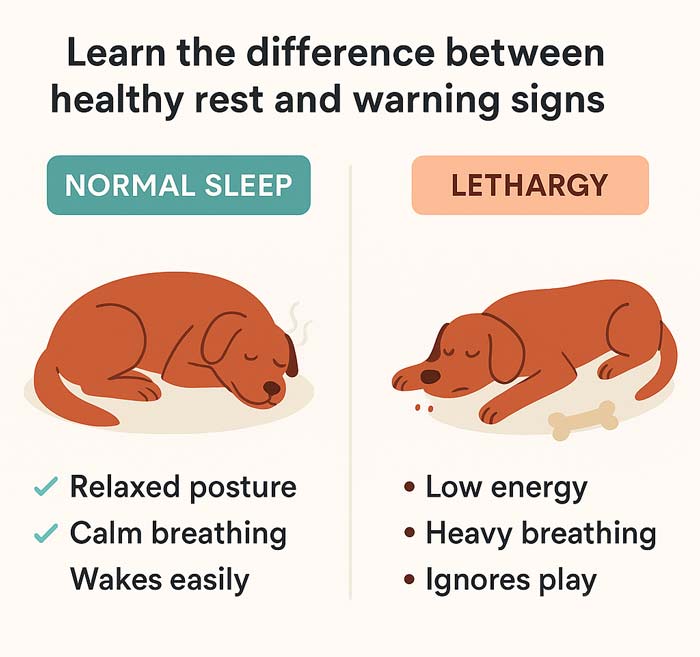
There’s a big difference between a lazy napper and a lethargic dog and knowing that difference can save you a lot of stress (and maybe even a trip to the vet).
A lazy napper wakes easily, gets up for meals, greets you with a tail wag, and still enjoys playtime. They rest often, yes, but they bounce back when something exciting happens like you grabbing the leash or rustling the treat bag.
A lethargic dog, on the other hand, seems “switched off.” They might sleep more but also move less when awake. You’ll notice things like:
- Sleeping all day and showing little to no appetite
- Ignoring walks or playtime they normally love
- Heavy breathing, whining, or seeming uncomfortable even at rest
- Weakness, stiffness, or difficulty standing up
These signs can point to underlying health issues things like hypothyroidism, diabetes, infections, depression, anemia, pain, or side effects from medication.
Sometimes it’s something simple, other times it’s your dog’s way of saying, “I don’t feel right.”
If this behavior comes on suddenly, don’t wait and see – call your vet. A quick check can rule out serious problems and give you peace of mind.
Here’s a helpful trick:
Start tracking your dog’s sleep. Use a small notebook or a smart collar that monitors activity. Write down when and how long they sleep, how they act when awake, and note any changes.
Over time, you’ll spot patterns – what’s normal, and what’s not.
Remember, you know your dog best. Trust your instincts. If their usual lazy naps turn into full-day slumbers with no spark left in their eyes, it’s time to look closer.
How Sleep Impacts Your Dog’s Health and Mood
Sleep isn’t just downtime for your dog, it’s when their body and mind reset.
Just like us, dogs need quality rest to stay healthy, happy, and emotionally balanced. When they don’t get enough of it, everything from their immune system to their temperament can take a hit.
During deep sleep, your dog’s body repairs tissues, builds muscle, and strengthens the immune system.
It’s also when the brain sorts through memories, helping them remember training cues and daily routines.
That’s why a well-rested dog learns faster and stays calmer during training. Their brain has had time to process and store what they’ve learned.
Lack of proper sleep, on the other hand, can make dogs irritable, anxious, or overly reactive.
You might notice more barking, restlessness, or even signs of mild aggression when they’re overtired.
It’s the same way we get cranky when we haven’t slept well only they can’t tell us why.
A well-rested dog is easy to spot: steady breathing, relaxed posture, calm body language, and fewer nighttime disturbances.
You’ll see it in their eyes and feel it in their energy – they’re content, alert, and emotionally balanced.
So yes, all those naps aren’t just for comfort. They’re your dog’s way of keeping their body strong and their spirit steady.
Nighttime vs Daytime Sleep Patterns
You might have noticed your dog wide awake at night but dozing all day, and you’re not alone.
Dogs have incredibly flexible sleep patterns and they naturally adjust to the rhythm of the household.
This adaptability, called circadian flexibility, is why your dog seems to wake when you do and rest when you rest. But left on their own, dogs tend to follow their natural rhythm and that’s a bit different from ours.
Dogs are what we call crepuscular creatures, meaning they’re most active during dawn and dusk.
In the wild, these times were ideal for hunting and avoiding danger.
That instinct still lives inside your pup, even if their “hunt” today is just chasing the postman or sniffing out treats in the garden.
If your dog seems restless at night or naps too much during the day, try gently reshaping their routine. Here are a few ways:
- Morning walks: Start the day with a bit of exercise and sunlight, it helps set their internal clock.
- Structured playtime in the evening: Burn off energy before bedtime so they rest easier.
- Keep nighttime calm: Lower lights, play soft music, and avoid late-night excitement.
Over time, your dog’s sleep-wake cycle will sync more closely with yours, meaning better nights for both of you.
Final Thoughts – Let Sleeping Dogs Lie (Literally!)
After everything we’ve uncovered, one thing’s clear – dog sleep explained is mostly about understanding what’s normal and what’s not. Most dogs sleep a lot because their bodies are designed that way.
Still, it’s worth paying attention. Sudden changes – sleeping far more, skipping meals, or losing interest in play can sometimes point to something deeper. When in doubt, trust your gut and talk to your vet.